Workshop 5
Playful Approaches, Creative Code, AI Policy
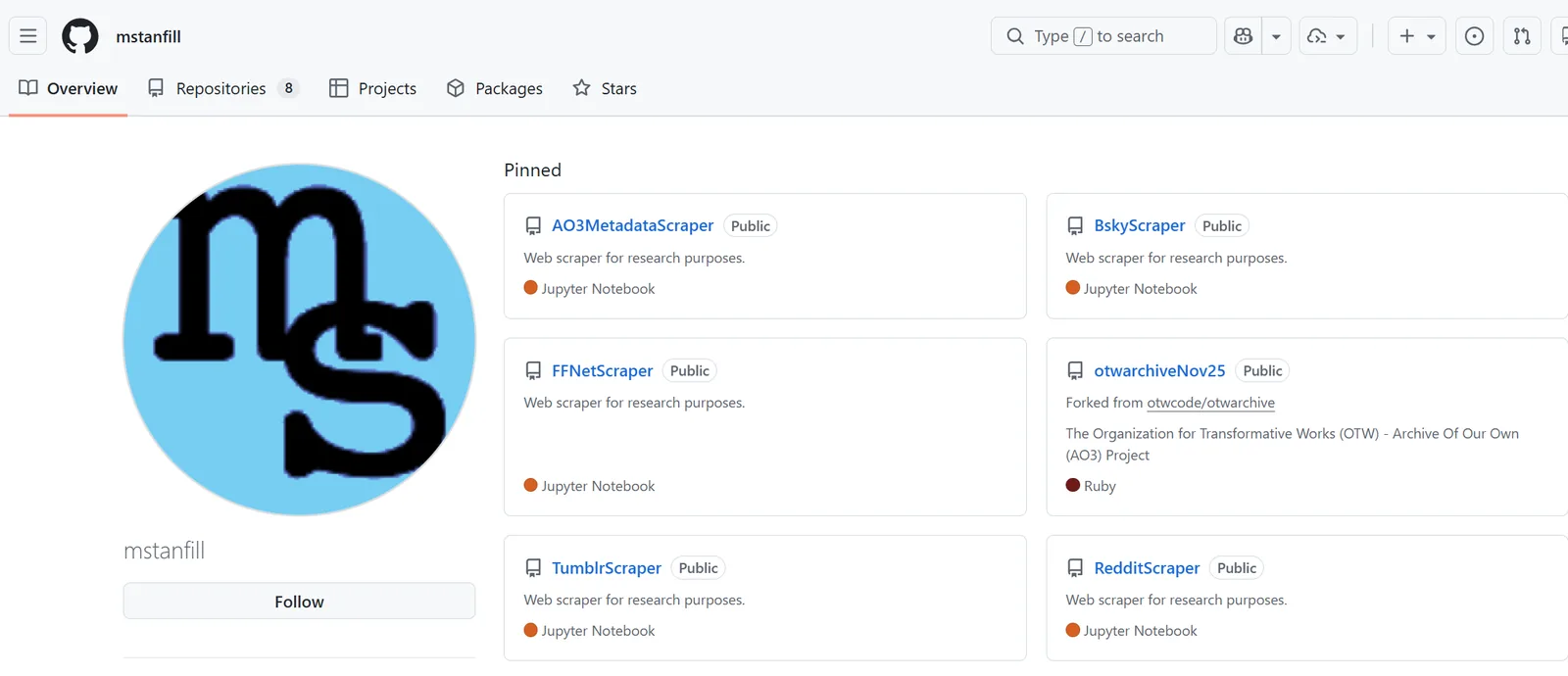
Sample Tools by Mel Stanfill
- github.com/mstanfill — research scrapers built as small, public, single-purpose tools.
- AO3, Bluesky, Tumblr, Reddit, fan-fiction metadata — each tool scoped to one corpus.
- The model for what you're building: specific, open, made to do one thing well.
Demo · AO3 Tag Crawler
The data: AO3's tag ecosystem
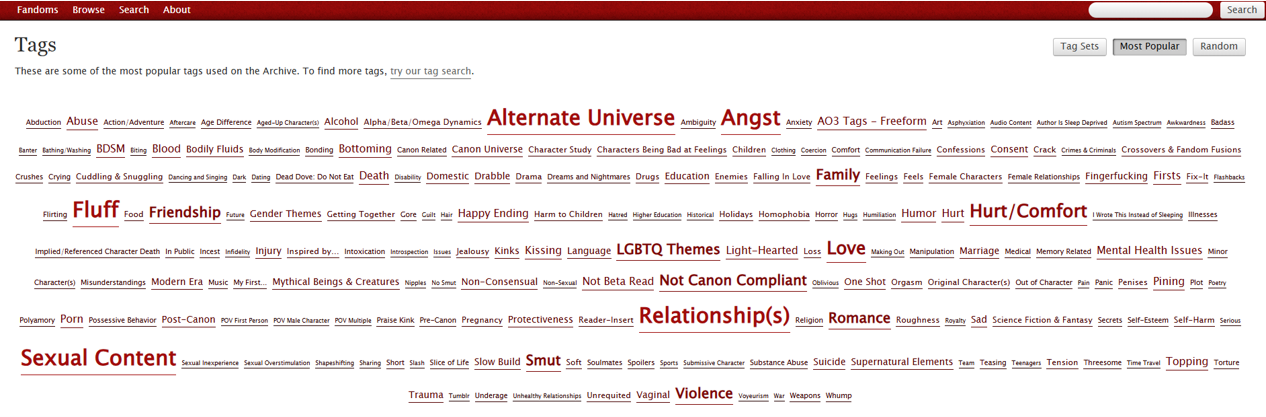
Archive of Our Own's tag cloud — community-made metadata, and the corpus the scraper collects.
Demo · AO3 Tag Crawler
Building the scraper: prompt, debug, retry



Demo · AO3 Tag Crawler
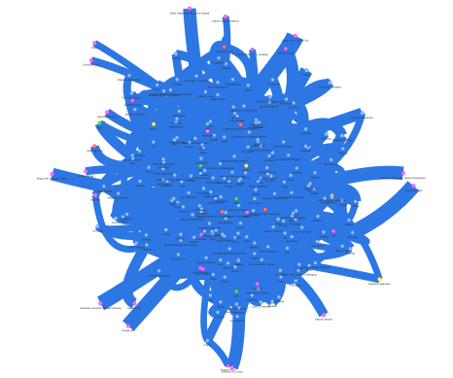
Which tags travel together?


Demo · AO3 Tag Crawler
Heatmaps: tags × ratings, tags × tags


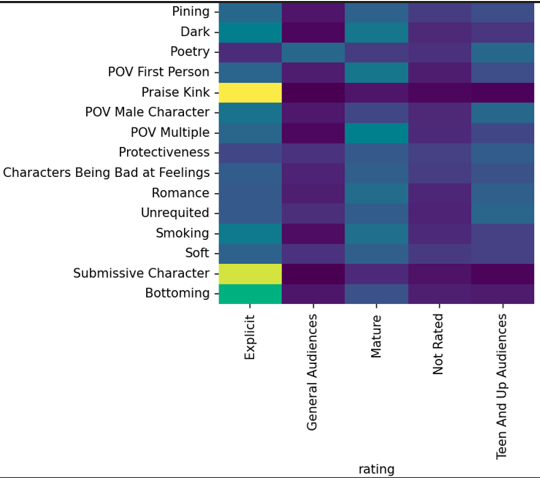
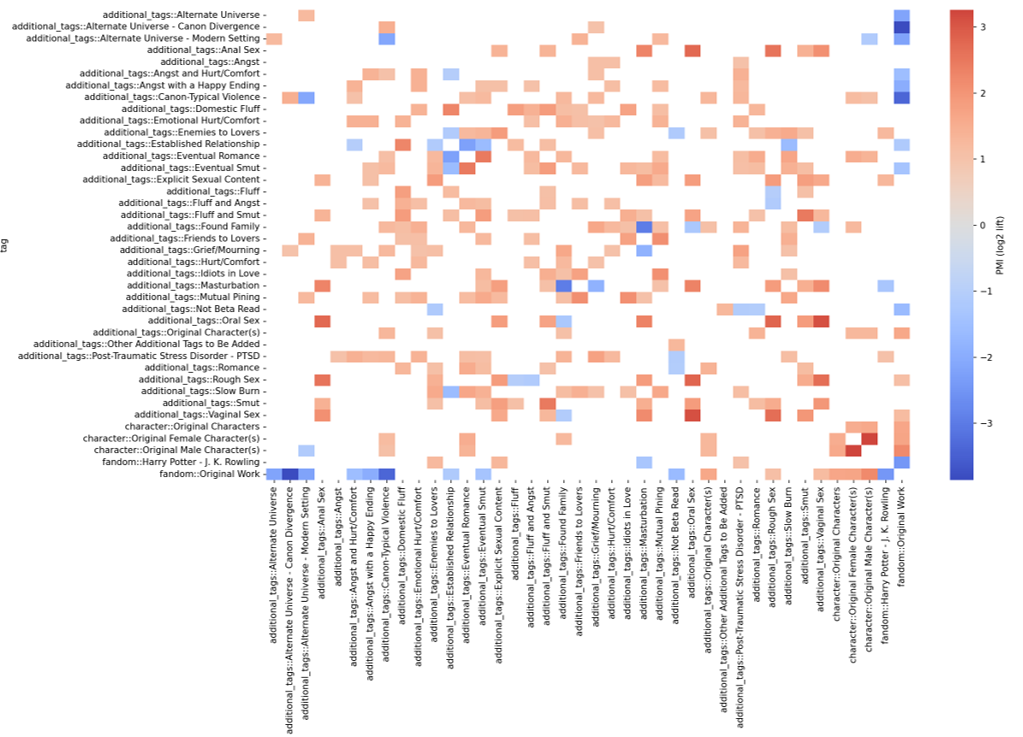
Demo · AO3 Tag Crawler
Refining the analysis pipeline



Demo · AO3 Tag Crawler
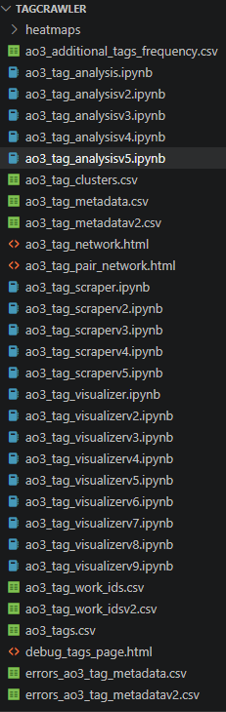
Iteration is the method
- One project folder, dozens of versions: the scraper to v5, the visualizer to v9, the analysis to v5.
- Error logs and CSVs pile up alongside the notebooks — a record of the conversation.
- Nothing here was right the first time. That's not failure; that's the workflow.
What we're building toward
- Small. Strange. Made for one course or one corpus.
- Not an app. Not a startup. A pedagogical artifact.
- Survives because it's specific. Travels because it's open.

The Paperclip Maximizer (and other thought experiments)
- decisionproblem.com/paperclips — the playable form of an alignment thought experiment.
- Not a prediction. A teaching tool for what optimisation without judgement looks like.
- Useful pairing for any tool you build: what is it optimising for?