Workshop 4
Web and Interactive Applications
Wednesday, June 24, 2026 · 10 AM – noon · CHDR
Part 1
GitHub and GitHub Pages, from scratch
Walk through, together: what a repository is, what a commit is in plain language, what main means, and what GitHub Pages does.
What GitHub is — and what it isn't
- A repository: a folder of files with a complete history.
- A commit: a saved version. You'll make many.
- Main: the canonical line of work; everything else is a branch off it.
- Owned by you (or by Microsoft, technically) — not by Claude.
GitHub Pages
- Free public web hosting from any repository.
- URL pattern:
https://<username>.github.io/<repo>/ - Static only — but for a CV, syllabus, or playful tool, that's plenty.
- Settings → Pages → choose a branch → wait two minutes → you have a site.
Part 2
From Artifact to Code Web
What persists, what changes. Why a real GitHub repository matters even for a one-page site.
Two tools, two purposes
Claude Artifacts
Quick. Disposable. Lives inside a Claude conversation. Great for a one-shot demo or in-class build.Claude Code Web
Persistent. Multi-file. Writes to a real GitHub repository. Designed for the thing you'll keep iterating on.Where this is heading: agentic Code Web
- Claude AI now ships in finance, sales, and infra workflows — full repo access.
- Same building blocks we'll use today: read files, edit files, run commands, deploy.
- What we do for an ePortfolio scales to course tools, archive interfaces, recommender sites.
Live demo
Live demo: CV → ePortfolio
Same tool, same prompt structure, deployed to a real GitHub Pages URL inside the demo block. Watch the iteration: palette, sections, typo. This is the workflow you'll do in 50 minutes.
What we'll have built today
- A live URL pointed at a single-page website you wrote.
- Version history of every change you and Claude made.
- A README that documents your AI use — the attribution is part of the work.
- No code written from scratch. That's the point — and it's also a literacy.
Exercise
CV → ePortfolio (deployed)
Adapted from DistantCodingUMKC and HumanitiesAI/weekeleven:
- From your GitHub home, click New → name it (
my-eportfolio) → set Public → check Add a README. - From the repo page, Add file → Upload files → drag your CV / syllabus / description → Commit changes.
- Open Claude Code Web → authorize GitHub → select the repo.
- Prompt: "This repo has my [CV/syllabus]. Read it, then build a fun-but-professional single-page site appropriate to the work it represents. Put files in
/site. Make it deploy-ready for Pages." - Iterate. Color, layout, sections. The conversation is the workflow.
- Settings → Pages → branch
main, folder/site(or/(root)) → wait two minutes → save your URL.
What's actually under the hood
- geeksforgeeks.org/javascript/variables-datatypes-javascript — the level of detail you need to read the code Claude writes.
- You don't have to write it. You do have to recognize it.
- If something looks off, ask Claude to explain. The explanation is the literacy lesson.
Where Code Web sits in the agentic landscape
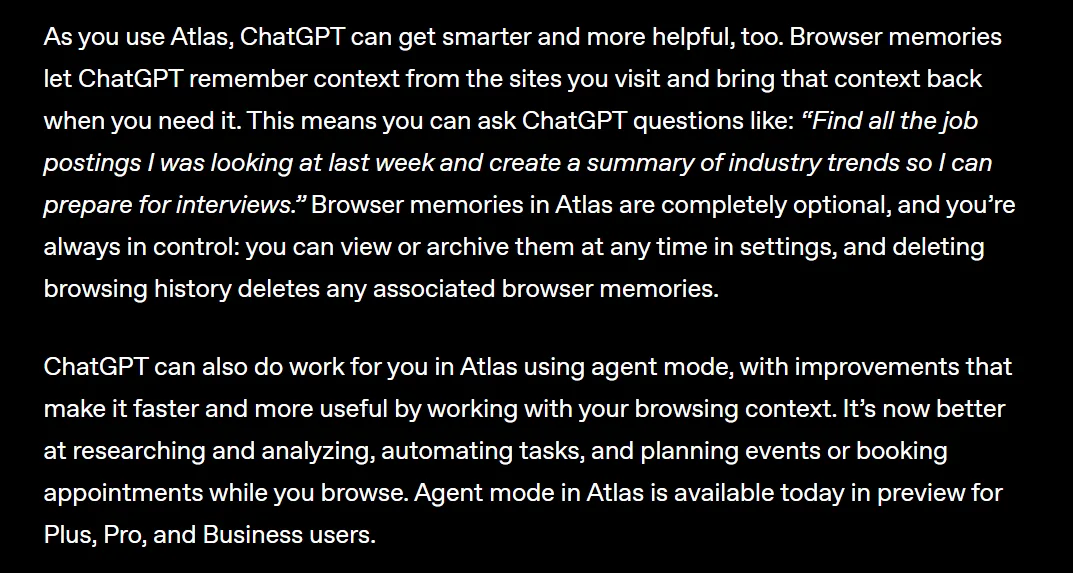
- OpenAI ships Atlas (browser-as-AI), Comet automates tasks in your browser.
- Claude Code Web is the humanities member of the family — it commits, deploys, attributes.
- Choose the tool whose building blocks match your discipline's labor.
"But I didn't write any code"
- Describing what you want in prose and steering what the model builds is natural language programming — the prompt is the source, the running site is the output.
- It's continuous with distant coding: just as distant reading lets us work with a corpus too large to read line by line, agentic AI lets us work with code without authoring every line — reading it, directing it, judging it instead.
- You still made the design decisions, reviewed the output, and committed the changes. That is a literacy — even if it isn't the one you grew up calling "programming."
And then there's the CLI
- CLI = command-line interface: you type commands to the computer instead of clicking — the original, most direct way to drive software.
- techradar.com: 'Claude Code comes to the masses.'
- Code Web is the entry. The CLI is the deeper version — we tour it in Workshop 6.
- You don't need it today. But know it's the same family of tool.
How fast this is moving
- Over half of Japanese game companies use AI in development (October 2025).
- NPR: AI code productivity claims under scrutiny — but the use is real.
- When your students enter the field in two years, this is the floor.
If you assign this in a course
- Require three iteration cycles documented in the conversation history.
- Require a reflection on one design decision the student overrode.
- Require AI-use attribution in the README.
- Grade the iteration. Grade the override. Grade the attribution.
Part 5
Discussion: assignment design
Bring the assignment you're worried about. Or the one you've been wanting to redesign. Open Q&A on how Code Web fits in your fall.
What broke today? What surprised you?
- Save your Pages URL — Workshop 5 iterates on it for accessibility and play.
- Async Week 8: Rebuilding a Handout — converting a static handout into an interactive site.
- If something broke at deploy time: GitHub Pages settings → check branch + folder → wait full two minutes.
Your URL is yours
That URL stays live as long as the repo exists. You own the work, the version history, and the attribution.