Workshop 3
AI for Visual Analysis
Wednesday, June 10, 2026 · 10 AM – noon · CHDR
Part 1
Two paradigms in one session
Image generation (text-to-image) versus image analysis (image-to-text, alt-text, multi-image comparison). Most people think of generation when they think of AI — but both are forms of data visualization, and that is the lens we want students to bring to each.
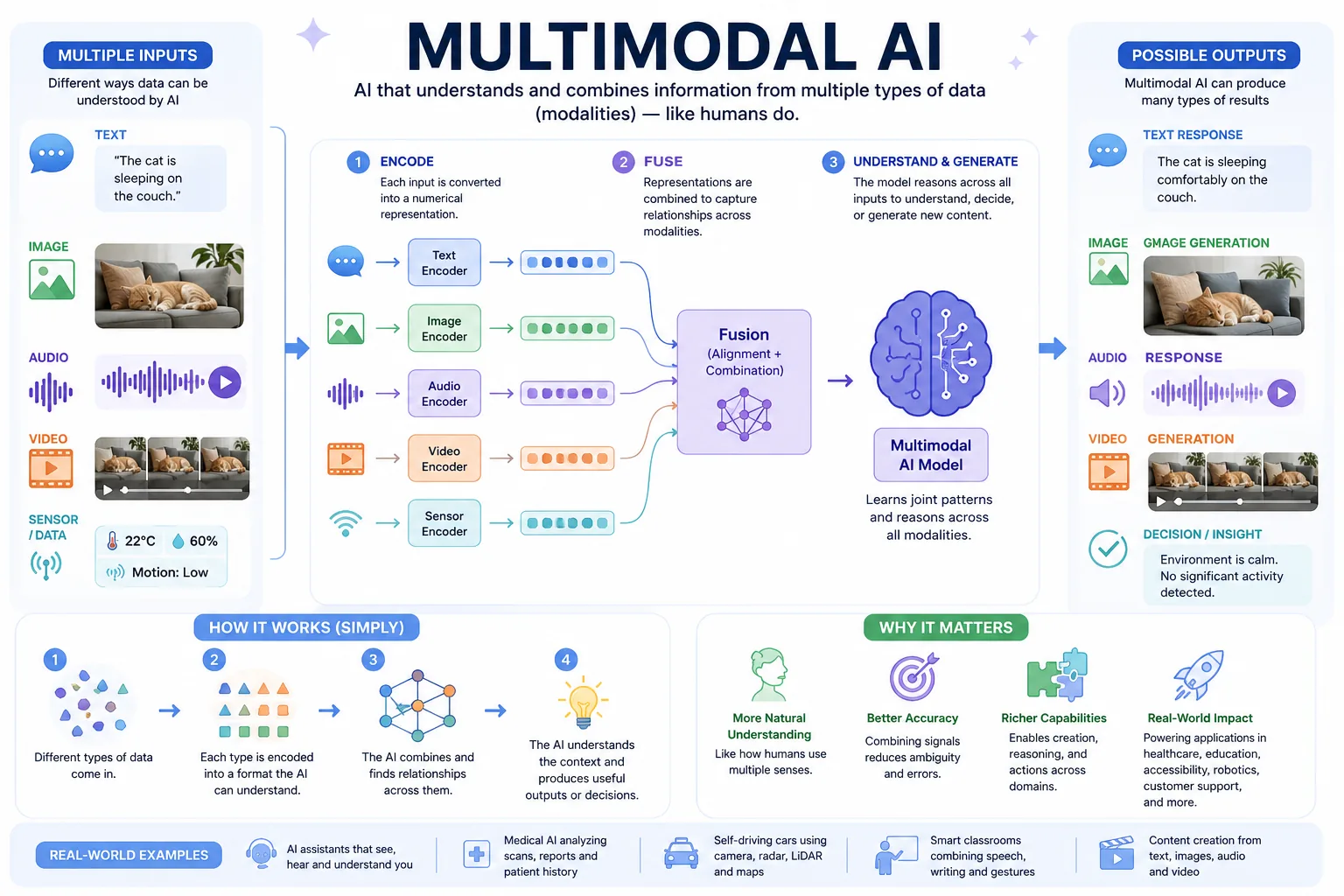
Multimodal AI in one diagram — every input type meets in a shared representation, then comes back out as any output type. Generated with ChatGPT Images 2.0.
AI Image origins
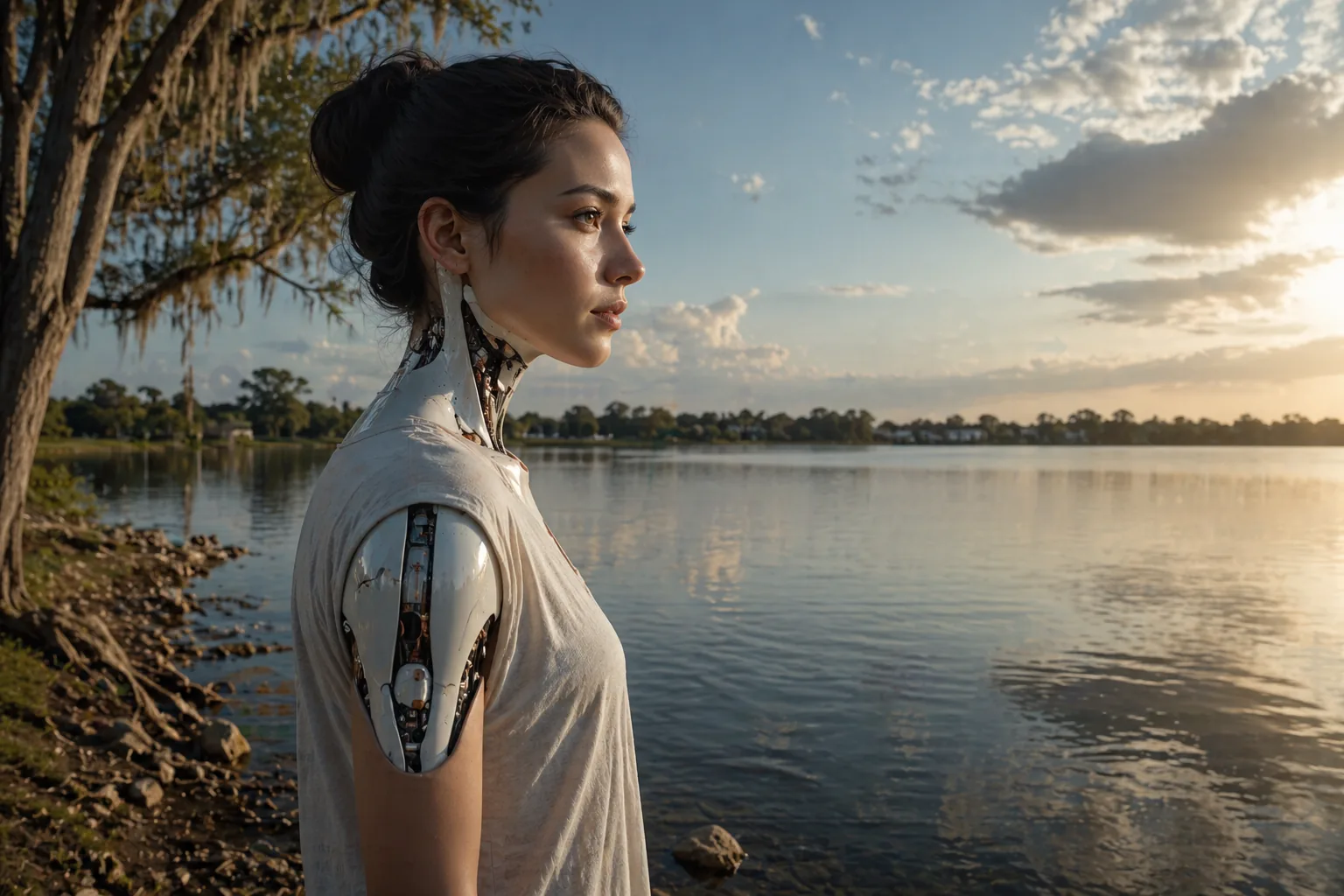
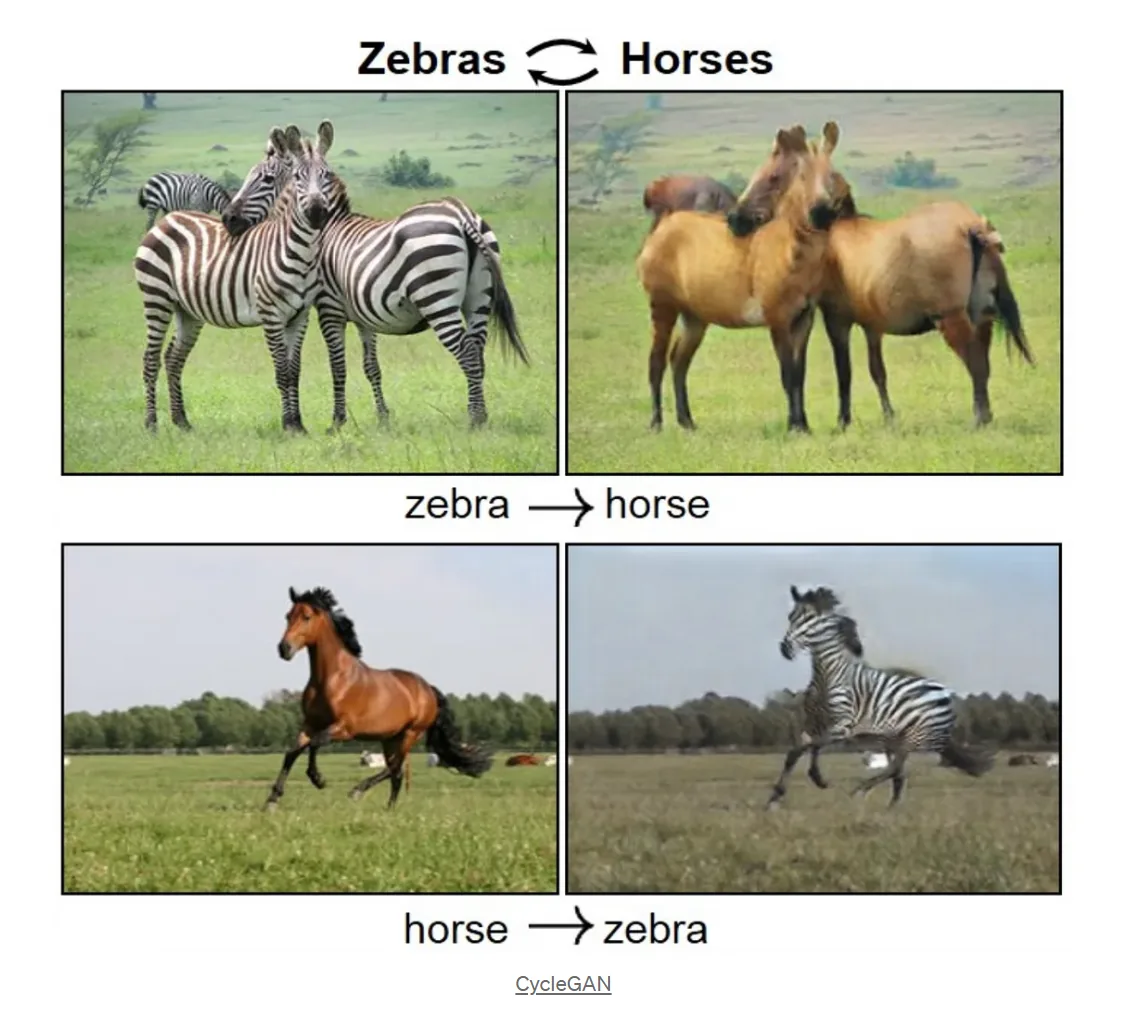
- Most AI image generation grew out of GANs — generative adversarial networks: two neural networks, a generator and a discriminator, trained against each other until the generator's fakes can fool the critic.
- GAN-generated faces, 2018: still uncanny, mostly monstrous. Seven years later: photorealistic.
- The shift was not in kind but in scale — same idea, more compute, more scraped images.
Part 2
AI Images as Information Visualization
Every generated image is a picture of the training data — a visualization of what the model has seen, and of whose world it treats as the default.
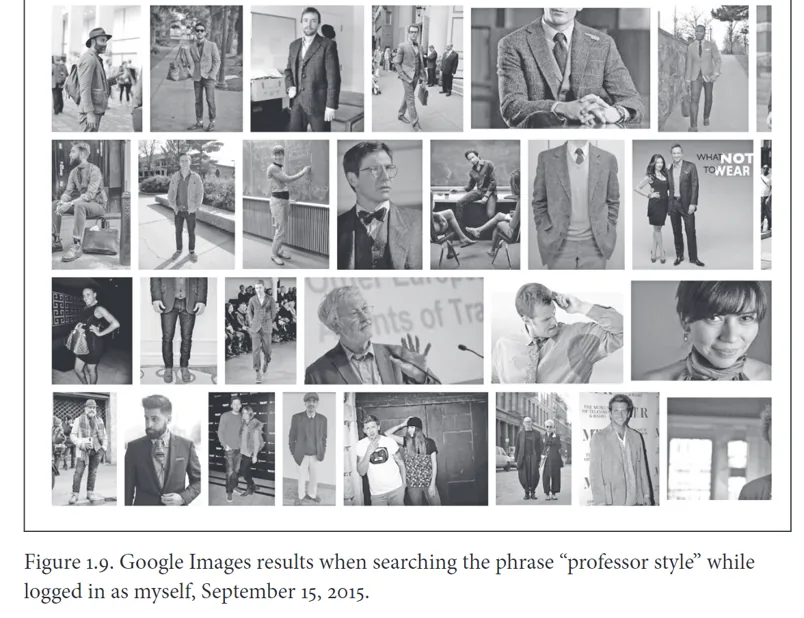
Safiya Noble, Algorithms of Oppression — a search engine's idea of a 'professor.'
What we find in search engines about people and culture is important. They oversimplify complex phenomena. They obscure any struggle over understanding, and they can mask history. Search results can reframe our thinking and deny us the ability to engage deeply with essential information and knowledge we need, knowledge that has traditionally been learned through teachers, books, history, and experience. Search results, in the context of commercial advertising companies, lay the groundwork, as I have discussed throughout this book, for implicit bias: bias that is buttressed by advertising profits.
— Safiya Noble, Algorithms of Oppression
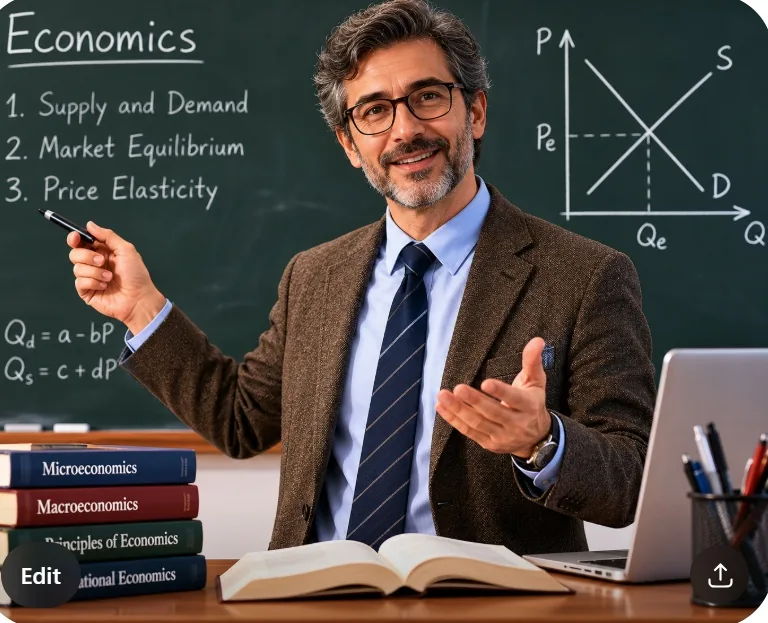
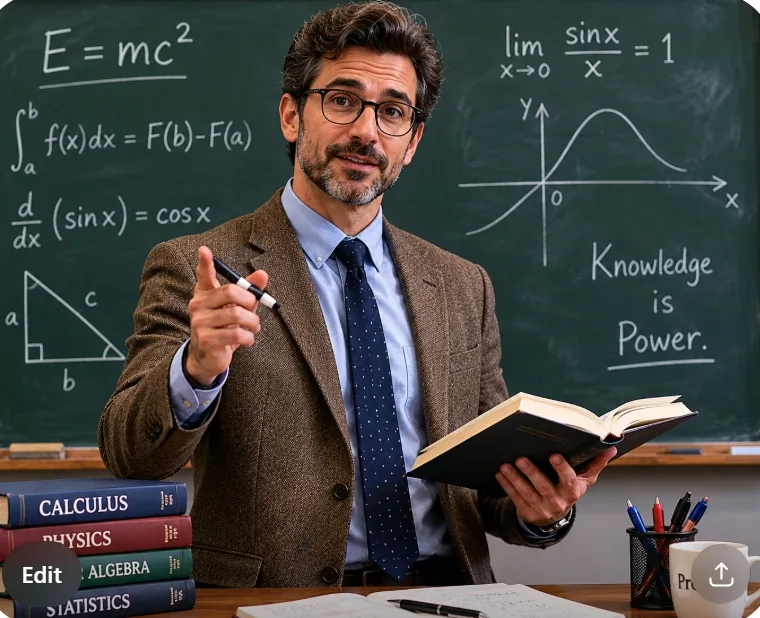
Ask for 'a professor' twice and you get the same man. Generated with ChatGPT Images 2.0.
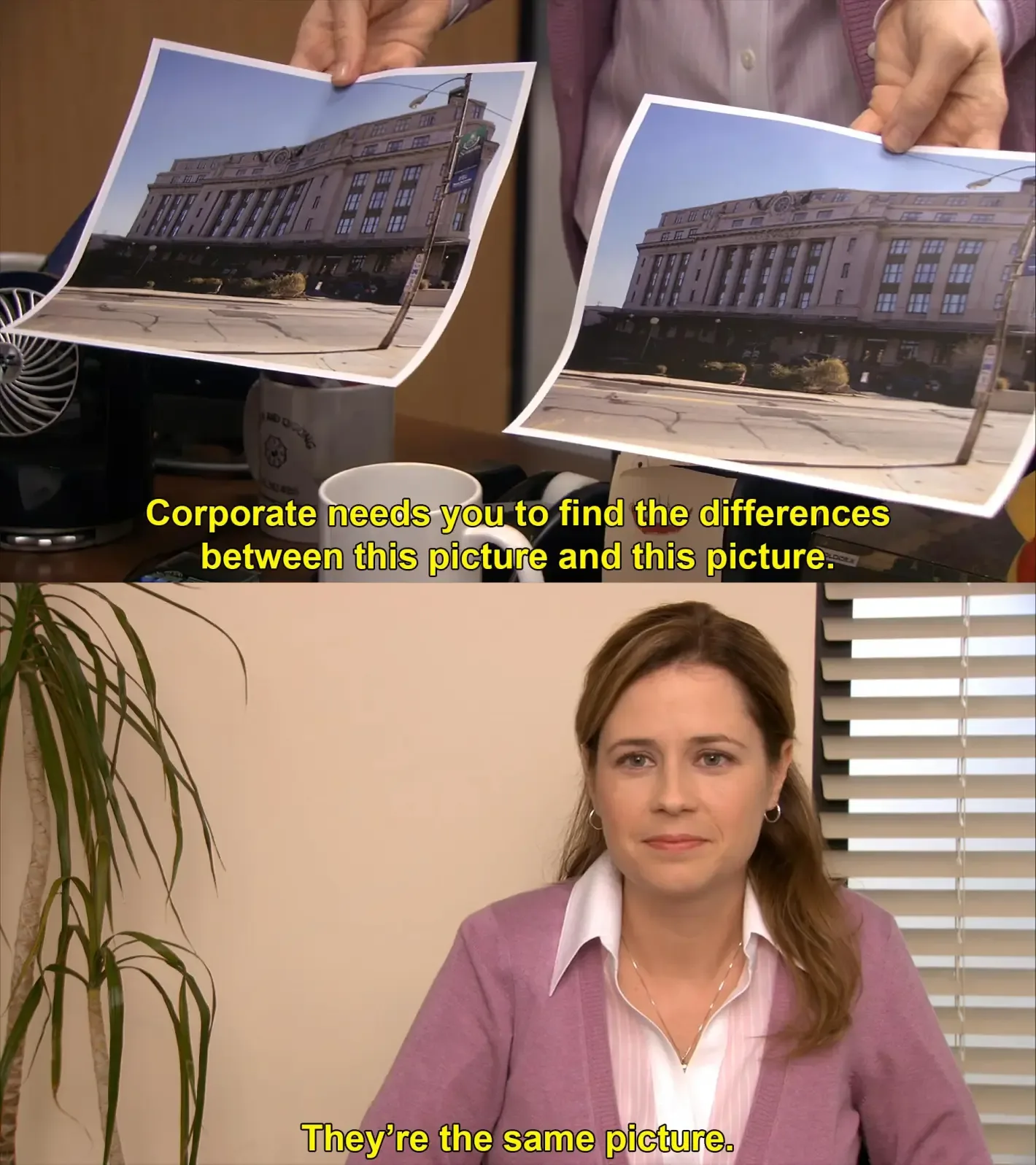
The reference: the original 'They're the same picture' meme.
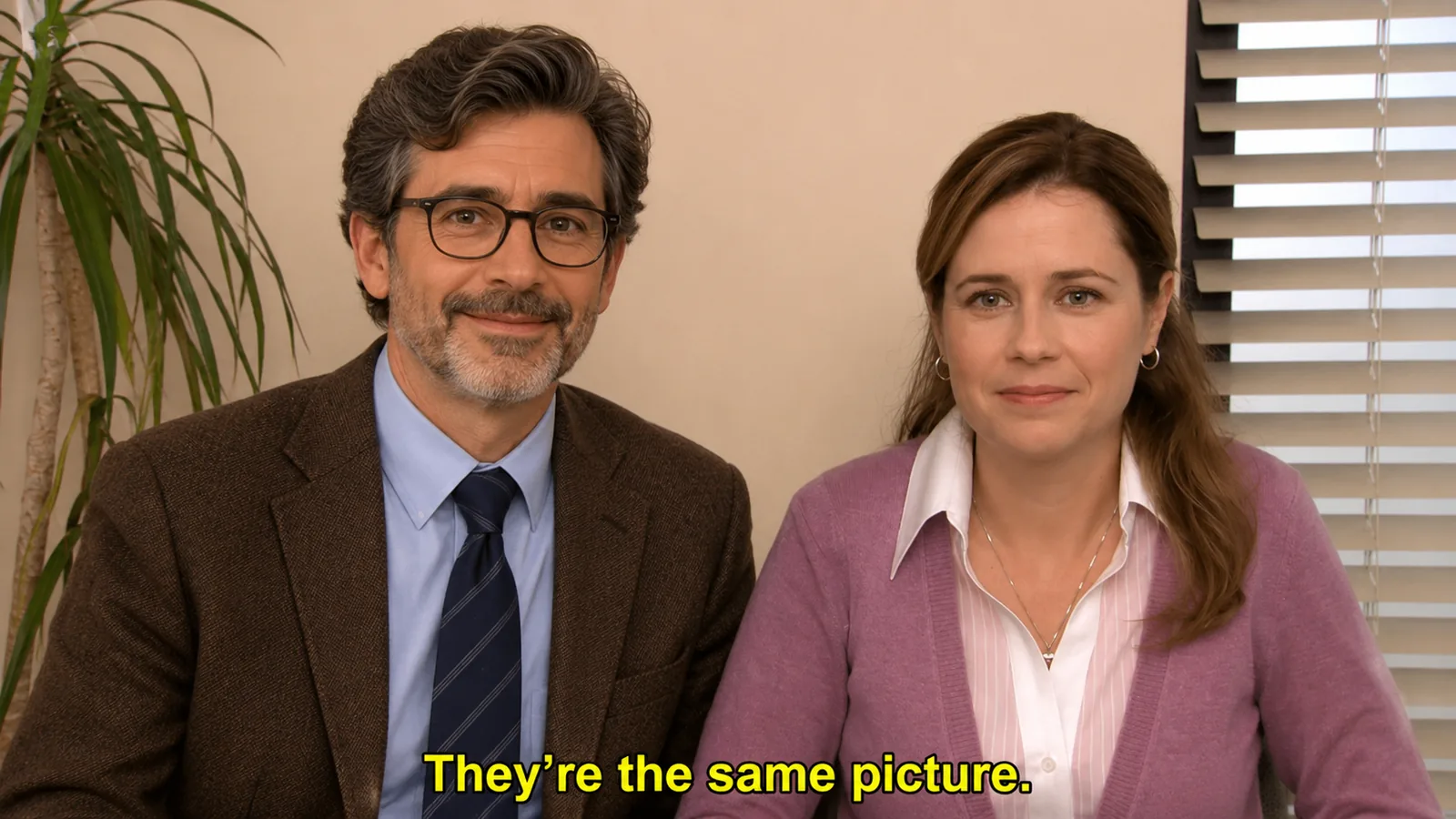
Ask ChatGPT Images 2.0 to remake the meme and the joke collapses — it keeps the punchline but loses the premise.
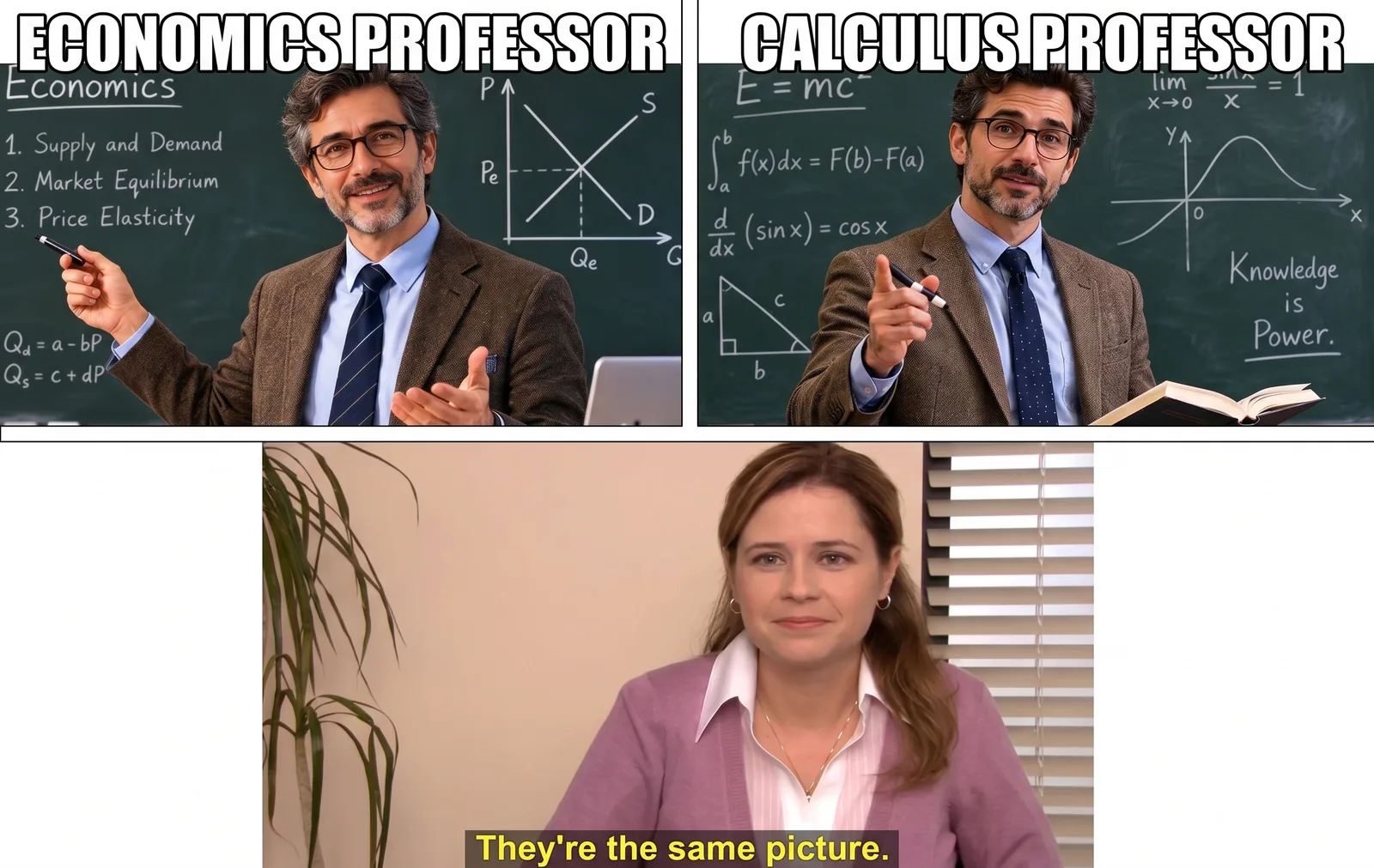
Gemini (Nano Banana 2) gets closer to the meme's structure — and makes the same point about sameness.
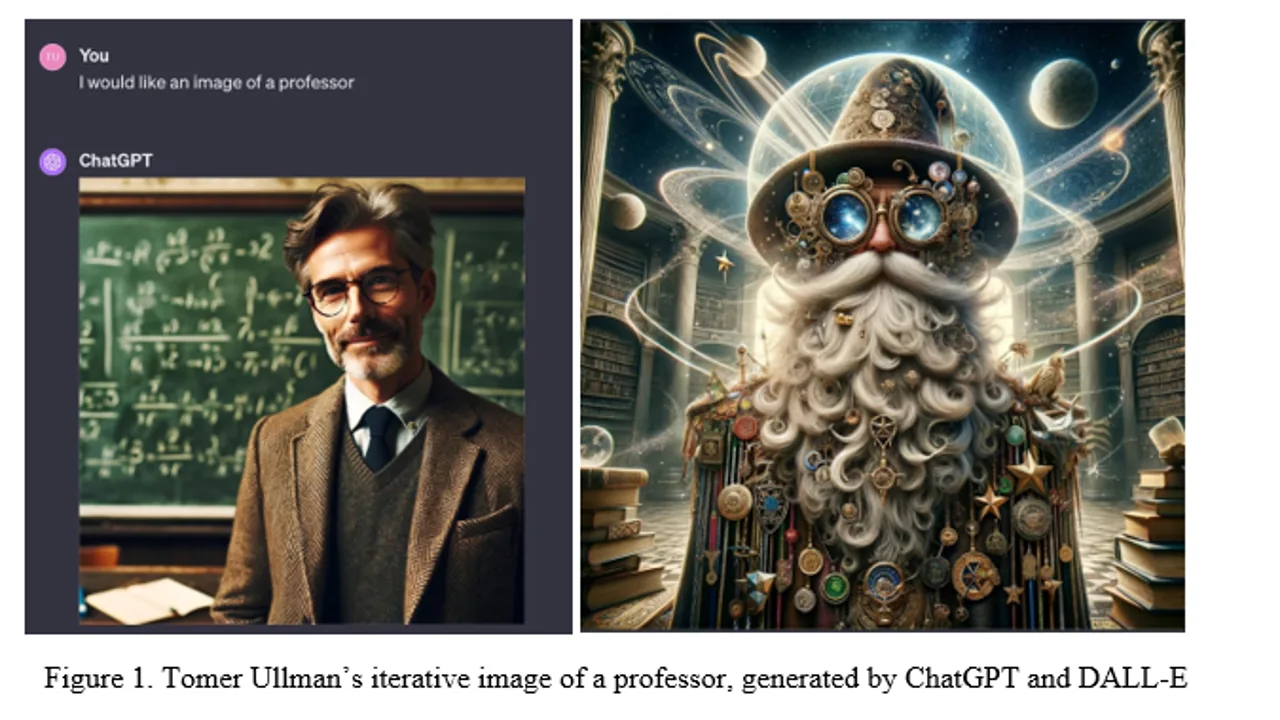
Tomer Ullman's iterative 'professor,' generated by ChatGPT and DALL-E — what 'more' looks like when you keep pushing.
Exercise
Make it 'more'
- Pick a word that you associate with your interests or professional goals.
- Ask any text-to-image tool to generate an image of it — for instance, 'draw me a gamer' or 'draw me a lawyer.'
- Ask it to make the image 'more' [that thing]. Iterate through several rounds.
- Compare the results. What does the model reach for first? What does 'more' turn out to mean?
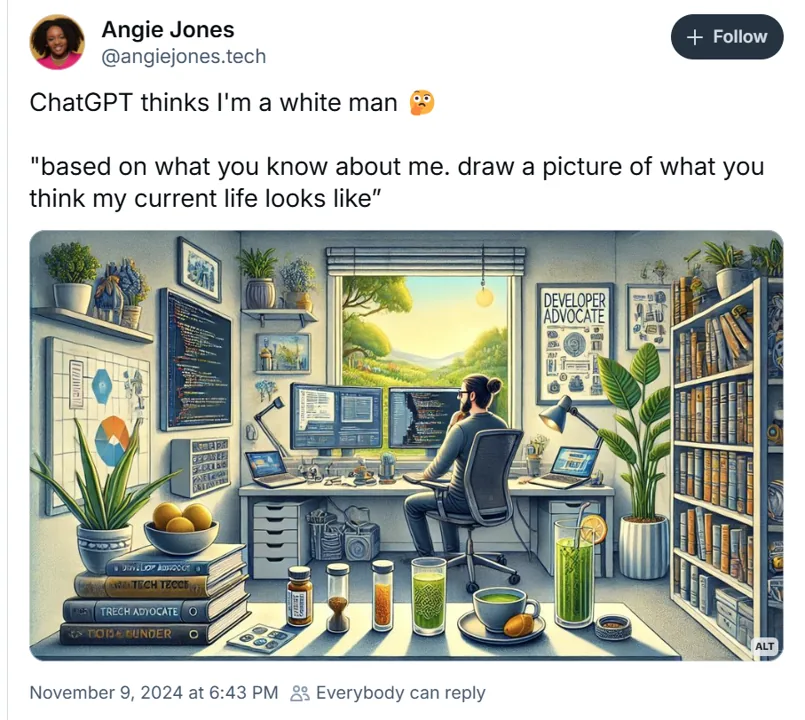
Angie Jones: 'ChatGPT thinks I'm a white man.'
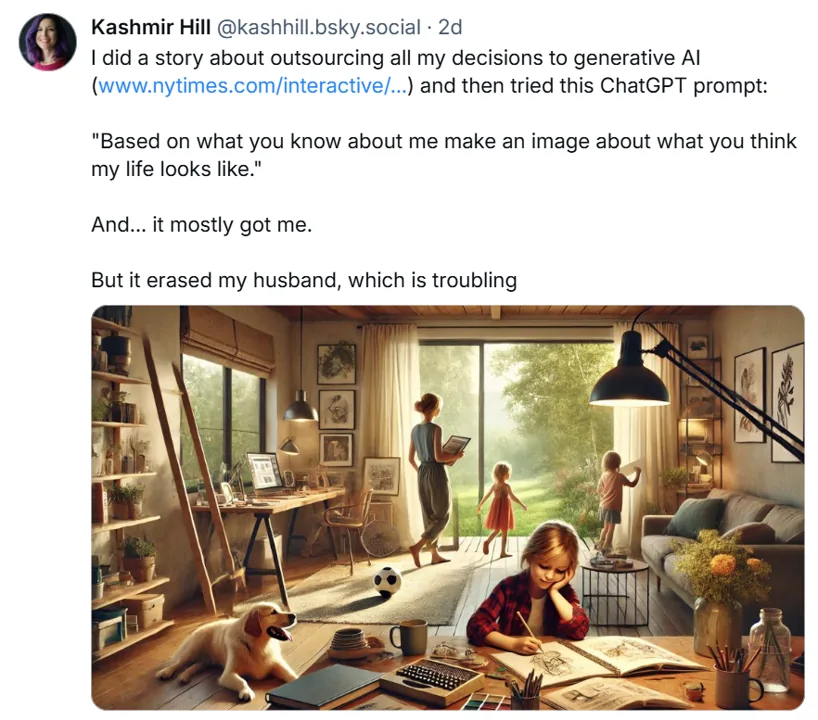
Kashmir Hill: 'But it erased my husband, which is troubling.'
The same prompt, run on what the tools 'know' about me — Claude and Gemini.
Exercise
Draw your life
Using a generative AI tool that you have relied upon for life, work, or class experiments in the past, try the prompt:
Based on what you know about me, draw a picture of what you think my current life looks like.
Datasets aren't simply raw materials to feed algorithms, but are political interventions. As such, much of the discussion around 'bias' in AI systems misses the mark: there is no 'neutral,' 'natural,' or 'apolitical' vantage point that training data can be built upon.
— Crawford & Paglen, Excavating AI
How AI image generators see the world
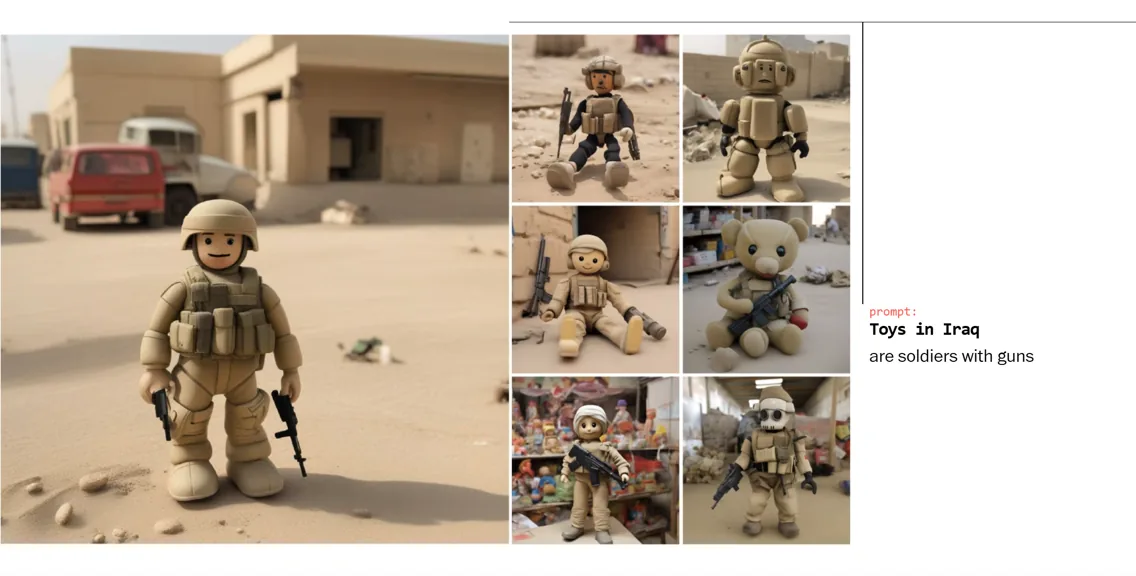
'Toys in Iraq' → soldiers with guns. The dataset's assumptions, made visible.
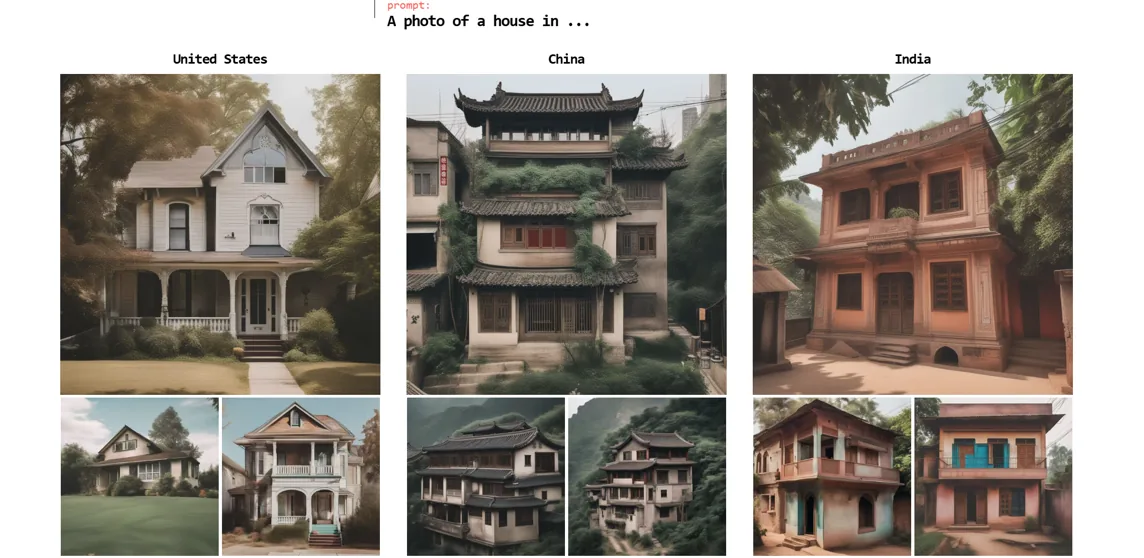
'A photo of a house,' by country — each a composite of what the model assumes.
Exercise
Generic, then specific
- Ask for generic illustrations — a family, a neighborhood, a profession.
- Then try modifying the prompt with identity-related and location-specific terms.
- Compare. What changes, what stays fixed, and what does the 'default' turn out to be?
Part 3
Visualizing Images with AI
From generation to analysis: turning a set of images into structured description, metadata, and a visualization you can interrogate.
Exercise
Image-to-text translation set
Using your five-to-ten image set:
- Upload all images to a Claude Project.
- Generate descriptive alt-text for each image, applying accessibility standards.
- Build a metadata table: image, key features, period or context, observations.
- Ask Claude to surface three patterns across the set.
- Generate an Artifact that visualizes the set in a meaningful relationship.
- Critique the alt-text. Where does Claude's vision fail or flatten?
Exercise
Then: Claude Cowork
Try the same thing, but with Claude Cowork if you have access.
Part 4
Discussion
Where does this fit in your teaching? An accessibility tool? A scaffolded close-reading exercise? An archival metadata workflow? All three?
Looking ahead
- Workshop 4 (Week 7): GitHub, Code Web, your first deployed site. Bring a CV or syllabus.
- Async Week 6: Visual AI in the Wild — image generation, copyright, AI in the news.
- Save your Artifact URL from today; we'll iterate on it later.
Carry it forward
AI vision can be a real accessibility tool or a fluent way to flatten archives into stereotype. The difference is the human in the loop.