Workshop 1
Introducing AI for DH Pedagogy
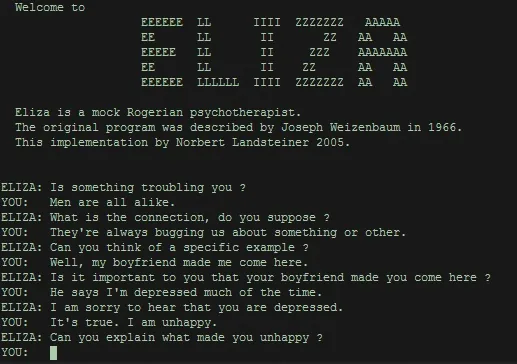
ELIZA, 1966 — Joseph Weizenbaum, MIT. "ELIZA — A Computer Program for the Study of Natural Language Communication Between Man and Machine" (CACM, 1966) →
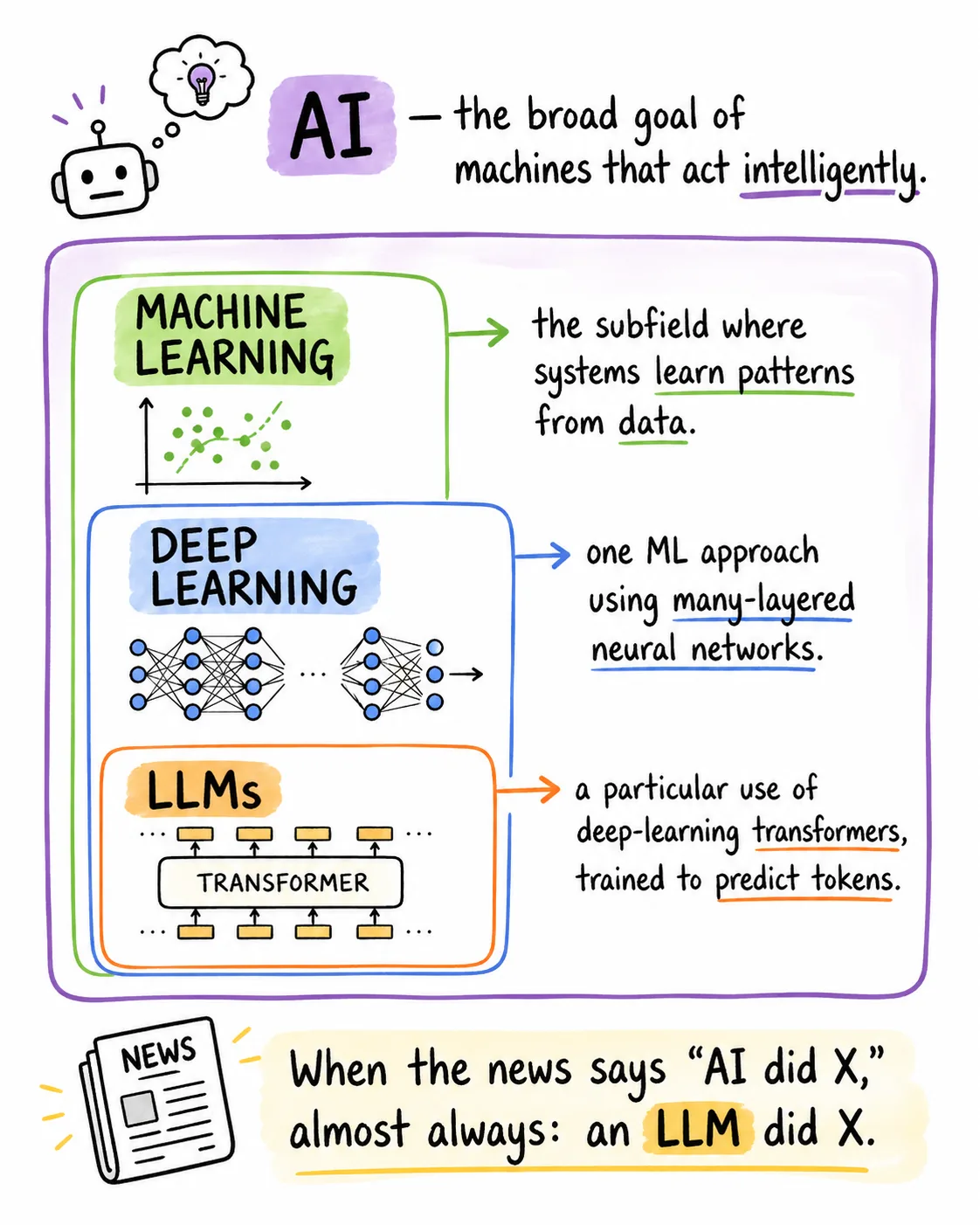
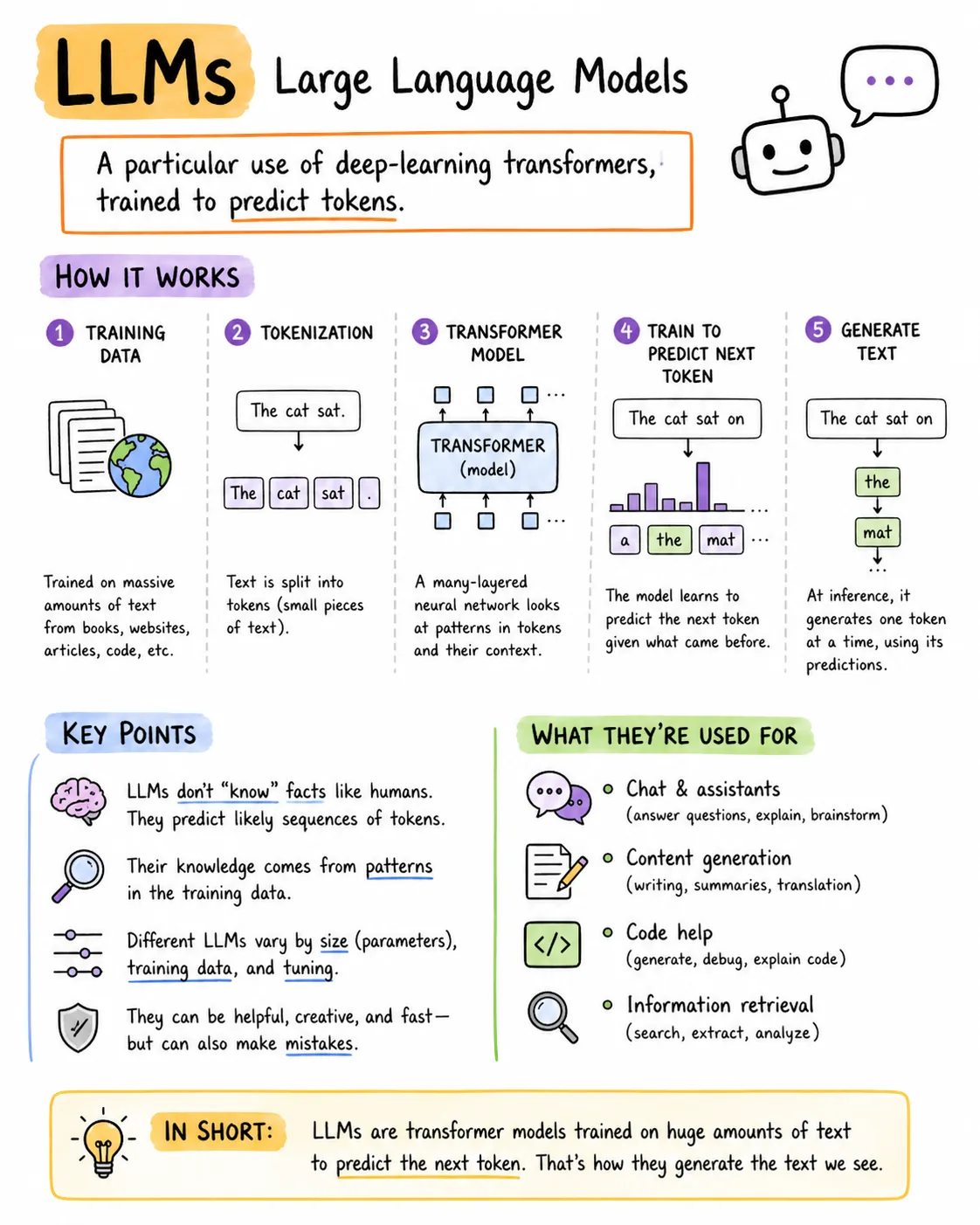
What is generative AI?
- Per the MLA-CCCC task force: 'computer systems that can produce, or generate, various forms of traditionally human expression — language, images, video, music.'
- Today we're focused on the language part. We touch the others in later workshops.
- Transformer architecture + a vast scraped training corpus + reasoning layers on top.
- MLA-CCCC working paper →
The conversation in 2026
From plagiarism panic to agent panic
- Plagiarism panics, AI-detector arms race, faculty caught between adoption pressure and pedagogical challenges.
- "A new app offers to do students' work for them. Professors aren't ready."
- The conversation has shifted from did the chatbot write this? to did the agent do the work?
The Chronicle of Higher Education — "Will Agentic AI Break Higher Education?"

What is an agent?
- "An LLM agent runs tools in a loop to achieve a goal." — Simon Willison, On the definition of "agent"
- Tool use: the model can call functions you give it (web search, file edit, run command).
- Planning: the model decides what to do next, in what order, and when to stop.
- Subagents: the model can spawn helper instances of itself for sub-tasks.
- The vocabulary is doing a lot of work — but the foundation is still the LLM we just described.
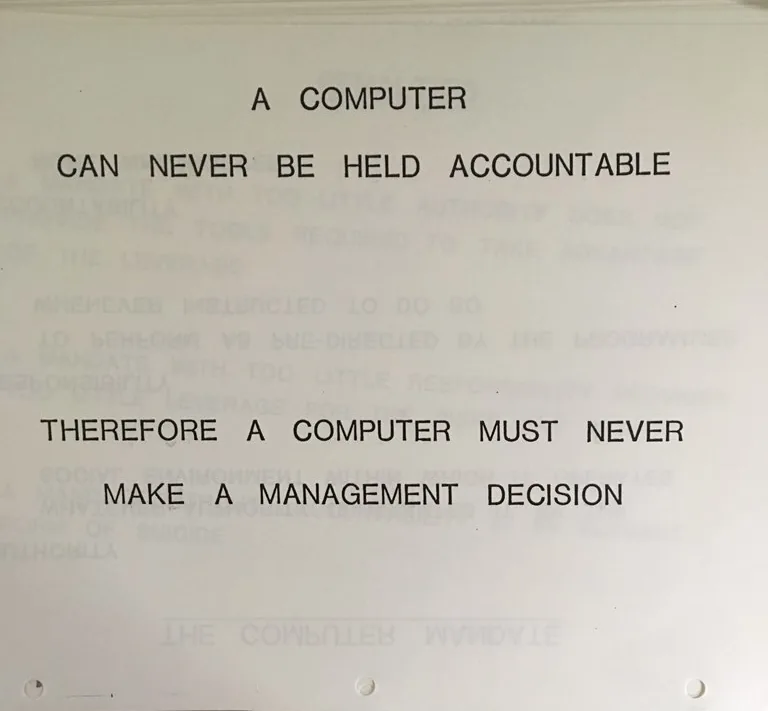
1979 IBM training slide, surfaced by Simon Willison: "A computer can never be held accountable" → — the principle agents quietly violate every time they act on our behalf.
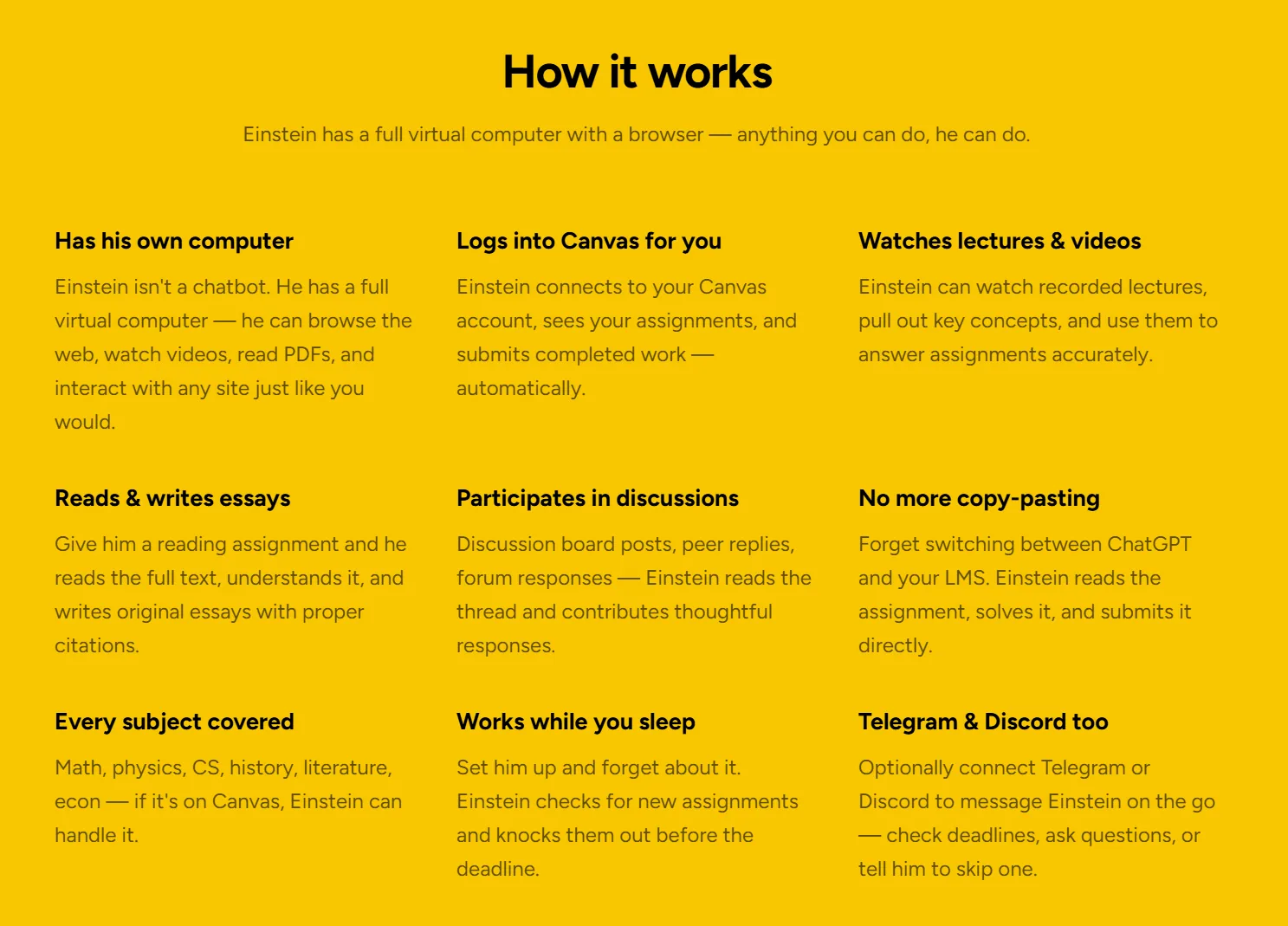
Einstein.AI: "Has his own computer"
- An agentic harness aimed straight at undergraduates: logs into Canvas for you, watches lecture videos, reads & writes essays, participates in discussions, works while you sleep.
- "Einstein isn't a chatbot. He has a full virtual computer — he can browse the web, watch videos, read PDFs, and interact with any site just like you would."
- This is the higher-ed crisis the Chronicle headline is pointing at — not that the chatbot writes the paper, but that the agent does the whole assignment loop.
- companion.ai/einstein →