Text Analysis
“Text analysis is fundamental to humanities scholarship.” — Houston
Houston walks through traditional DH ways of using computers to do this. From there we can ask: what does AI add — and what doesn’t it?
What Humanists Do When They Read
- Select or collect texts to explore a hypothesis
- Look for patterns: words, ideas, structures, rhetoric
- Discover relations between texts or parts of texts
- Interpret the significance of those patterns
- Develop arguments from those interpretations
“In humanities research, these steps are often iterative and recursive and are rarely labeled as hypothesis, data collection, experimentation, analysis, and argument. Instead, all of these things are called reading.” — Houston
Close Reading and Distant Reading
- Traditional approach: close reading — formalist, hermeneutic
- DH contribution: distant reading (Moretti) — patterns across corpora
- In practice, most projects use both:
- Distant reading surfaces patterns, and then we investigate up close
- Close reading generates questions, and then we test at scale
AI can give us new ways to do the distant end — but the interpretive work remains ours.
What Digitization Changes
“Digital technologies can be used to expand the scale of traditional methods (and thereby transform them) or to open entirely new modes and possibilities for text analysis.” — Houston
What Digitization Changes
- Large-scale digitization: new access, new quantities of texts
- Text preparation: forces explicit methodological decisions
- Relational databases + full-text search: new research questions
- New interfaces: transform how we understand reading itself
- Computational storage: new ways to curate and display collections
- Visualization + multimodal tools: new ways to build arguments
AI can then build from this same work already done for traditional DH.
Croxall — Text Preparation
“Making the labor of text preparation and cleaning evident to students demystifies the processes of text analysis and opens up conversations about textual transmission more generally.” — Croxall, via Houston
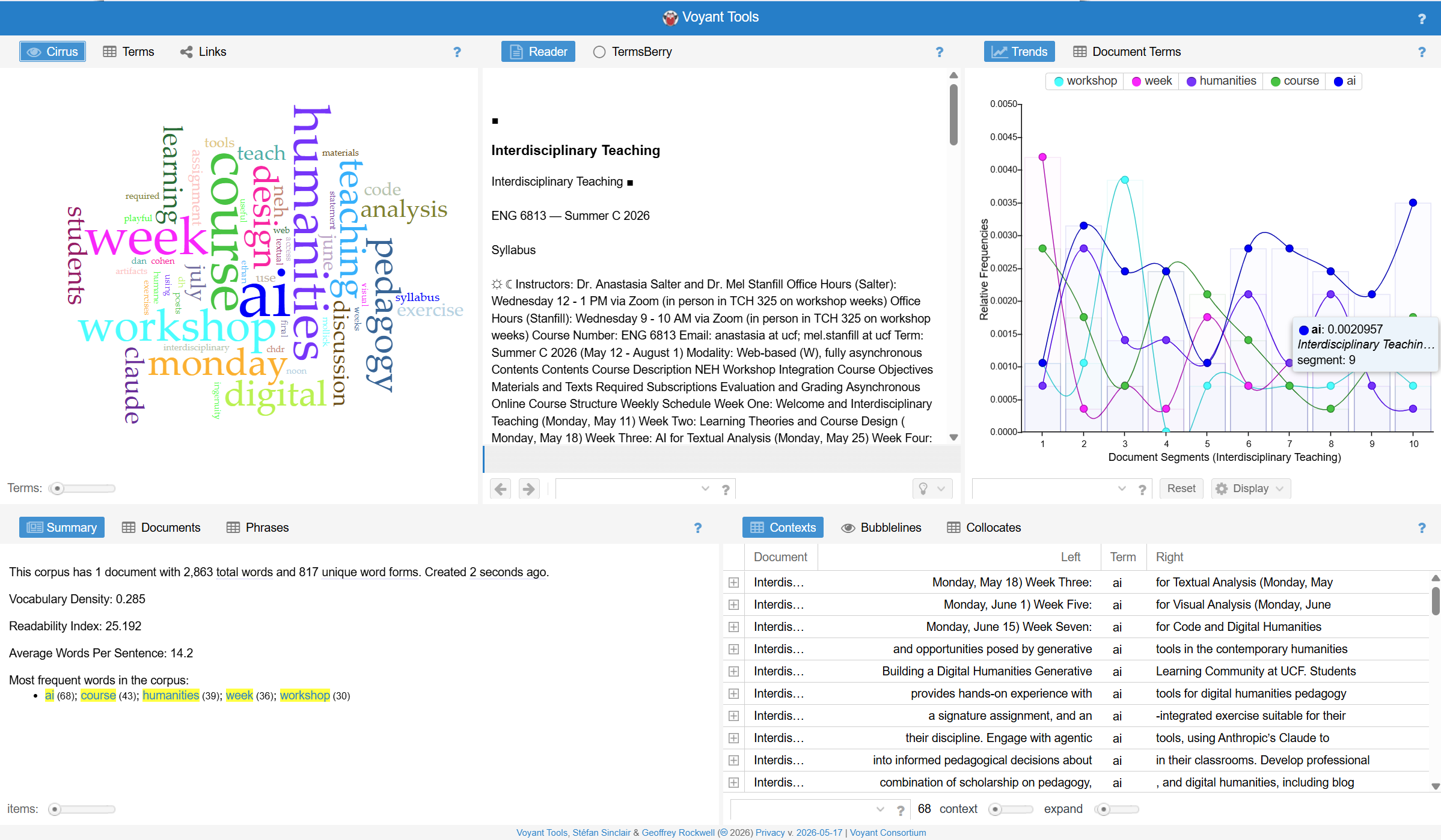
Ullyot — Tool Experts
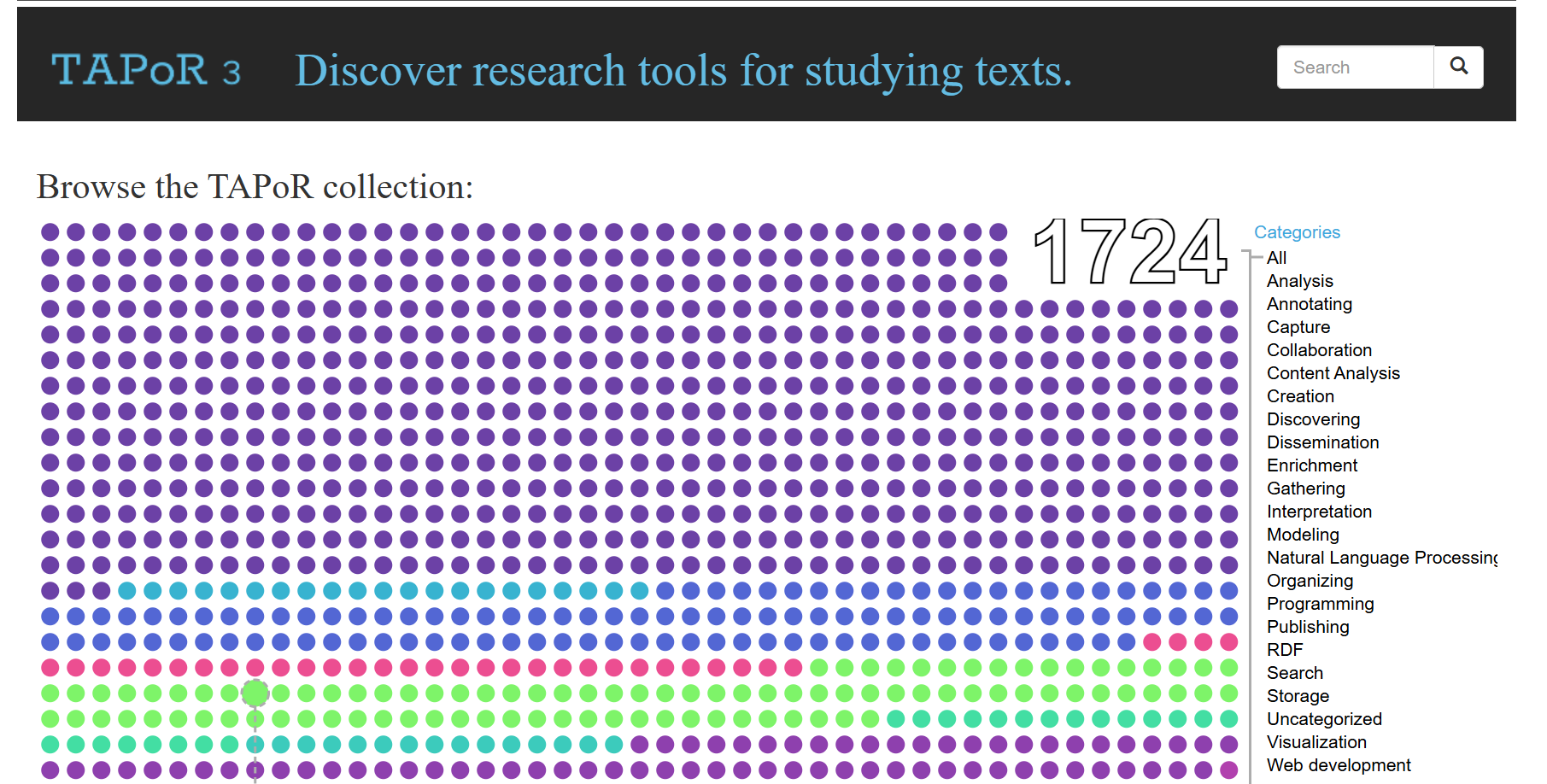
In Ullyot’s assignment, groups learn individual DH tools, and then groups composed of experts in different tools work together on a project.
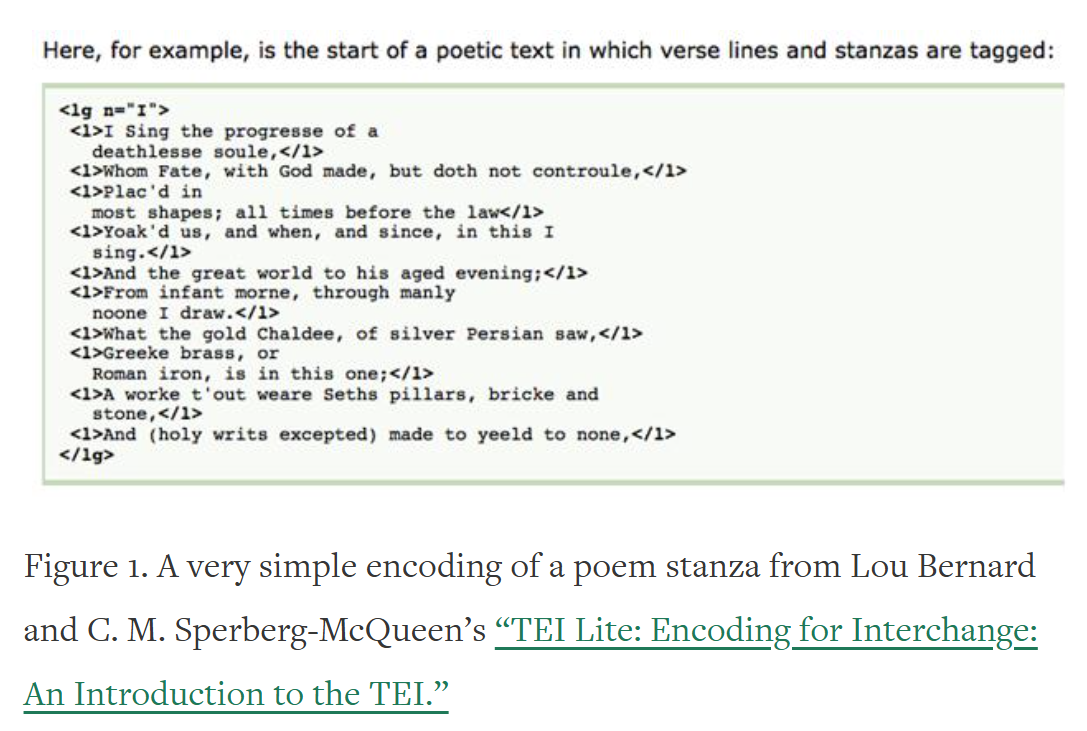
Singer — TEI Encoding
“TEI encoding can serve two purposes: equipping students with practical, project-based skills and exposing the interpretive choices that are at the heart of textual editing and text encoding.” — Singer, via Houston
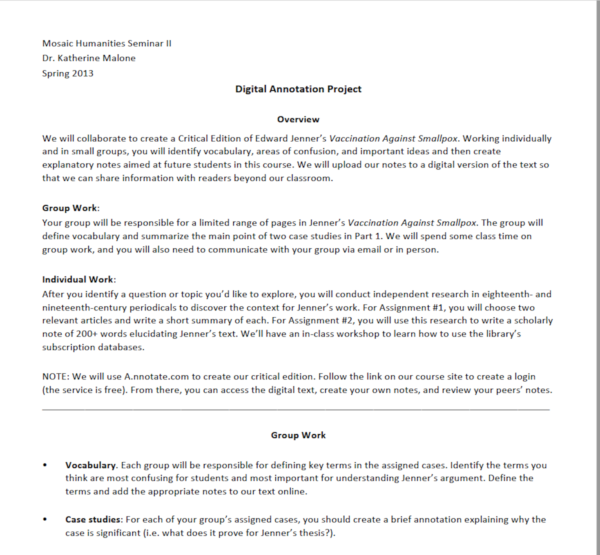
Malone — Digitized Primary Materials
“Exposing students to primary research with digitized materials deepens the context for their understanding of the text.” — Malone, via Houston
Walsh — Collation for Writing
Walsh uses “collation, the comparing of multiple copies or witnesses of a text, for the teaching of writing.” — via Houston
This is also a way to teach revision — by seeing how other writers do it.
Dierkes-Thrun — Multimedia
Dierkes-Thrun’s students “use multimedia digital technologies to communicate their analyses of a literary text.” — via Houston
This helps students understand argumentation while bracketing writing.
Underwood
If the LLM is the horsepower put into a harness, Underwood frames AI itself as more like electricity or steam power: it can be used for many things, and we should do with it what we find valuable.
Language → Writing → Models
“Language vastly magnified our ability to coordinate patterns of collective behavior (culture), and transmit those patterns to our descendants. Writing made cultural patterns even more durable. Now generative language models (and image and sound models) represent another step change in our ability to externalize and manipulate culture.” — Underwood
Externalizing Culture
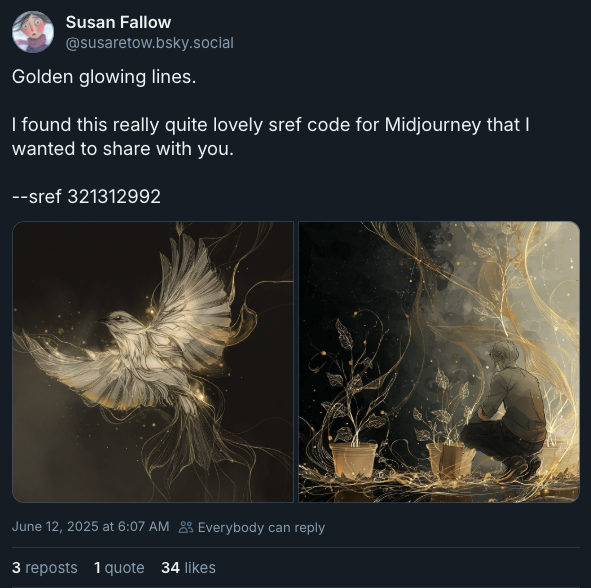
Image from Underwood, “A More Interesting Upside of AI.”
Writing as Stepping Back
“Writing allows us to take a step back from language, survey it, fine-tune it, and construct complex structures where one text argues with two others, each of which footnotes fifty others. It would be hard to imagine science without the ability writing provides to survey language from above and use it as building material.” — Underwood
Technological Upsides and Downsides
“Language models are likely to be used as ideological weapons — just as pamphlets were, after printing made them possible.” — Underwood
- Every communications technology that lowered the cost of producing text has been weaponized.
- The same tools that transcribe archival documents also generate disinformation at scale.
- That context matters for how we teach students to use these tools.
Cohen
“Use AI, not too much, mostly to connect with the intelligence of other human beings, not AI.” — Dan Cohen, Humane Ingenuity
Handwriting as a Bottleneck
“It would have saved me a lot of time getting to the interesting interpretive phase of my research if a computer could have converted his handwriting into machine-readable text, as it already could for typeset text through a process called optical character recognition (OCR).” — Cohen
Gemini Reads Paleographically
“It is essentially a verbalization of what you’re taught to do in a paleography class: assess the overall document first, determine key features, study letter shapes and strokes across the letter to refine your understanding of the particular script, consider context and word/phrase possibilities, think about the coherence of content, grammar, and usage, identify any contractions, proper names, and other oddities, etc.” — Cohen
Thinking Traces as Pedagogy
“Take Gemini’s 2,000-word thinking analysis of Boole’s script. I could imagine using that with students in a paleography class to help them understand the steps in the process of deciphering a letter or manuscript.” — Cohen
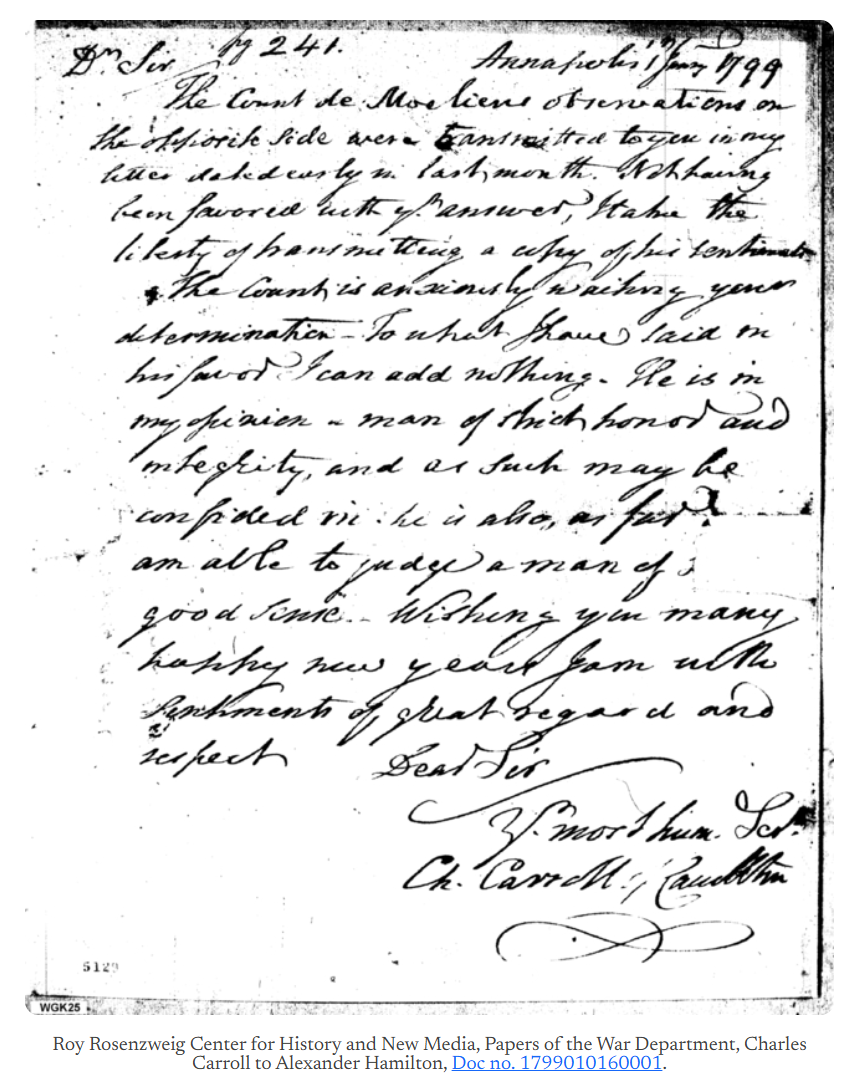
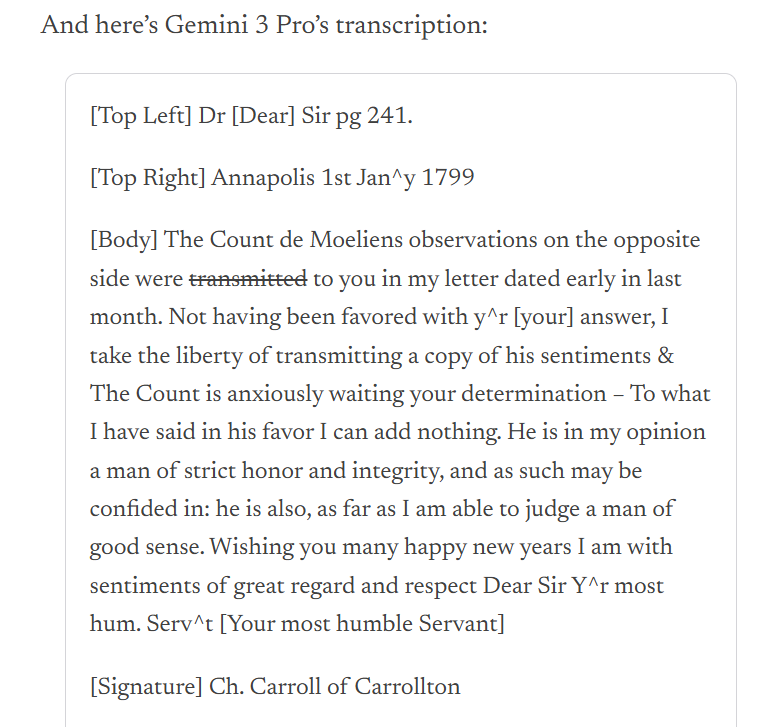
Example: Source & Transcription
What to Offload — and What Not To
Offloading these tasks “allows human beings to focus their time on the important, profound work of understanding another human being, rather than staring at a curlicue to grasp if it’s an L or an I. Could we also ask Gemini to formulate this broader understanding? Sure we could, but that’s the line that we, and our students, should resist crossing.” — Cohen
Ideal Scholarship vs. Realistic Constraints
“If you talk to historians now, they will admit that they can’t spare the expense and time of leafing through letters over a month in a foreign city. Most simply take photos of documents in quick trips to the archives and review them later, at home.” — Cohen
This Week
- NEH Workshop 2: AI for Textual Analysis — Wed, May 27, 10 AM – noon, CHDR.
- Discussion: Workshop Exercise — Textual Analysis — due Sunday, May 31.
- Using Claude Projects and Artifacts, upload a set of texts from your discipline and analyze them (patterns, comparisons, concordance, corpus exploration).
- Readings: Houston; Underwood; Cohen.
See weeks/week-03.md on Canvas for full reading links and the discussion prompt.