Bloom 1948: Cognitive Domain
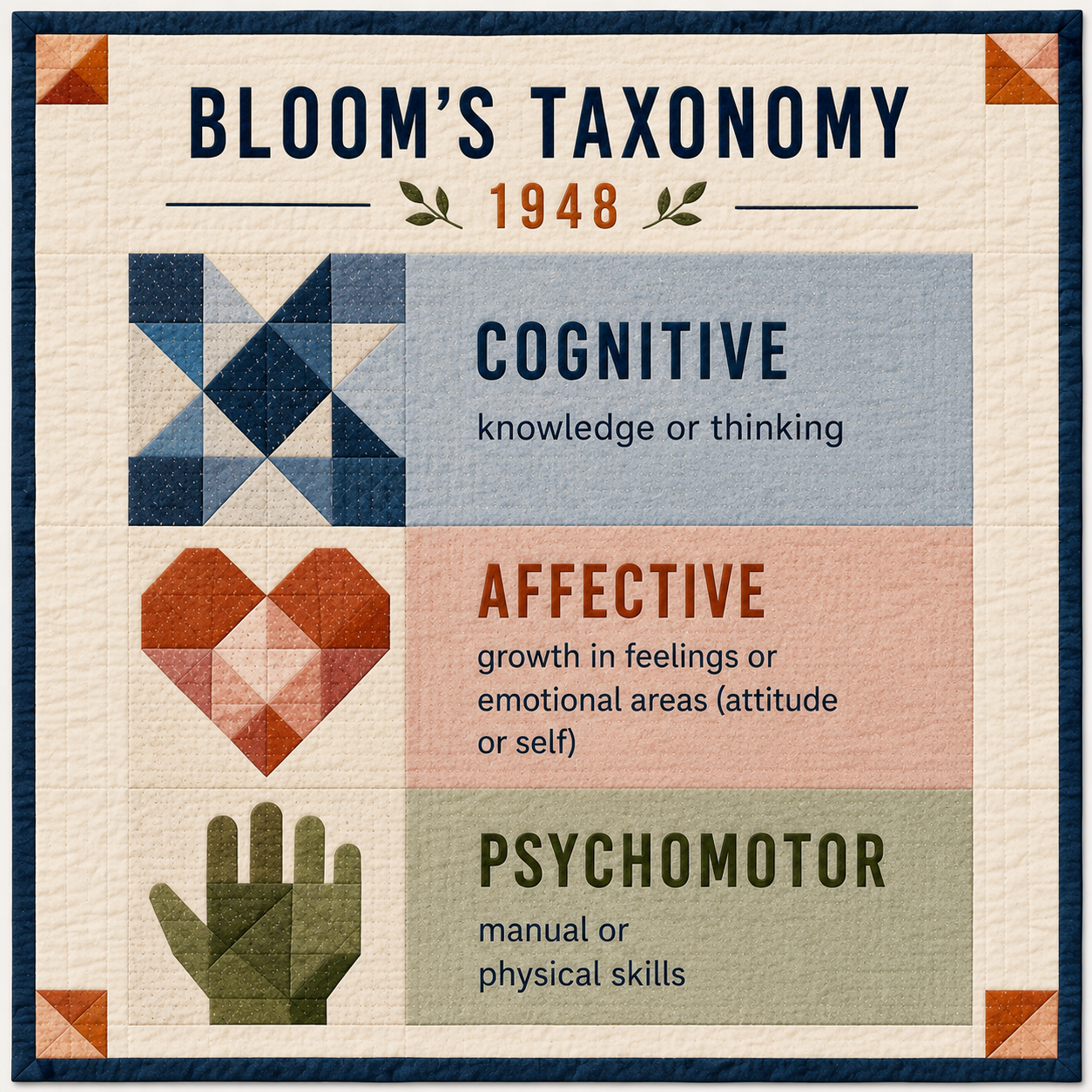
From the 1948 meeting of university educators that produced Bloom’s taxonomy.
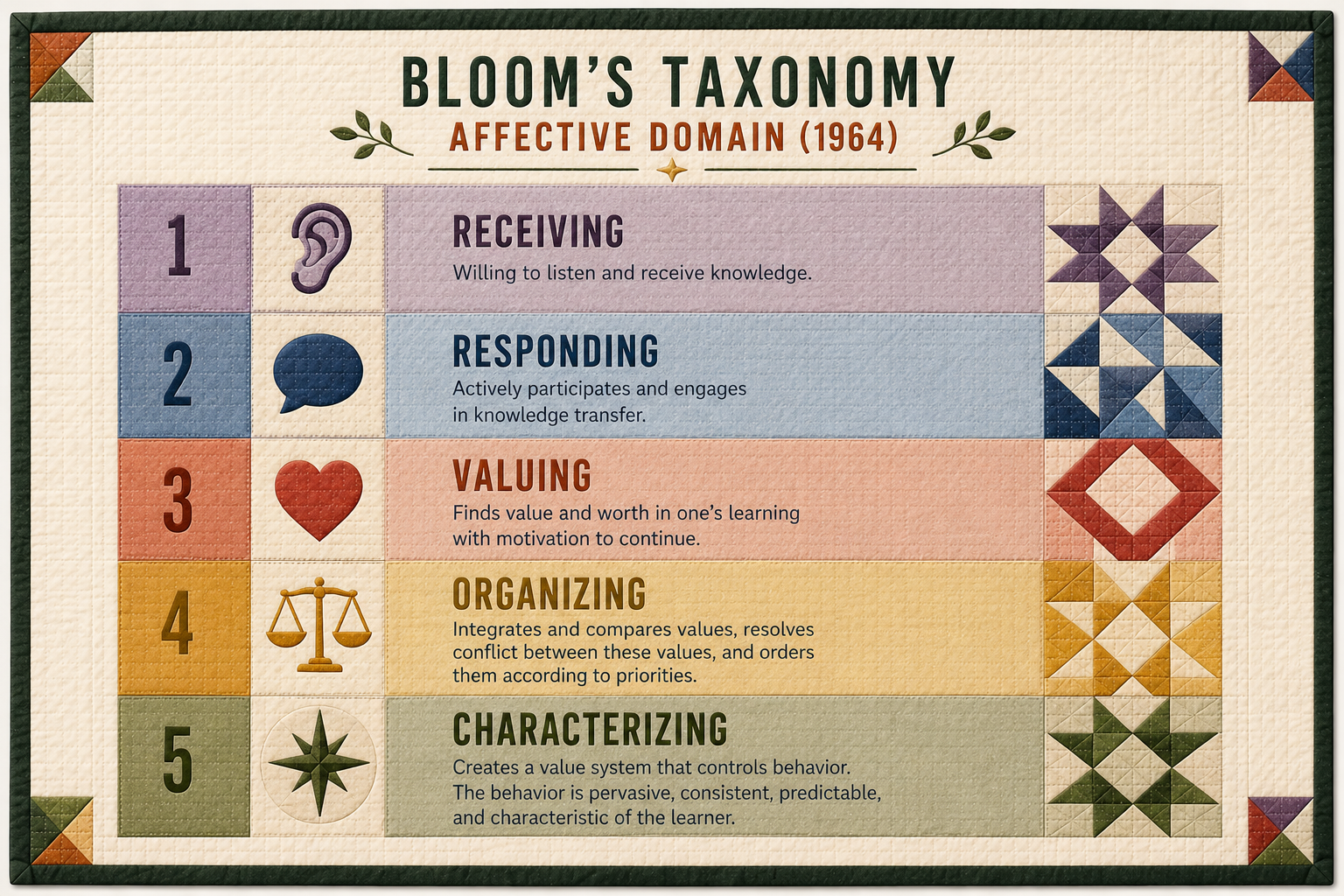
Bloom: Affective Domain
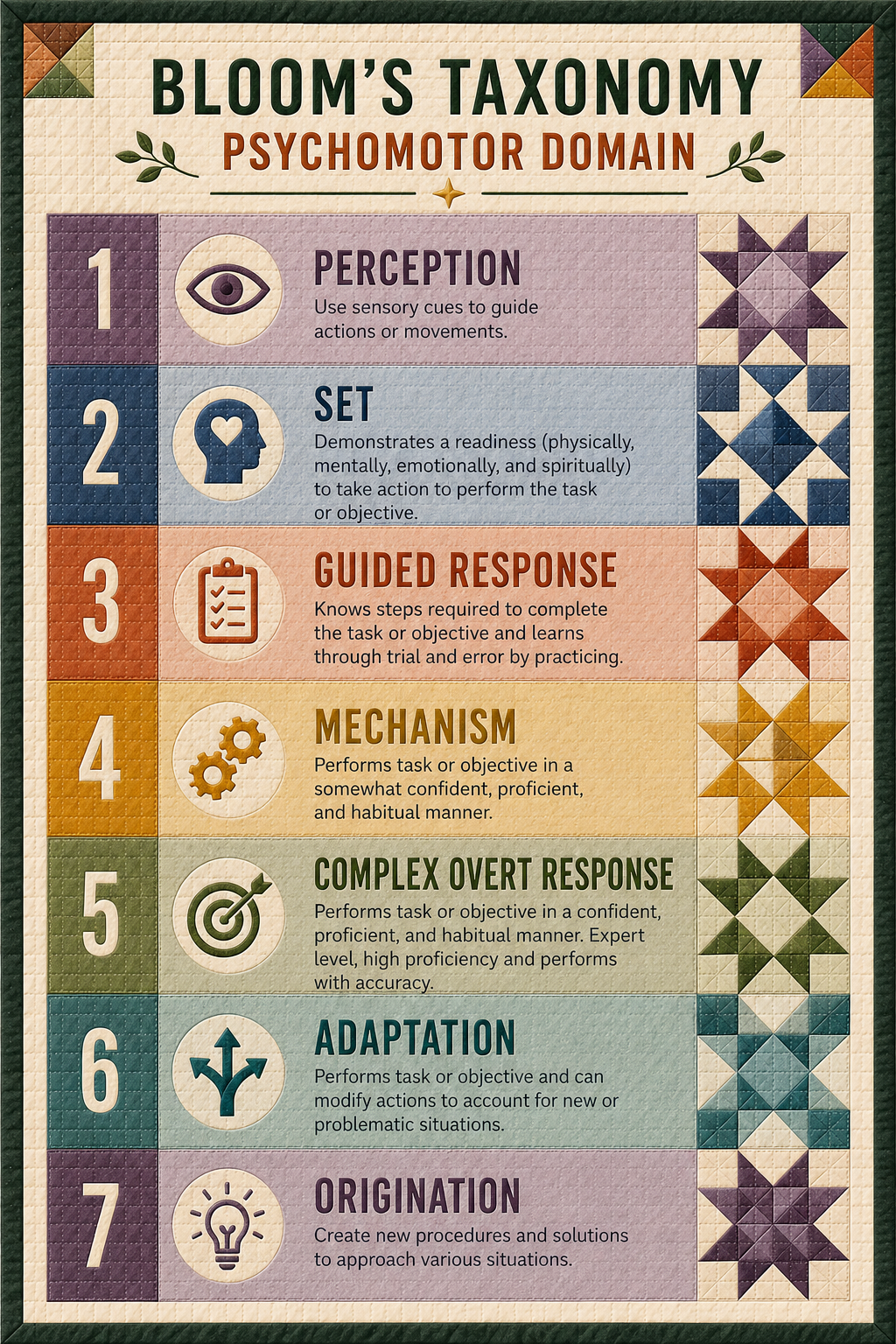
Bloom: Psychomotor Domain
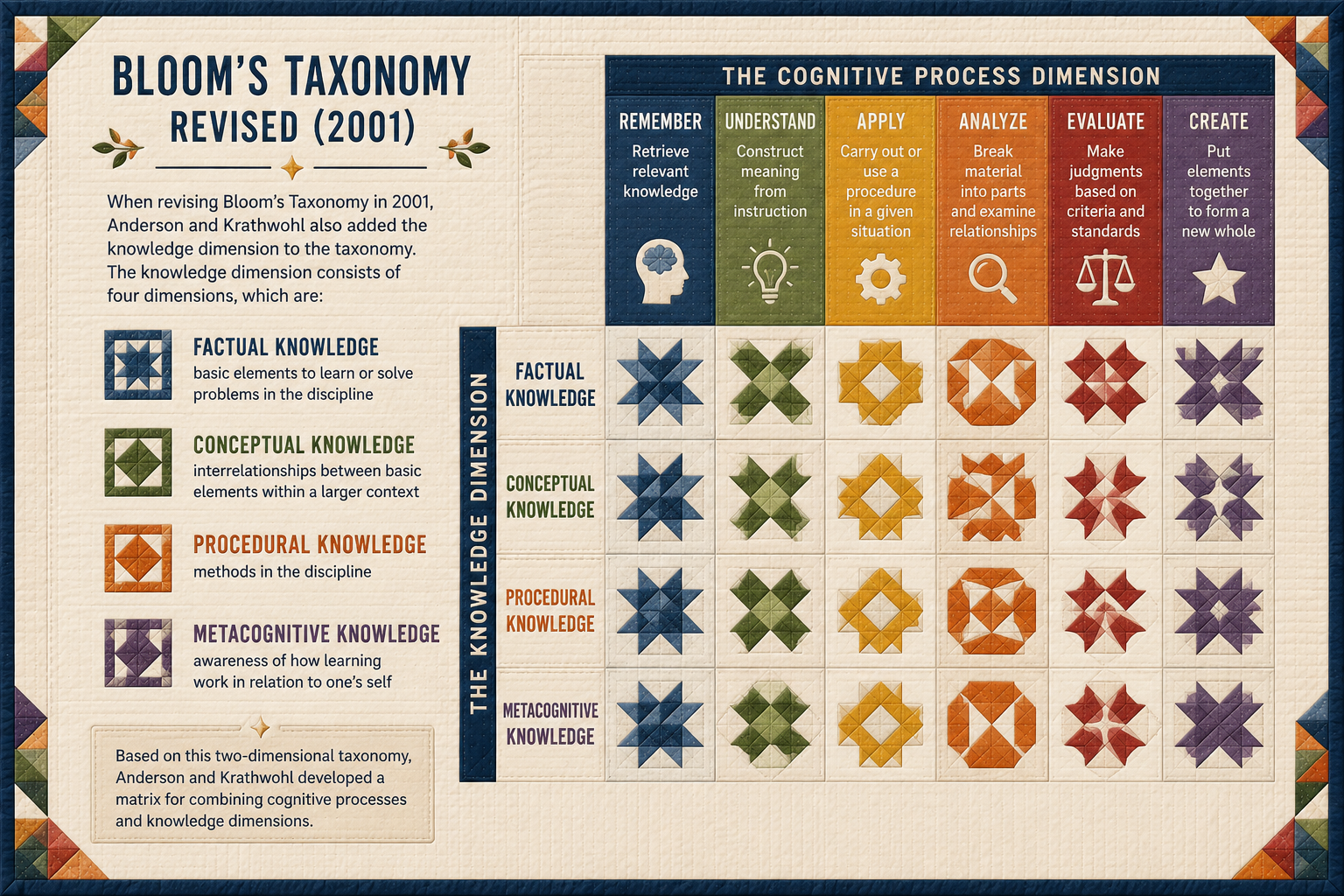
Cognitive Domain — 2001 Revision
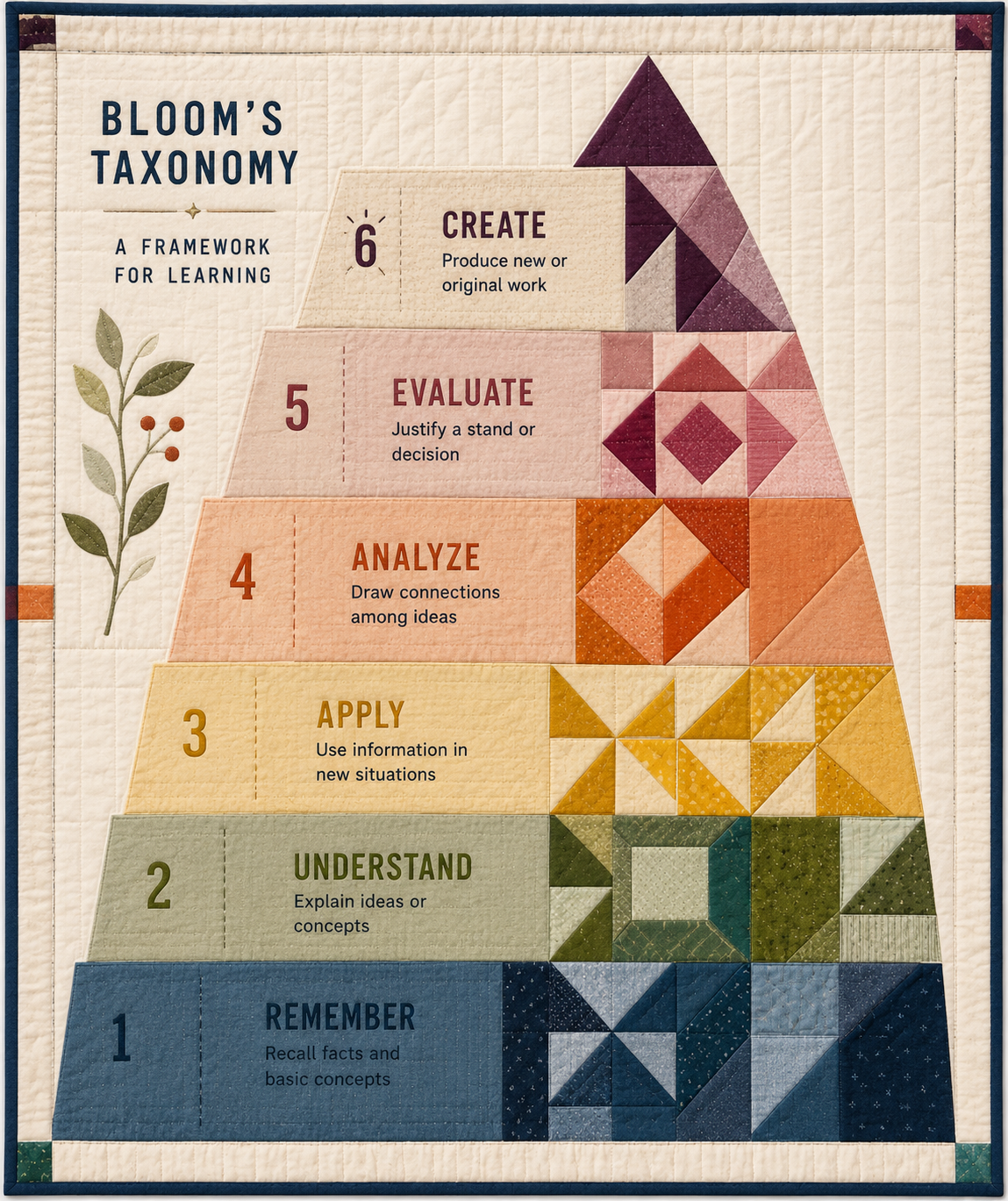
Anderson & Krathwohl
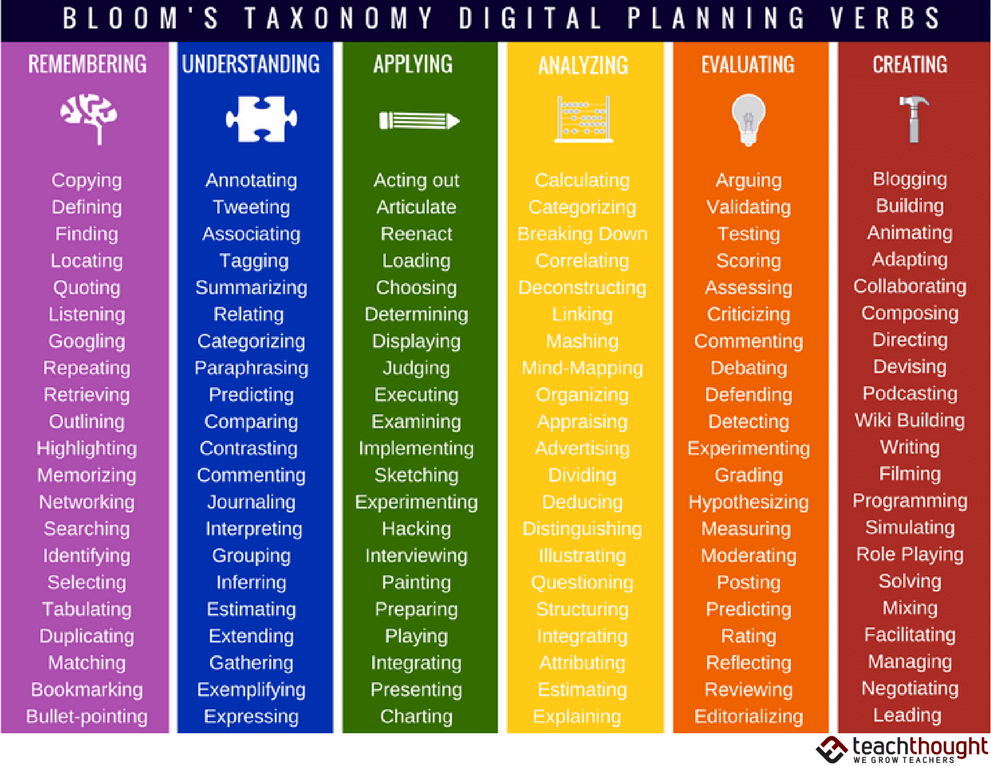
Bloom for Digital Pedagogy
These taxonomies still play a major role in how learning objectives are structured, including in digital pedagogy.
Integrative Learning
“One of the great challenges in higher education is to foster students’ abilities to integrate their learning across contexts and over time. Learning that helps develop integrative capacities is important because it builds habits of mind that prepare students to make informed judgments in the conduct of personal, professional, and civic life; such learning is, we believe, at the very heart of liberal education.” — Huber & Hutchings 2004: 1
Frameworks in Pedagogy
- Conversational Framework (Laurillard 2012, ch. 6) — allows students to express, compare, and develop their knowledge.
- Conversation Theory (Pask 1976; earlier: Dewey) — collaboration and the exchange of ideas as essential to cognitive development.
- Social Constructivism (Vygotsky 1978) — learning through discussion is distinct from learning through practice.
Pulling the Strands Together
“The integrative learning method which utilises a combination of discussion and practical — including object-based and project — learning pulls these strands of learning practice together.” — Mahony, Nyhan, Terras & Tiedau (2014)
Defining DH
“Digital Humanities can be defined in many ways and from a variety of perspectives (see, for example, Terras, Nyhan and Vanhoutte 2013). However, it is widely agreed that DH usually involves the use of technology to ask both new and different questions about the humanities, often in ways that would not otherwise be possible. The process can also go in the other direction too, as perspectives of the humanities are brought to bear on technological tools and methods in order to understand and critique them in new ways.” — Mahony et al.
Digitisation Is Interpretation
“As part of our DH teaching model we need to ensure that students understand the multi-layered interrelationship between, for example, a hard copy scholarly text edition and its electronic surrogate; a museum object or an artefact in an anthropological exhibition and their 3D representations (particularly if they may have been made for the general public as well as museum professionals or researchers). In essence we need to be made clear that all digitisation involves interpretation.” — Mahony et al.
Applied DH
“Moreover, in order to develop the skills and knowledge needed to push beyond this, students must become self-aware and self-directed learners who can respond to the complexities of real-world problems by effectively integrating their domain knowledge, practical skills (e.g. tool building and coding), critical understanding and creativity. It is in facilitating these learning practices that integrative learning is so powerful.” — Mahony et al.
Three Challenges
- The heterogeneous background of the group of learners.
- How to deal with the inherent tension in DH between making and interpreting — including its implications on a teaching and learning level.
- How to deal with collaborative versus individual forms of learning.
Critical Reflection
“As part of the integrative process, students should be opened up to the importance of critical reflection as part of the learning process and be encouraged to reflect on what insights using these tools offered that was not available without them. This is not just about answering research questions but about how they enable new and perhaps better questions to be asked. Asking new questions should be encouraged as well as looking for answers to existing ones. Using these new technologies as an end to itself is not enough; rather it is necessary to develop communities of both practice and learning around them.” — Mahony et al., citing Mahony et al. 2013
What Is Transfer?
“Transfer is commonly defined as learners’ ability to recognize when and how their skills, store of knowledge, or critical thinking strategies might apply in different domains. For example, when a composition student uses principles of reasoned argument in their writing for another course. Yet transfer is a complex phenomenon. Recently, scholars of transfer have emphasized such properties as adaptation, enculturation, repurposing, and transformation.” — Brier & Wilner, DHQ 12.2 (2018)
Why DH Supports Transfer
“Transfer happens best in the context of integrative learning. Understanding is developed across disciplinary boundaries and likely to be retained across contexts. Because DH is collaborative and cross-disciplinary, engaging multiple knowledges at once, it is more likely to create knowledge transfer.” — McGrail 2016, 20 — via Brier & Wilner
Low Road and High Road
“For transfer to occur, students must also recognize and apply their abilities in new situations. ‘Low road’ transfer is when students apply existing abilities or insights within a fairly familiar context. For instance, a student who already knows how to sew readily sees its application in the unfamiliar domain of book binding. More needs to happen for ‘high road’ transfer — the ability to abstract, transform, and apply concepts or methods between unfamiliar domains. High road transfer depends on greater self-awareness, a critical vocabulary which persists across domains, and structured training in how and when to use transferable problem solving.” — Brier & Wilner, paraphrasing Perkins & Salomon, Halpern
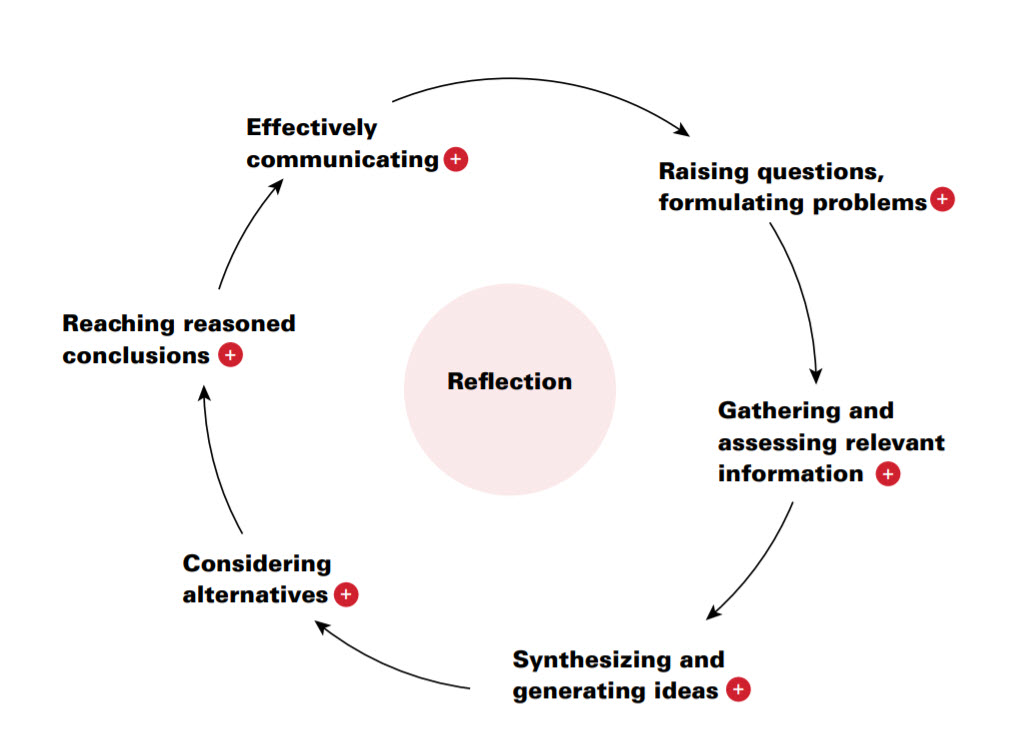
The THINK Model
Key Points Thus Far
- Course objectives reflect student progression and curricular positioning.
- Integrative learning combines discussion, object-driven, and project-driven methods.
- Interpretation and making should co-exist, and must be thoughtfully intertwined.
- Collaboration and independent work are both critical — and require significant scaffolding.
- Designing for “low road” and “high road” transfer requires intention and building student self-awareness of their abilities.
Using AI for Learning Objectives
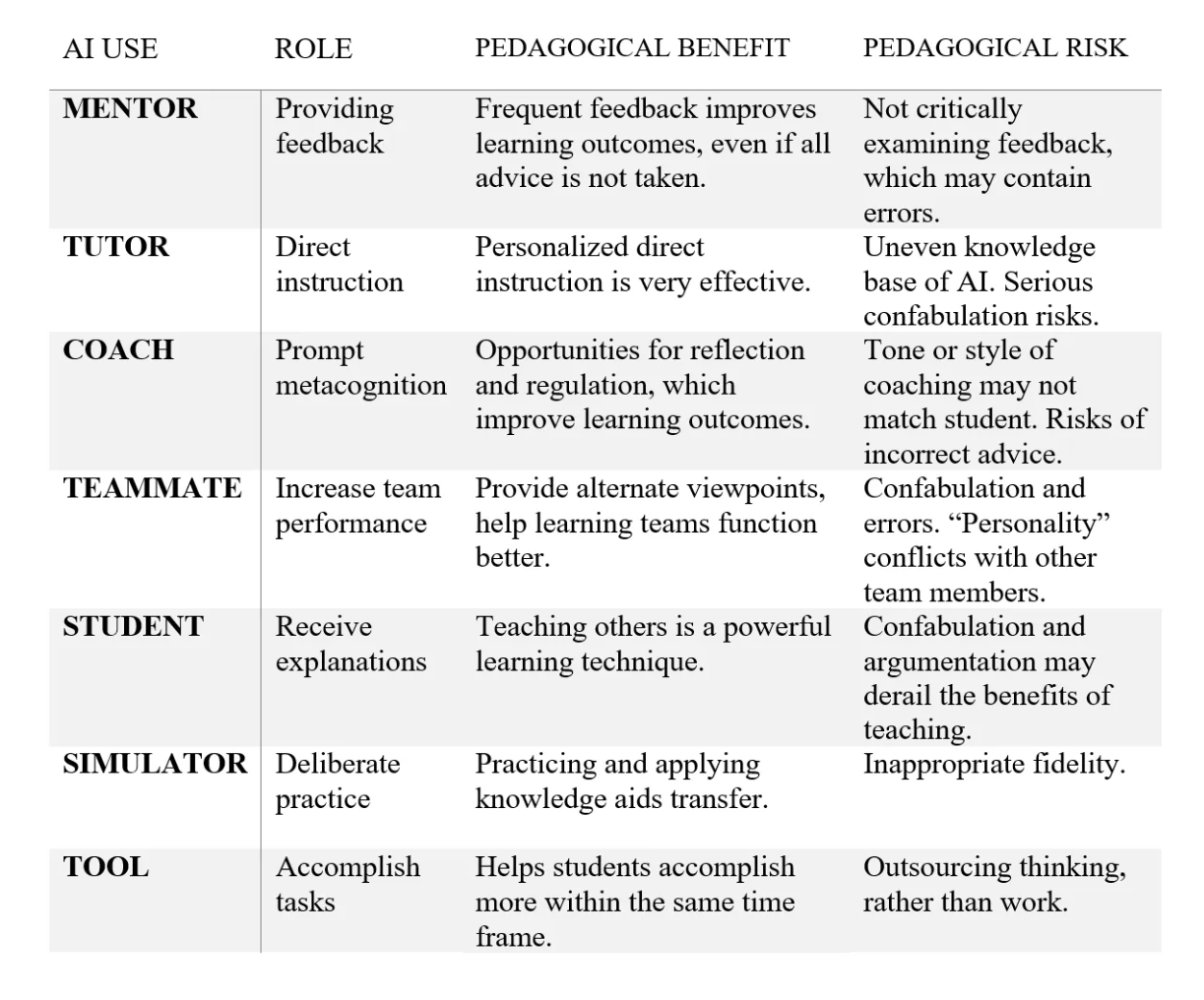
Mollick & Mollick
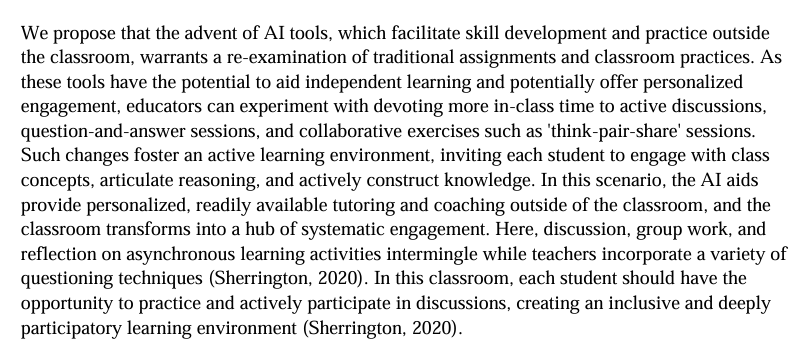
Mollick & Mollick, “Assigning AI: Seven Approaches for Students, with Prompts” (2023).
This Week
- Discussion: Course Design Plan — due Sunday, May 24.
- Identify the course you will design or redesign this semester — institutional context, audience, objectives, and the role (if any) of AI.
- Readings: Mahony et al.; Brier & Wilner; UIC Bloom’s Taxonomy; Mollick on Seven Approaches.
See weeks/week-02.md on Canvas for full reading links and the discussion prompt.