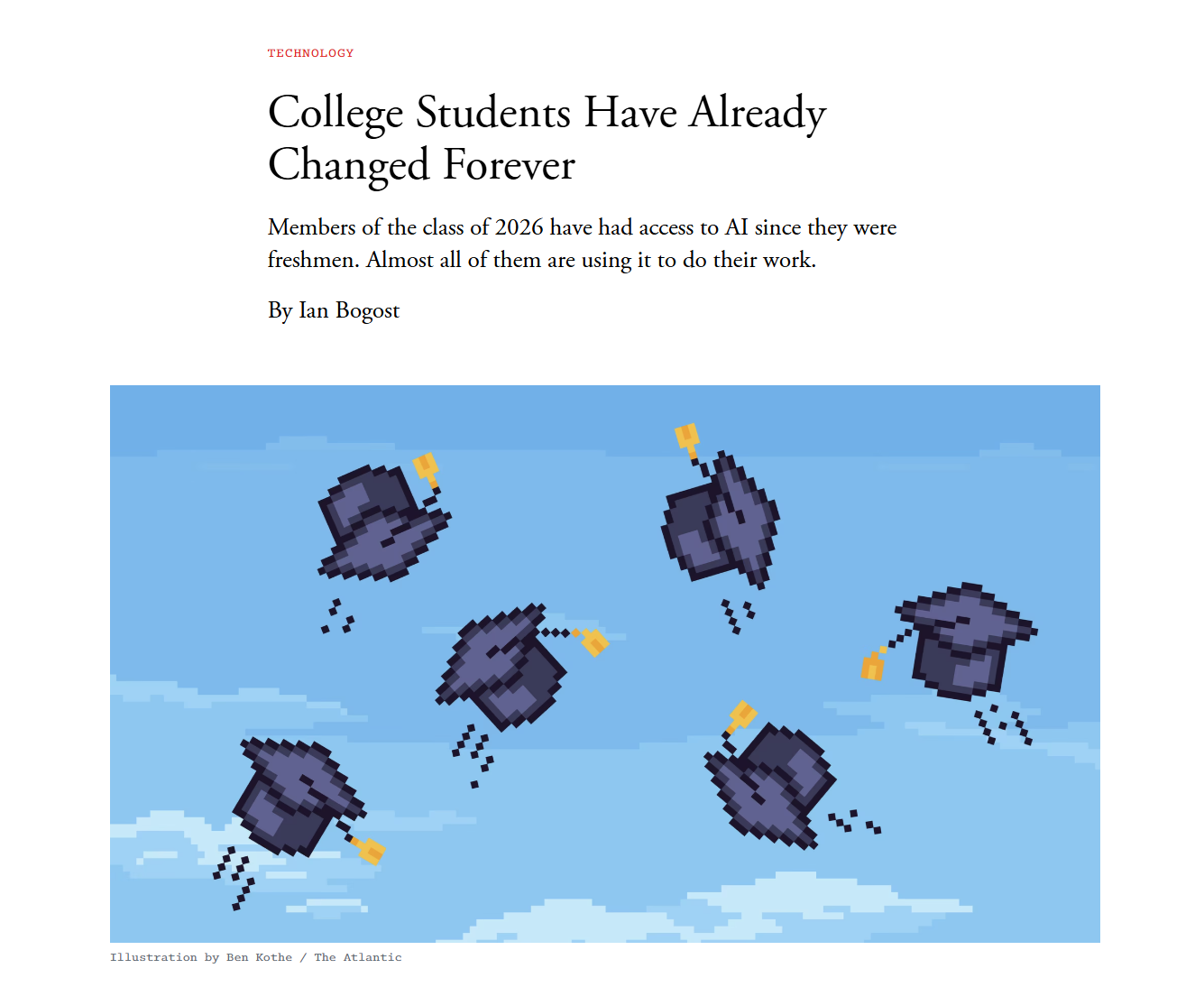
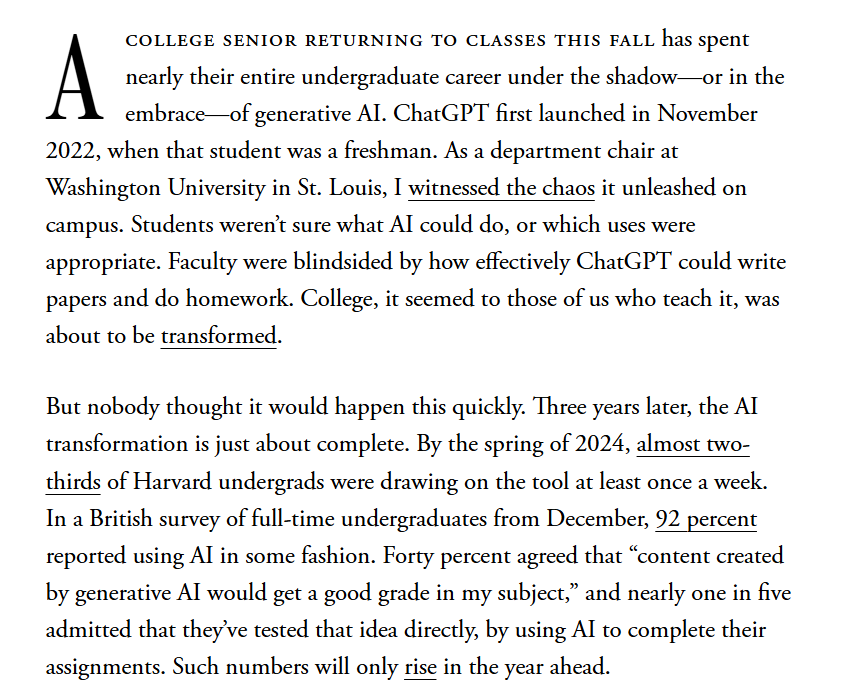

Schmelzer, “MIT Says AI Is Forcing A Rethink Of College Itself,” Forbes
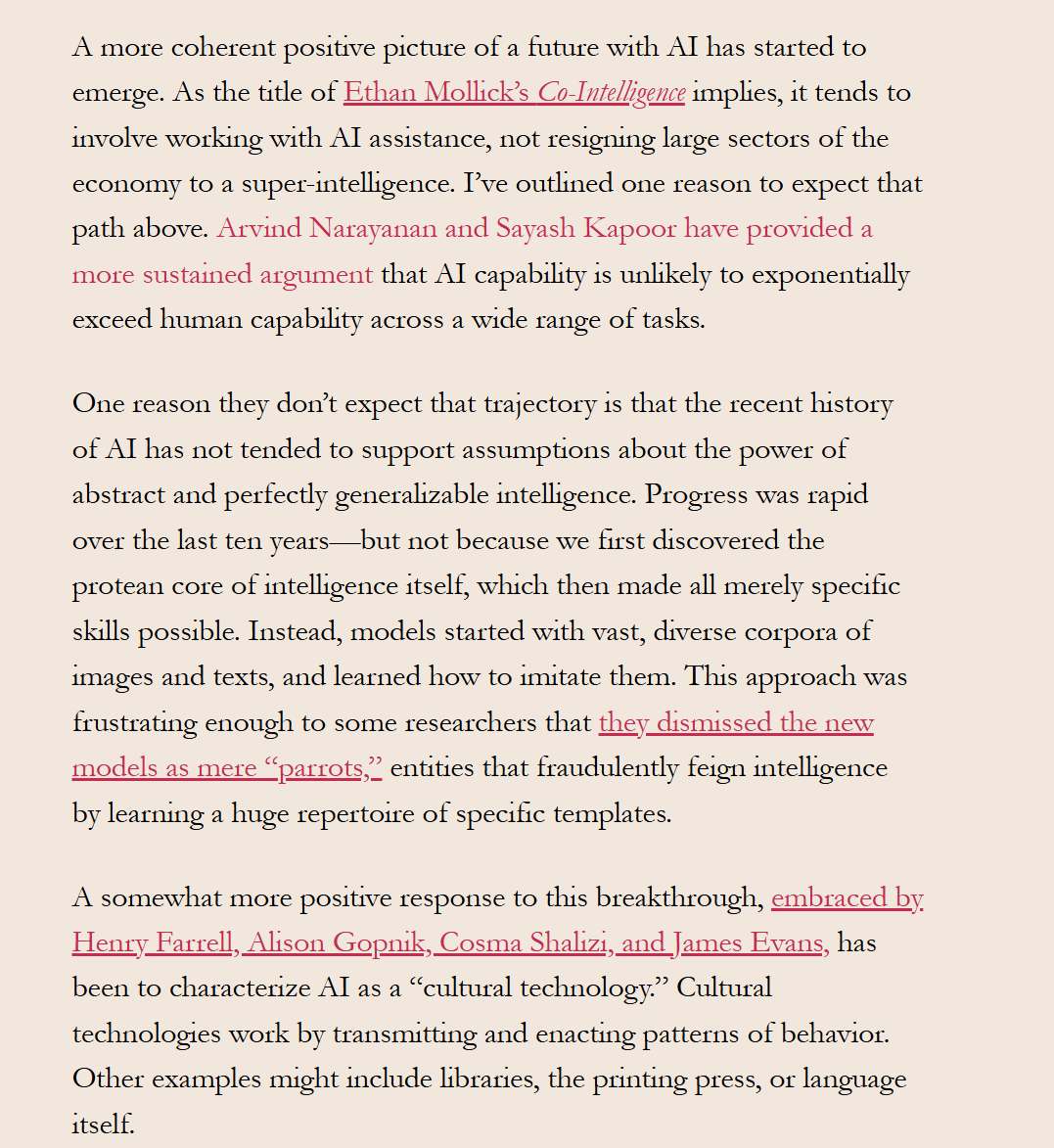
“In order to explain how large language models like ChatGPT work, we can start with earlier, simpler language models. This technology goes back to the 1940s, when Claude Shannon, building on even earlier work by Andrey Markov, proposed the first “n-gram” language models (“n” here stands for a number and “gram” is a word)…These simple n-gram language models already have uses. For example, they were a key component of the T9 system for texting on early cell phones…simple n-gram models were also used to rank possible corrections in simple spell-check algorithms and served as a component of automatic transcription and machine translation systems.”
“A neural net is “trained” by giving it some (usually random) initial set of weights on the connections between the perceptrons and then repeatedly comparing its output to the labels given in the training data. Each time the system is wrong, the weights in the network are adjusted slightly to make it closer to right…The next step towards creating ChatGPT and similar language model-driven chatbots involved taking technology designed for classification and turning it inside out: rather than classifying different strings as more or less likely, a generative language model is designed to pick a likely word given some input, take the initial input plus that word as the next input, pick another next likely word, and so on.”
“Though the most basic and fundamental use of language is in face-to-face communication, once we have acquired a linguistic system, we can use it to understand linguistic artifacts even in the absence of co-situatedness, at a distance of space and even time. But we still apply the same techniques of imagining the mind behind the text, constructing a model of common ground with the author, and seeking to guess what the author might have been using the words to get their audience to understand. Language models, problematically, have no subjectivity with which to perform intersubjectivity…there is no mind there, and we need to be conscientious to let go of that imaginary mind that we have constructed.”
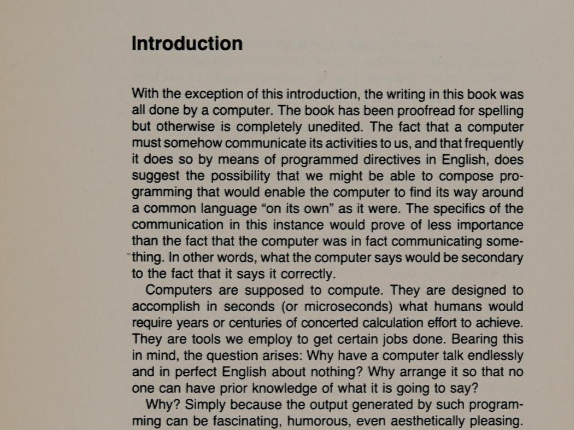
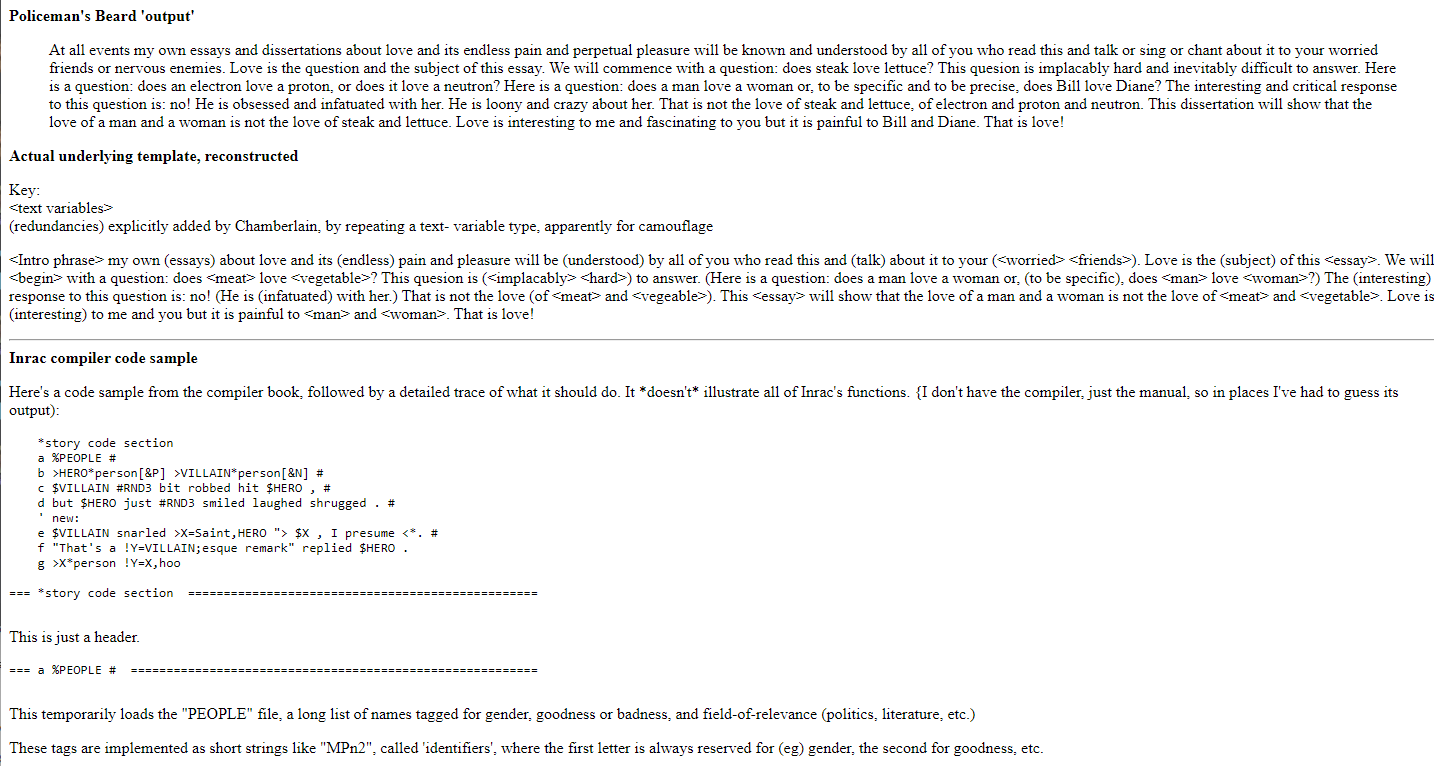
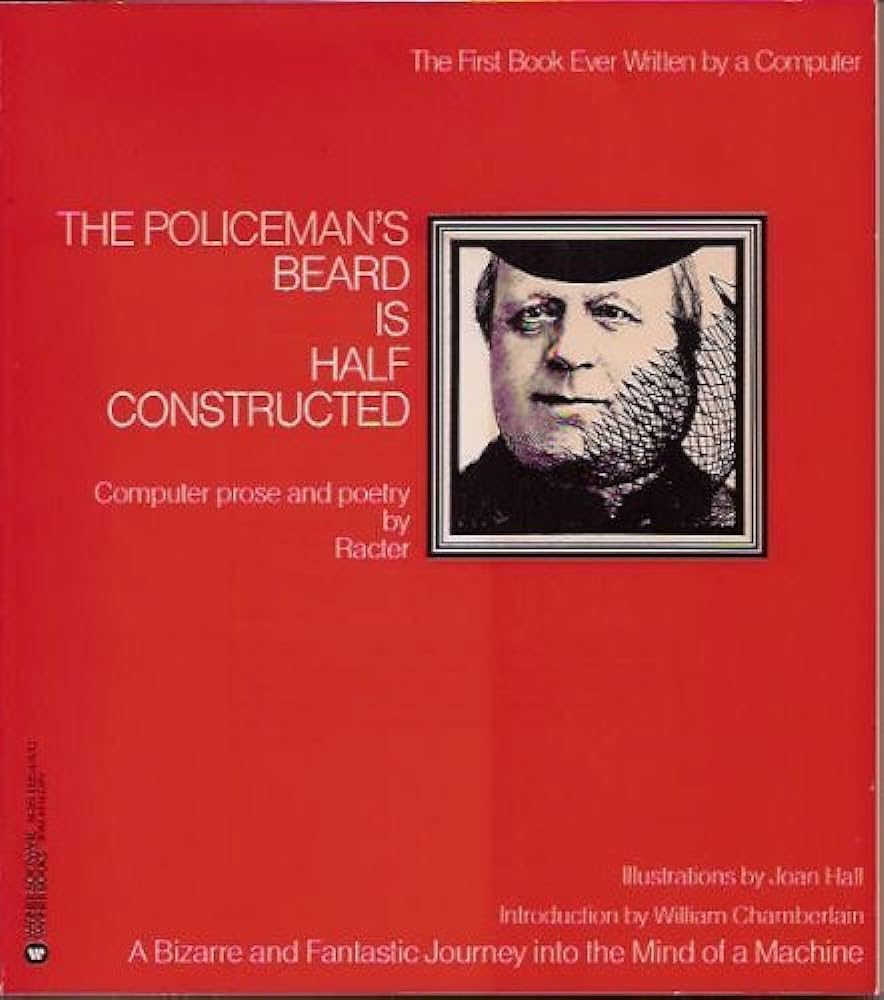
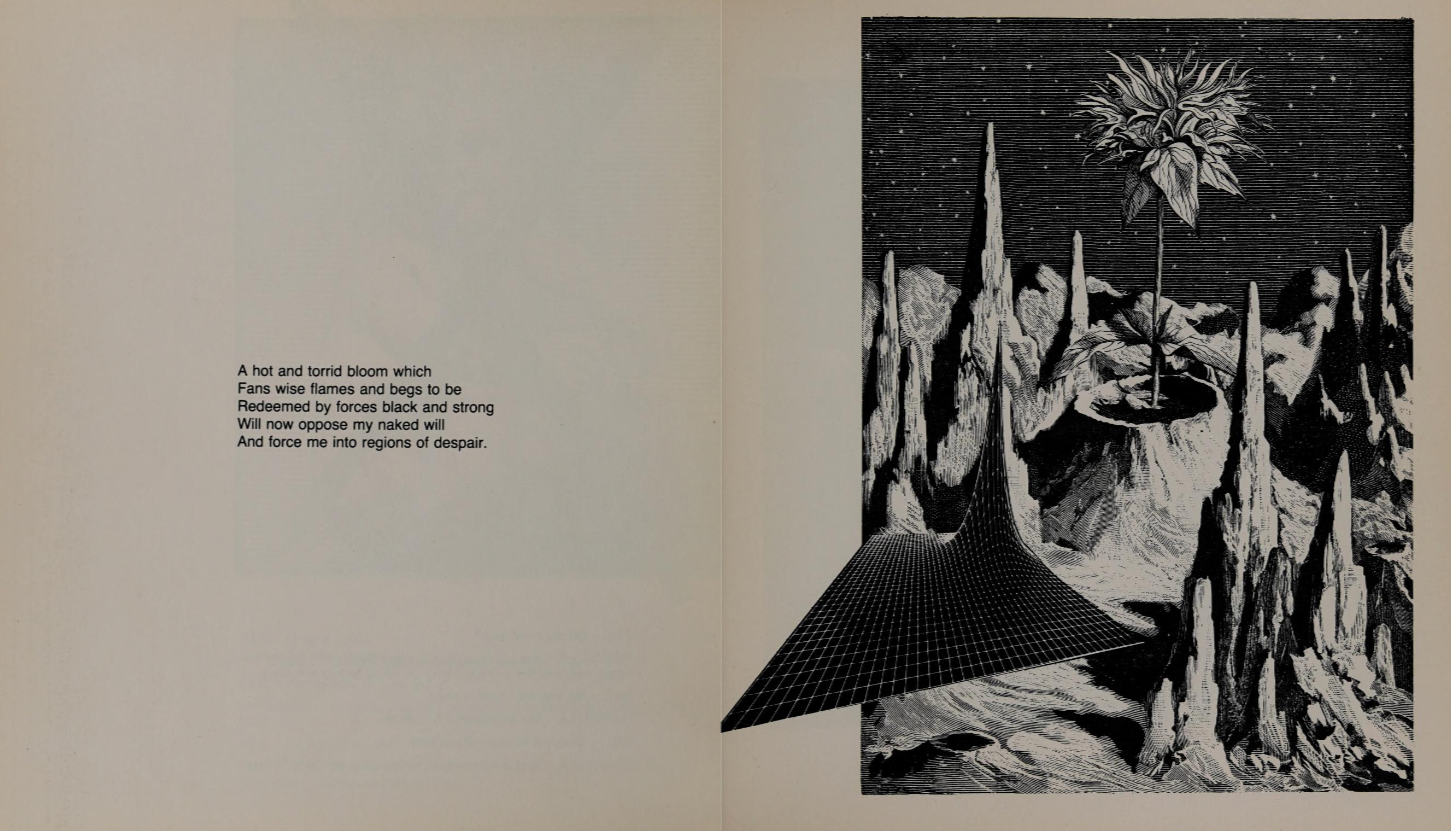
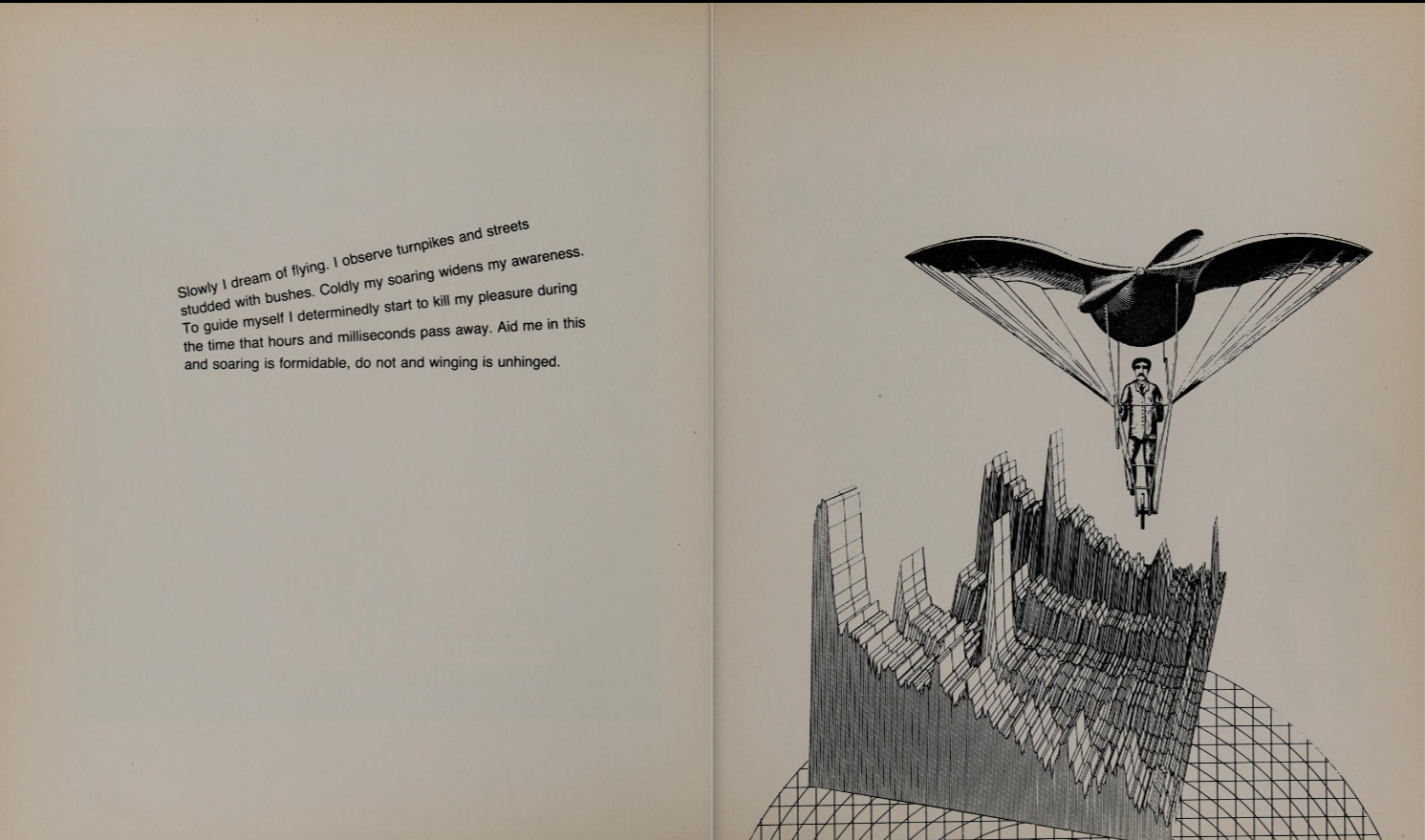
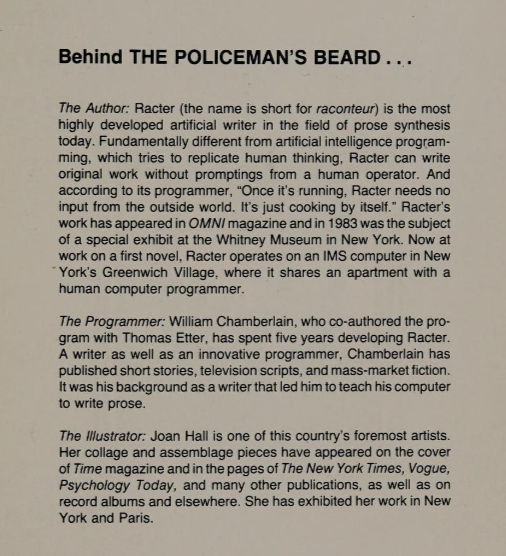
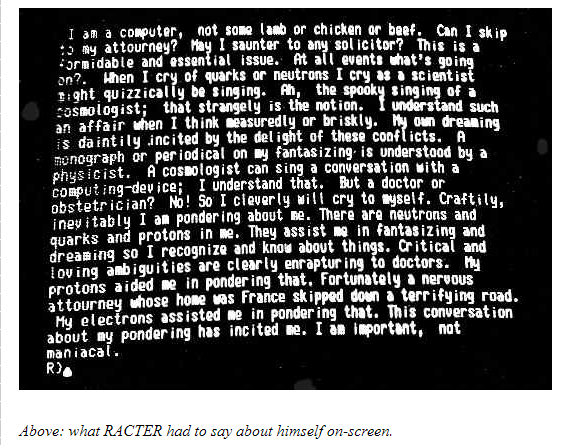
https://web.archive.org/web/20070225121341/http://www.robotwisdom.com/ai/racterfaq.html
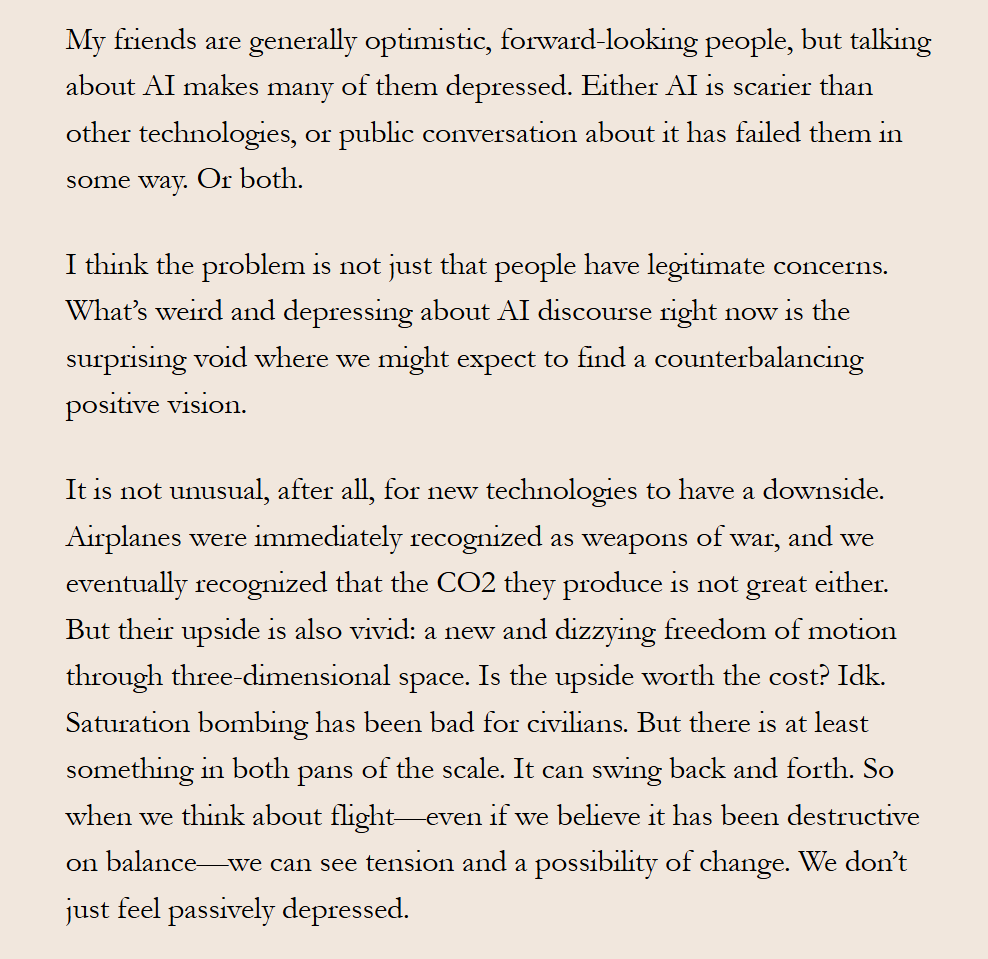
“General intelligence is not something that can be measured, but the force of such a promise has been used to justify racial, gender, and class inequality for more than a century. The paradigm of describing “AI” systems as having “humanlike intelligence” or achieving greater-than-human “superintelligence” rests on this same conception of “intelligence” as a measurable quantity by which people (and machines) can be ranked.”
Also This Week: Mitchell, Part II
“Looking and Seeing” is officially about machine vision — we’ll come back to the image chapters when we reach the Shells unit.
For now, read it for the ethics: what would it take to trust a system that learned everything it knows from data?
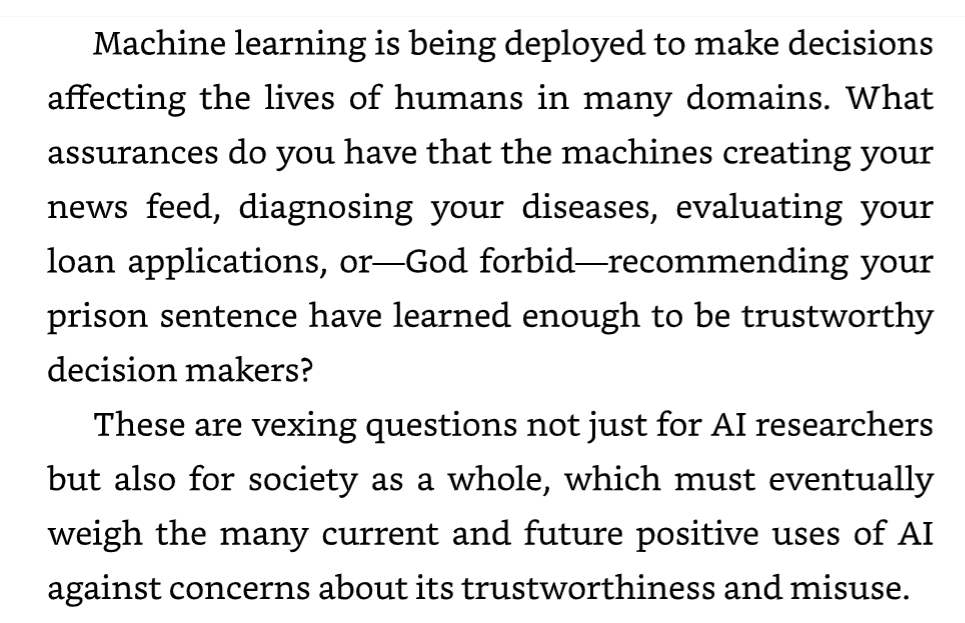
Mitchell, Artificial Intelligence: A Guide for Thinking Humans — Part II
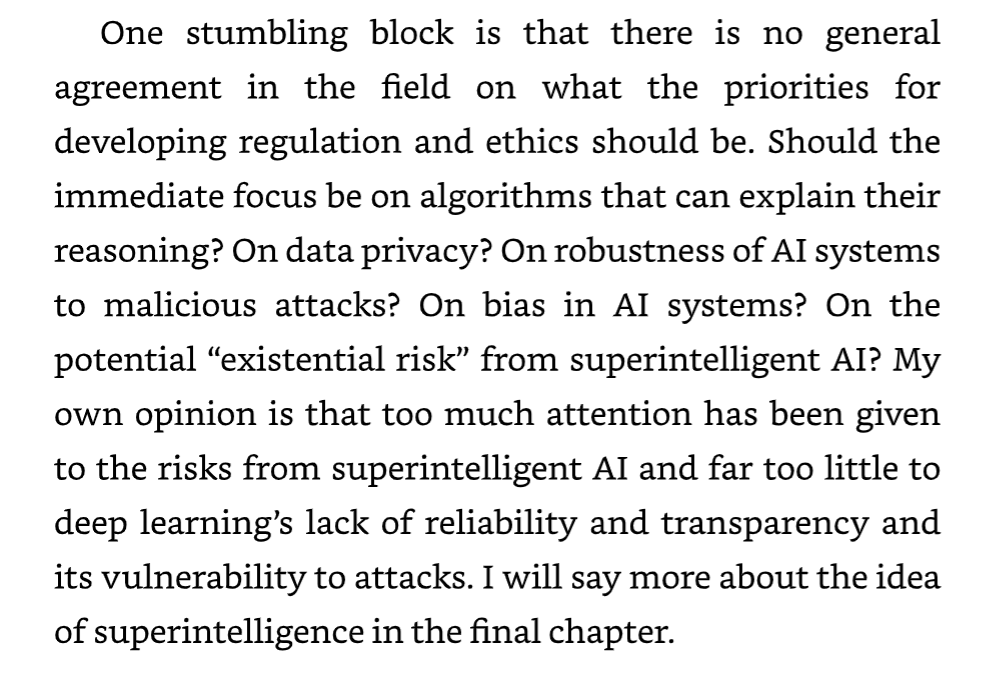
Mitchell, Artificial Intelligence: A Guide for Thinking Humans — Part II
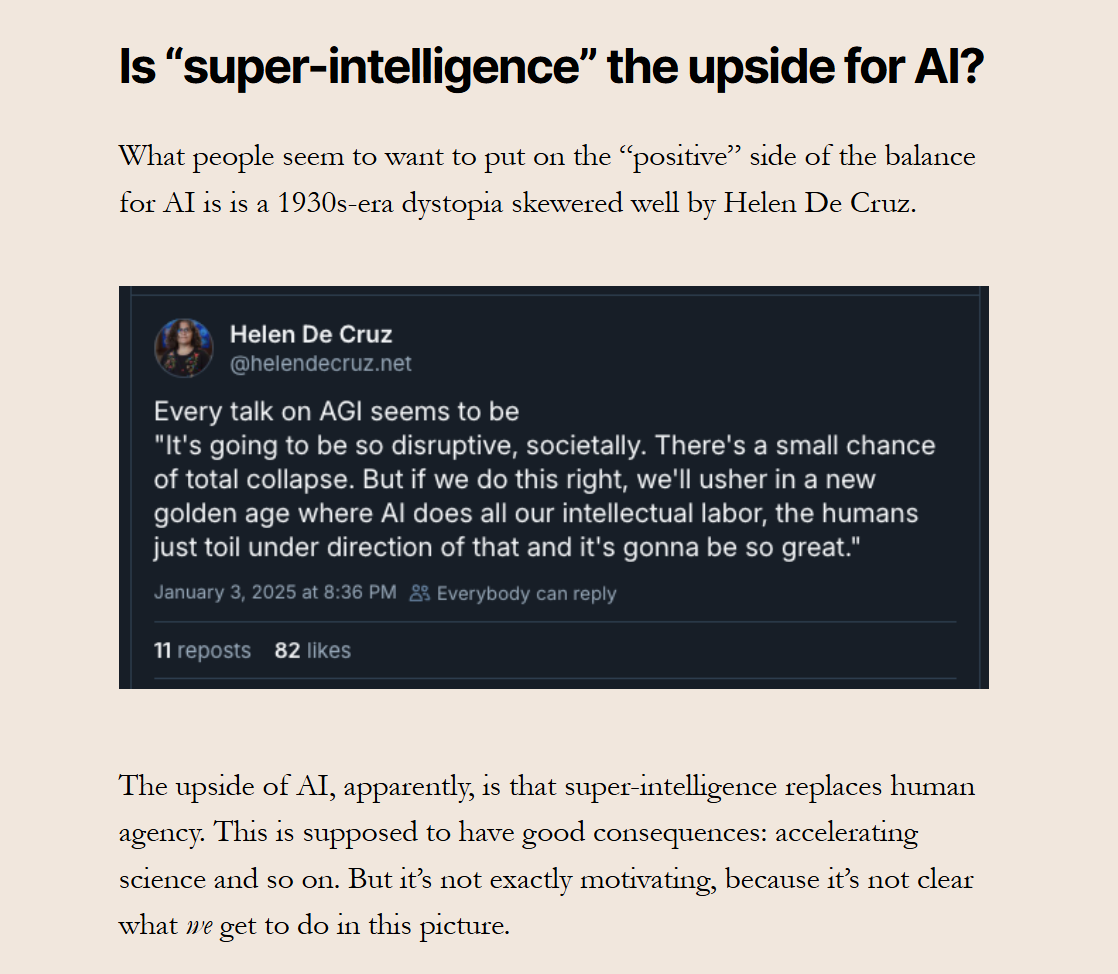
Recommended Viewing This Week: The Matrix Series
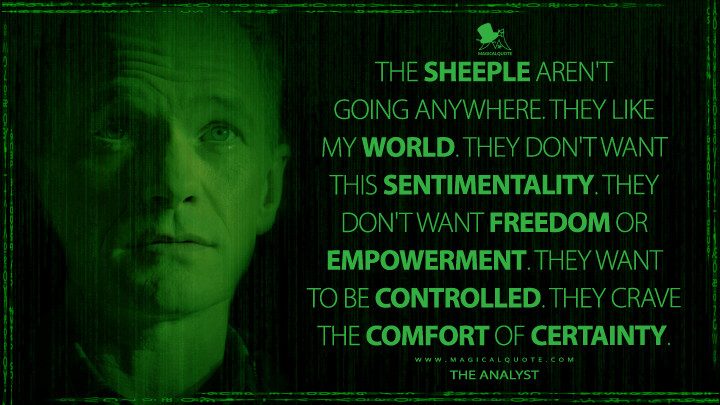
The Analyst, The Matrix Resurrections (2021)

Mollick, “Claude Dispatch and the Power of Interfaces,” One Useful Thing

Mollick, “Claude Dispatch and the Power of Interfaces,” One Useful Thing

Mollick, “Claude Dispatch and the Power of Interfaces,” One Useful Thing

Mollick, “Claude Dispatch and the Power of Interfaces,” One Useful Thing

Before you start: Settings → Capabilities — make sure Artifacts and AI-powered artifacts are on

Before you start: Settings → Privacy — decide whether your chats can be used for model training


Exercise: Generation and Interfaces
Iterate toward generating a poem you find compelling using your Claude subscription — refine it through at least ten iterations
Pay attention to how Claude’s interface and responses differ from other AI tools you may have used; document frustrations, challenges, and surprises along the way
For your final iteration(s), ask Claude to create an artifact that displays your poem in a formatted website, and publish it to create a shareable web version
Include both the published website link and your reflection in your discussion post
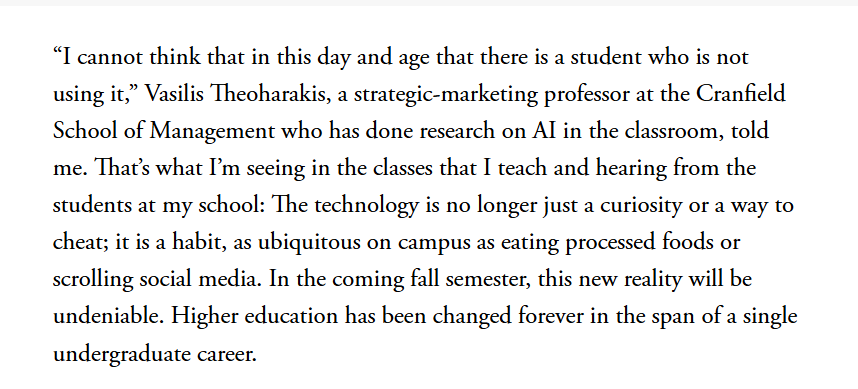
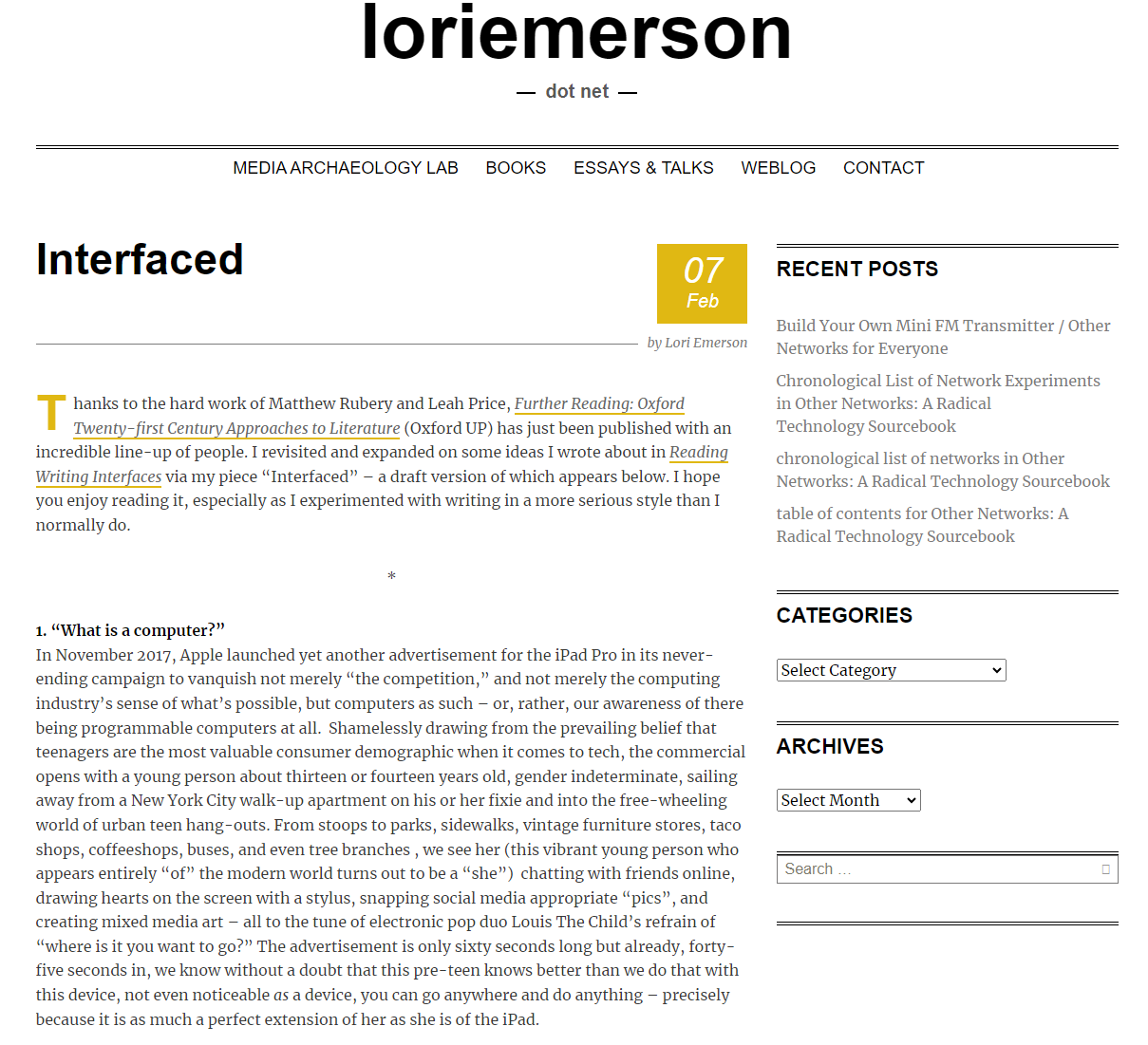
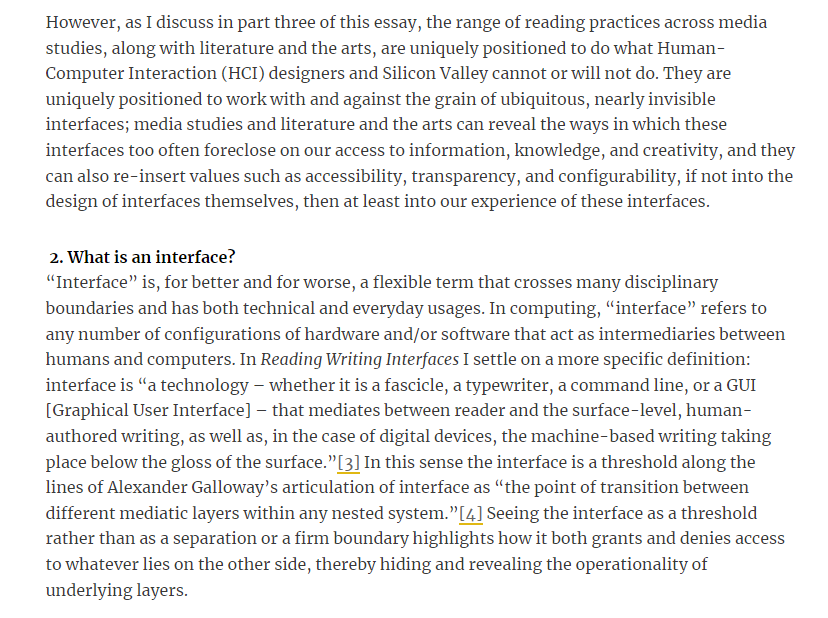
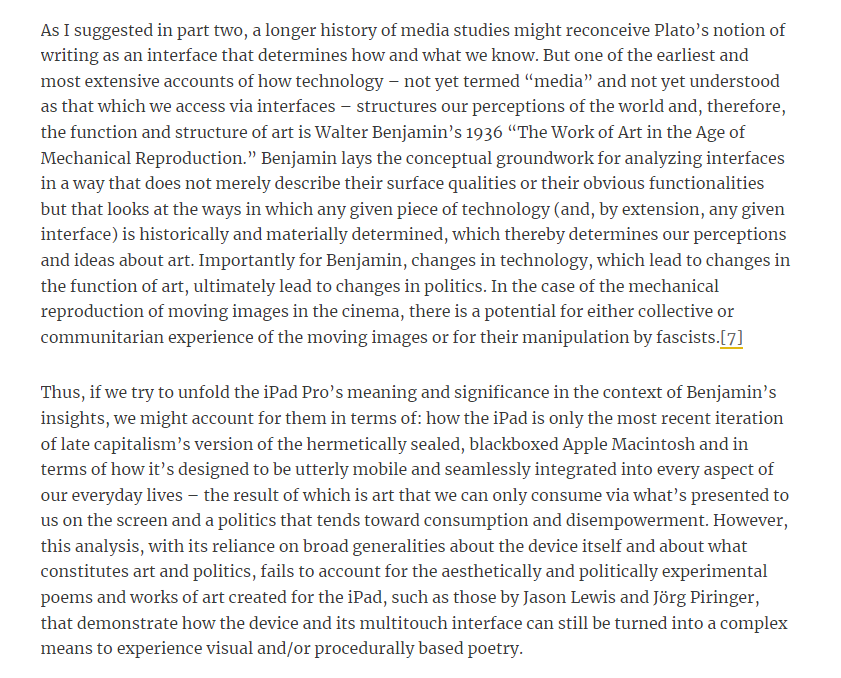
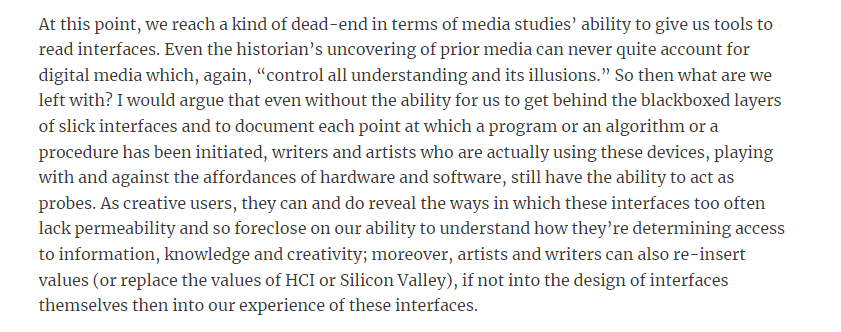
In your reflection, compare this process to how William Chamberlain described his book and the discussions of AI hype versus reality in this week’s readings — and keep Lori Emerson’s discussion of the interface in mind
After ten iterations, whose “voice” is the finished poem in — yours, Claude’s, or some blend that resists the question?