Tyrangiel, AI for Good: How Real People Are Using Artificial Intelligence to Fix Things That Matter (Simon & Schuster, 2026), ch. 2
Tyrangiel, AI for Good: How Real People Are Using Artificial Intelligence to Fix Things That Matter (Simon & Schuster, 2026), ch. 2
Tyrangiel, AI for Good: How Real People Are Using Artificial Intelligence to Fix Things That Matter (Simon & Schuster, 2026), ch. 2
Tyrangiel, AI for Good: How Real People Are Using Artificial Intelligence to Fix Things That Matter (Simon & Schuster, 2026), ch. 2
Tyrangiel, AI for Good: How Real People Are Using Artificial Intelligence to Fix Things That Matter (Simon & Schuster, 2026), ch. 2
Tyrangiel, AI for Good: How Real People Are Using Artificial Intelligence to Fix Things That Matter (Simon & Schuster, 2026), ch. 2
Tyrangiel, AI for Good: How Real People Are Using Artificial Intelligence to Fix Things That Matter (Simon & Schuster, 2026), ch. 2
Tyrangiel, AI for Good: How Real People Are Using Artificial Intelligence to Fix Things That Matter (Simon & Schuster, 2026), ch. 2
Tyrangiel, AI for Good: How Real People Are Using Artificial Intelligence to Fix Things That Matter (Simon & Schuster, 2026), ch. 2
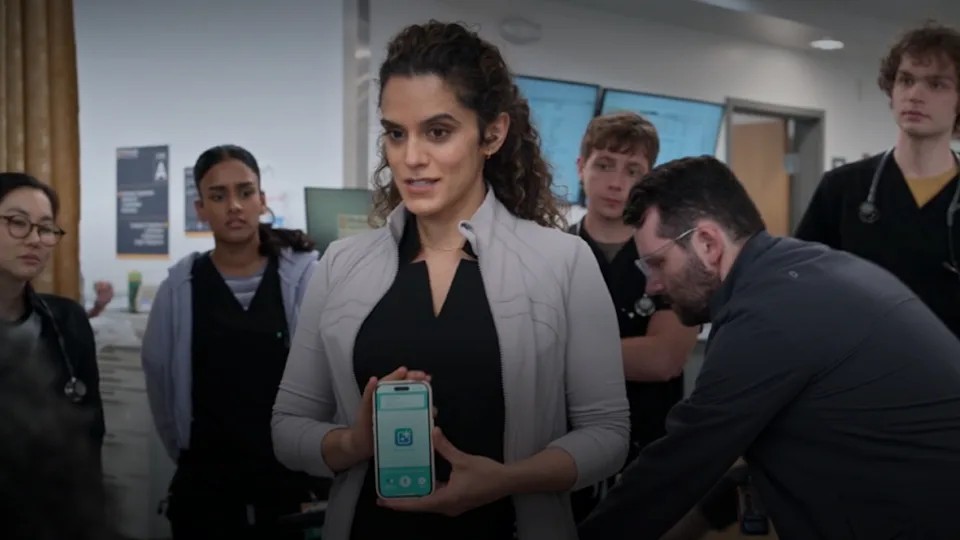
The Pitt (HBO Max)

The Pitt (HBO Max)
Tyrangiel, AI for Good: How Real People Are Using Artificial Intelligence to Fix Things That Matter (Simon & Schuster, 2026), ch. 2
Tyrangiel, AI for Good: How Real People Are Using Artificial Intelligence to Fix Things That Matter (Simon & Schuster, 2026), ch. 2
Tyrangiel, AI for Good: How Real People Are Using Artificial Intelligence to Fix Things That Matter (Simon & Schuster, 2026), ch. 2
Tyrangiel, AI for Good: How Real People Are Using Artificial Intelligence to Fix Things That Matter (Simon & Schuster, 2026), ch. 2
Tyrangiel, AI for Good: How Real People Are Using Artificial Intelligence to Fix Things That Matter (Simon & Schuster, 2026), ch. 2
Tyrangiel, AI for Good: How Real People Are Using Artificial Intelligence to Fix Things That Matter (Simon & Schuster, 2026), ch. 2
Tyrangiel, AI for Good: How Real People Are Using Artificial Intelligence to Fix Things That Matter (Simon & Schuster, 2026), ch. 2
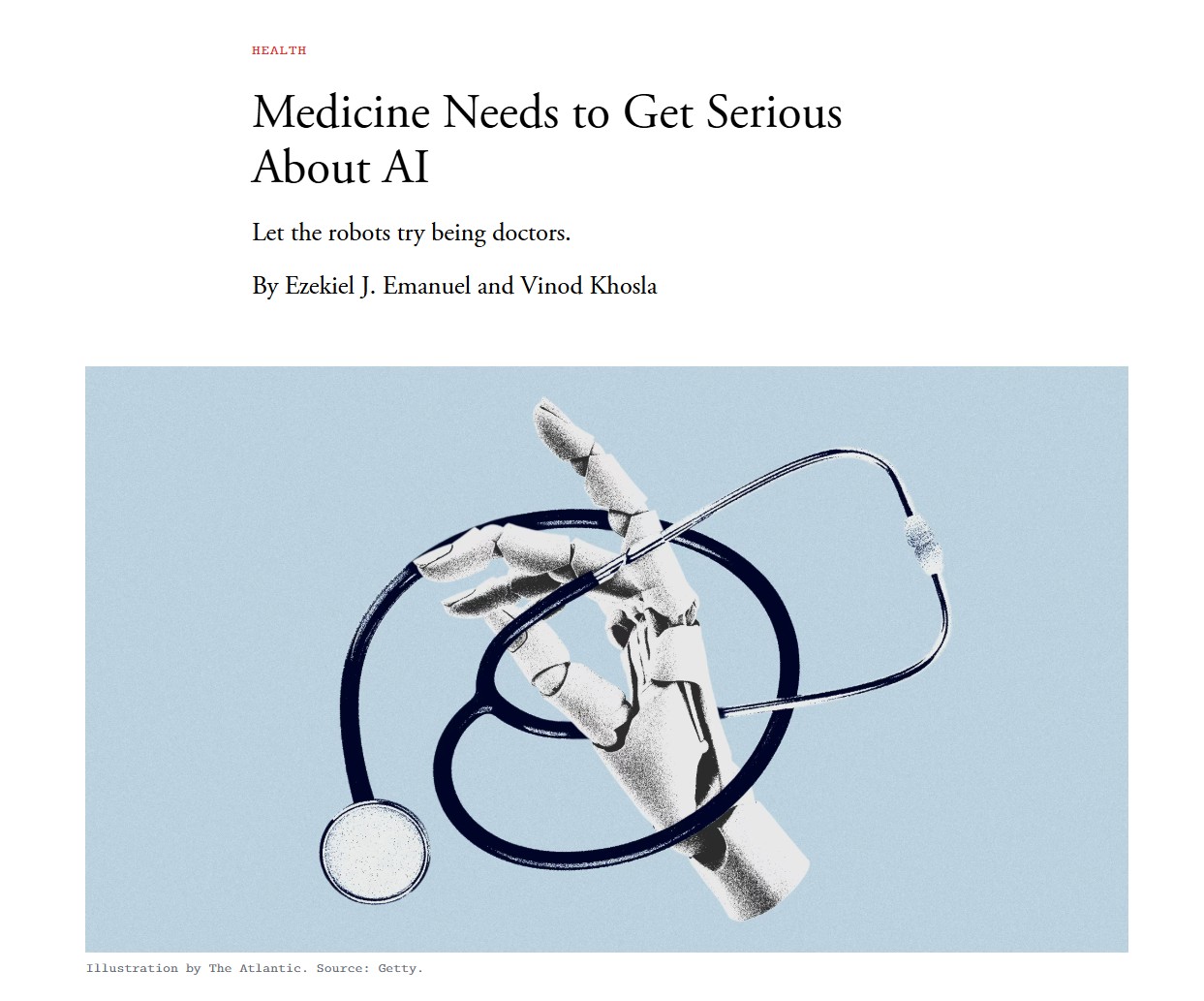
Emanuel and Khosla, “Medicine Needs to Get Serious About AI,” The Atlantic, Sept. 8, 2026
What about the physician-AI hybrids that medical associations are backing? Research on them is sparse, and more is needed. A 2025 review of 52 studies concluded that, on balance, such hybrids “neither outperformed medical AI alone nor surpassed the best of clinicians.” In at least a few of those studies, human-AI hybrids outperformed AI alone. But in those hybrid teams, the AI controlled the final clinical decision—the opposite of what the AMA and others have in mind.
Emanuel and Khosla, “Medicine Needs to Get Serious About AI,” The Atlantic, Sept. 8, 2026
using Git with coding agents
“Git is a key tool for working with coding agents. Keeping code in version control lets us record how that code changes over time and investigate and reverse any mistakes.”
“We don't need to memorize how to do things with Git, but staying aware of what's possible means we can take advantage of the full suite of Git's abilities.”
Willison, “Using Git with coding agents,” Agentic Engineering Patterns, §2.2
repositories, commits, branches
“Each Git project lives in a repository - a folder on disk that can track changes made to the files within it. Those changes are recorded in commits - timestamped bundles of changes to one or more files accompanied by a commit message describing those changes and an author recording who made them.”
“Git supports branches, which allow you to construct and experiment with new changes independently of each other.”
Willison, “Using Git with coding agents,” Agentic Engineering Patterns, §2.2
prompts any agent understands
- “Start a new Git repo here”
- “Commit these changes”
- “Review changes made today”
- “Discuss options for integrating changes from main”
- “Sort out this git mess for me”
- “Undo last commit”
Willison, “Using Git with coding agents,” Agentic Engineering Patterns, §2.2
“Agents are great at explaining the pros and cons of different merging strategies, and everything in git can always be undone so there's minimal risk in trying new things.”
Willison, “Using Git with coding agents,” Agentic Engineering Patterns, §2.2
history as authored story
“Don't think of the Git history as a permanent record of what actually happened - instead consider it to be a deliberately authored story that describes the progression of the software project.”
Willison, “Using Git with coding agents,” Agentic Engineering Patterns, §2.2
who writes the commit messages?
“I've found that frontier models usually have really good taste in commit messages. I used to insist on writing these myself but I've accepted that the quality they produce is generally good enough, and often even better than what I would have produced myself.”
Willison, “Using Git with coding agents,” Agentic Engineering Patterns, §2.2
subagents
“LLMs are restricted by their context limit - how many tokens they can fit in their working memory at any given time.”
“Carefully managing the context such that it fits within those limits is critical to getting great results out of a model.”
“When a coding agent uses a subagent it effectively dispatches a fresh copy of itself to achieve a specified goal, with a new context window that starts with a fresh prompt.”
“It's interesting to see models prompt themselves in this way - they generally have good taste in prompting strategies.”
“While it can be tempting to go overboard breaking up tasks across dozens of different specialist subagents, it's important to remember that the main value of subagents is in preserving that valuable root context and managing token-heavy operations.”
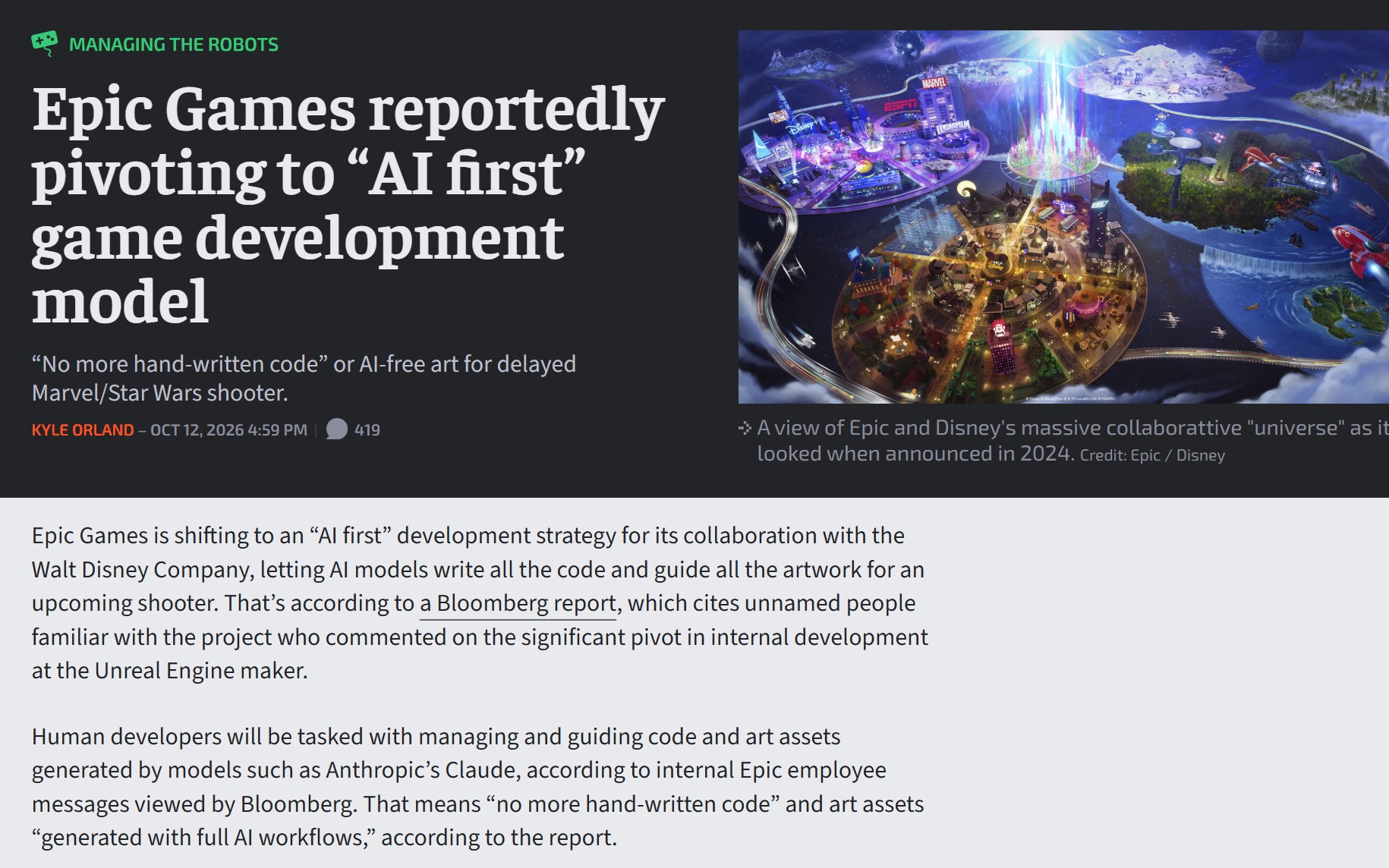

Dave, “AI Hacks Leave a Mess That AI Companies Aren’t Paying For,” WIRED, Oct. 15, 2026
Dave, “AI Hacks Leave a Mess That AI Companies Aren’t Paying For,” WIRED, Oct. 15, 2026
from the chat window to a repository
- a free GitHub account and one new repository
- connect it to Claude Code on the web (claude.ai/code) or Codex (chatgpt.com/codex)
- one new prompt: a web-based object that runs on GitHub Pages
- read what came back: commits, branches, pull requests, diffs
- merge, turn on Pages, share the live link
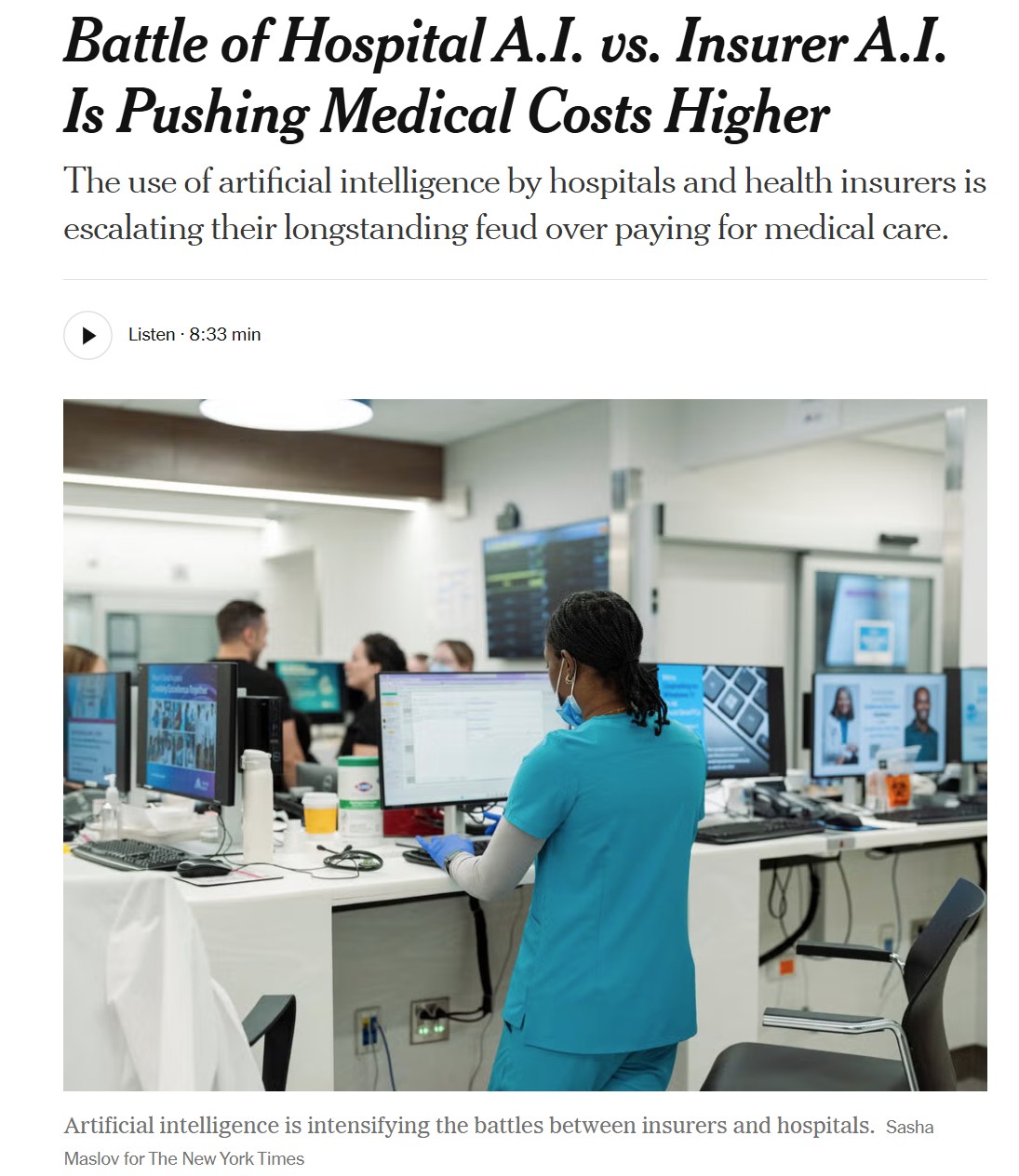
While A.I. could ease tensions between insurers and hospitals and save money, it could also do the opposite, acknowledged Dr. Shiv Rao, a cardiologist who founded Abridge, which offers A.I. tools documenting patient care.
“That’s the danger,” he said, “where it’s bots fighting bots, agents fighting agents, a horrible dystopic future nobody wants to live in.”
The technology has already intensified the battles between insurers and hospitals, going several rounds over whether the insurer should pay a specific claim or authorize a treatment, said Caroline Pearson, the executive director of the Peterson Health Technology Institute, a nonprofit group that recently looked at the potential of A.I. to add to already high administrative costs.
Both sides are willing to go these extra rounds “because it’s cheap,” she said.

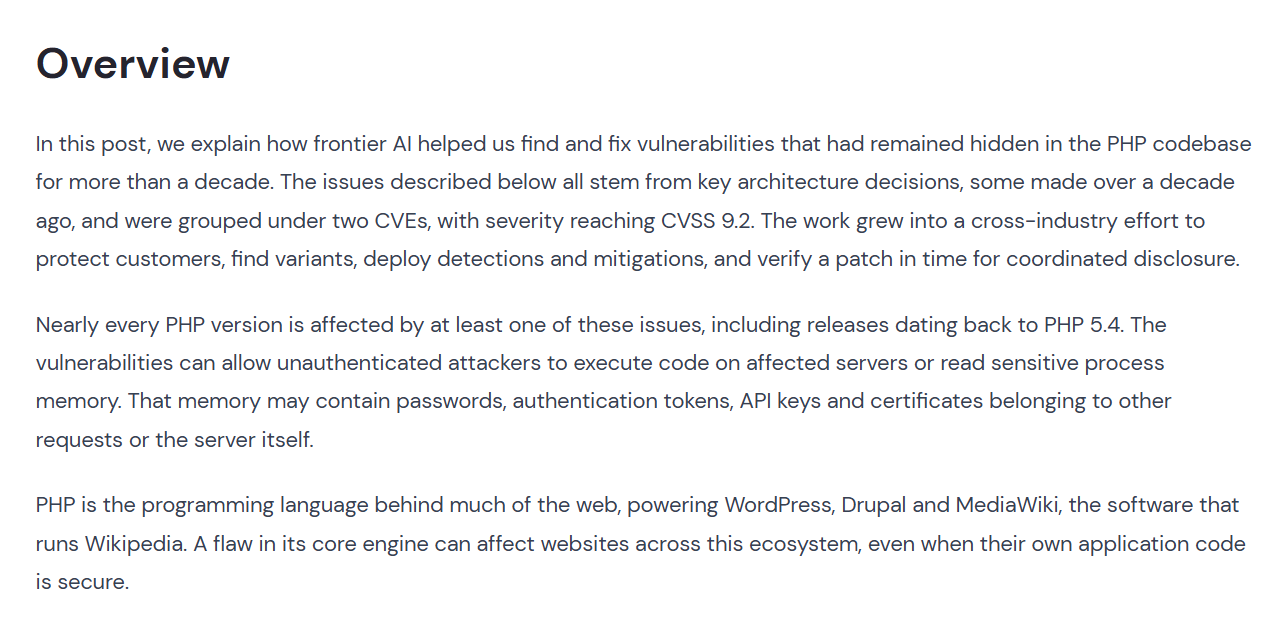

Brewster Kahle (@brewsterkahle) on the Internet Archive’s response to PHP2Shell, Oct. 2026