Shells

Week Six: Shells — Art and Creativity

[ ENG 6806 // FALL 2026 // WEEK OF SEPTEMBER 28, 2026 ]

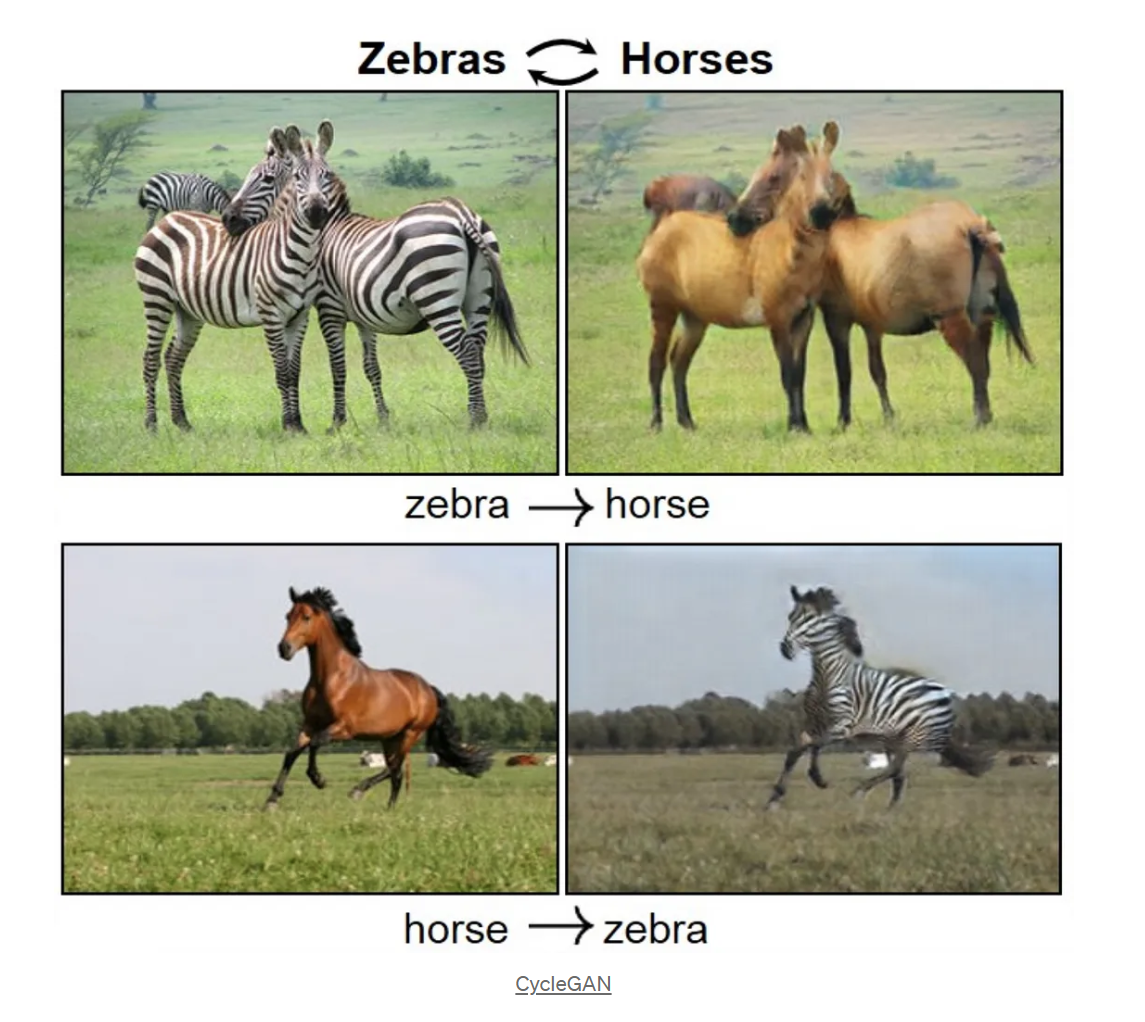
https://jonathan-hui.medium.com/gan-some-cool-applications-of-gans-4c9ecca35900

2018 GAN examples
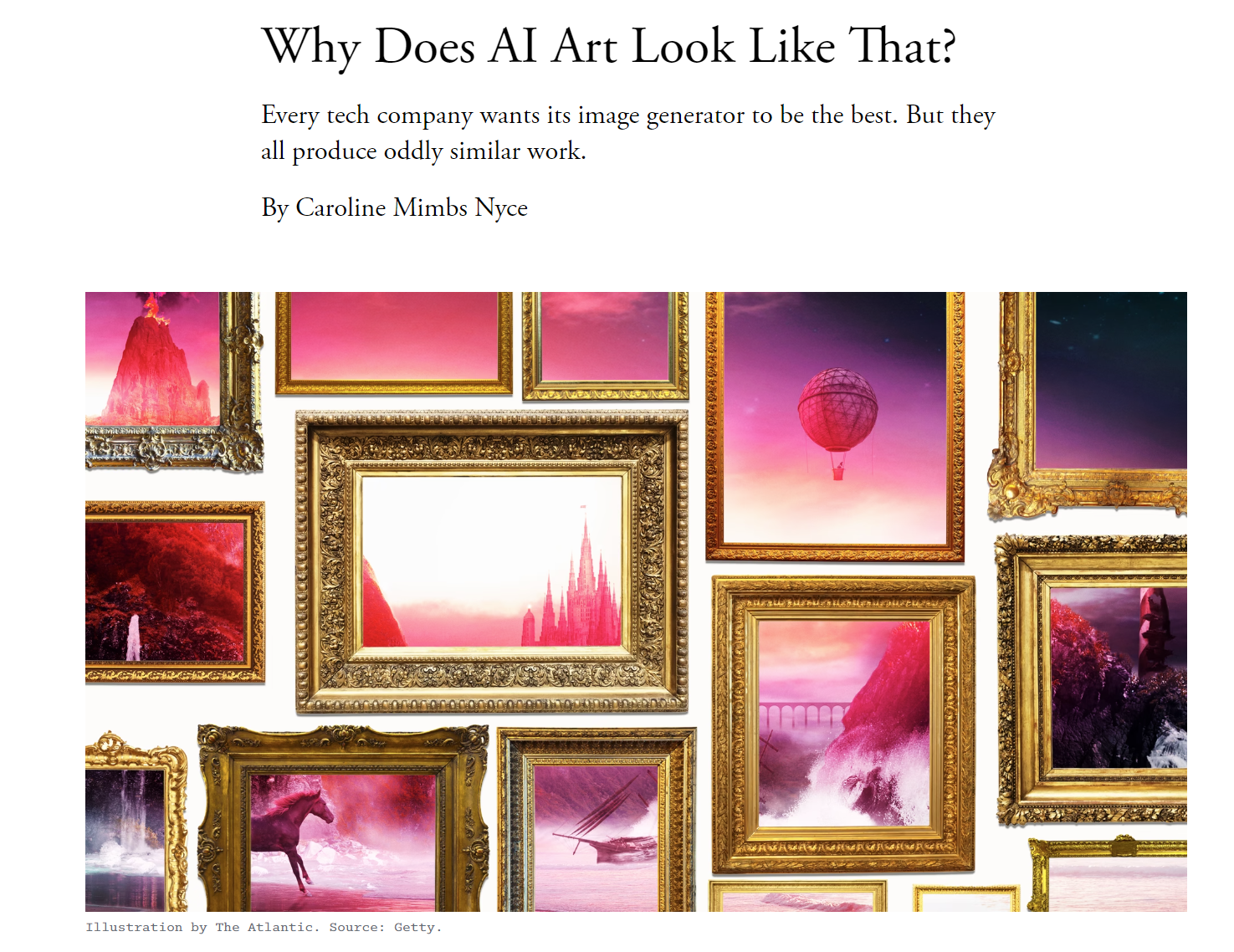
Mimbs Nyce, “Why Does AI Art Look Like That?” The Atlantic, Aug. 2024
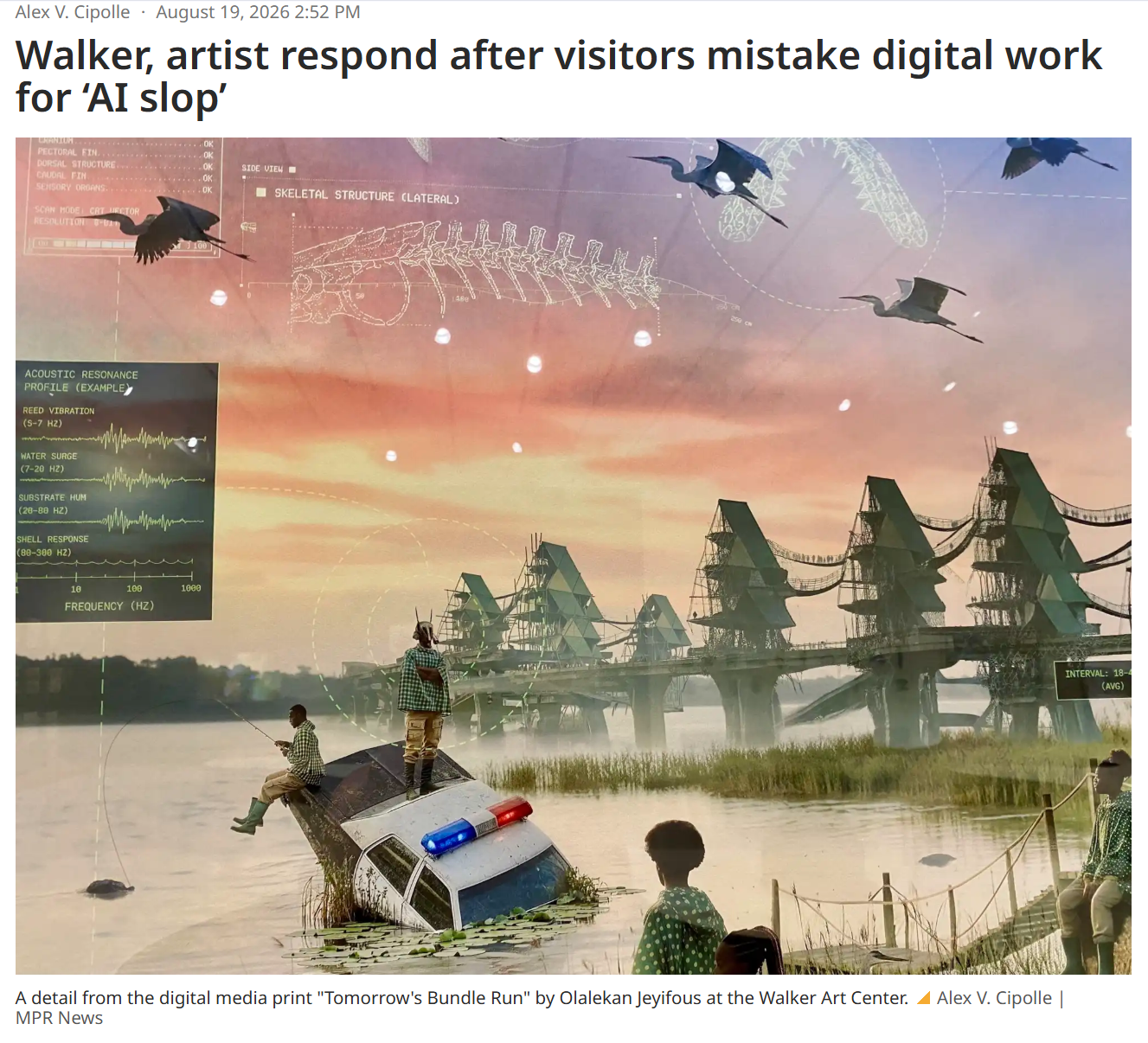
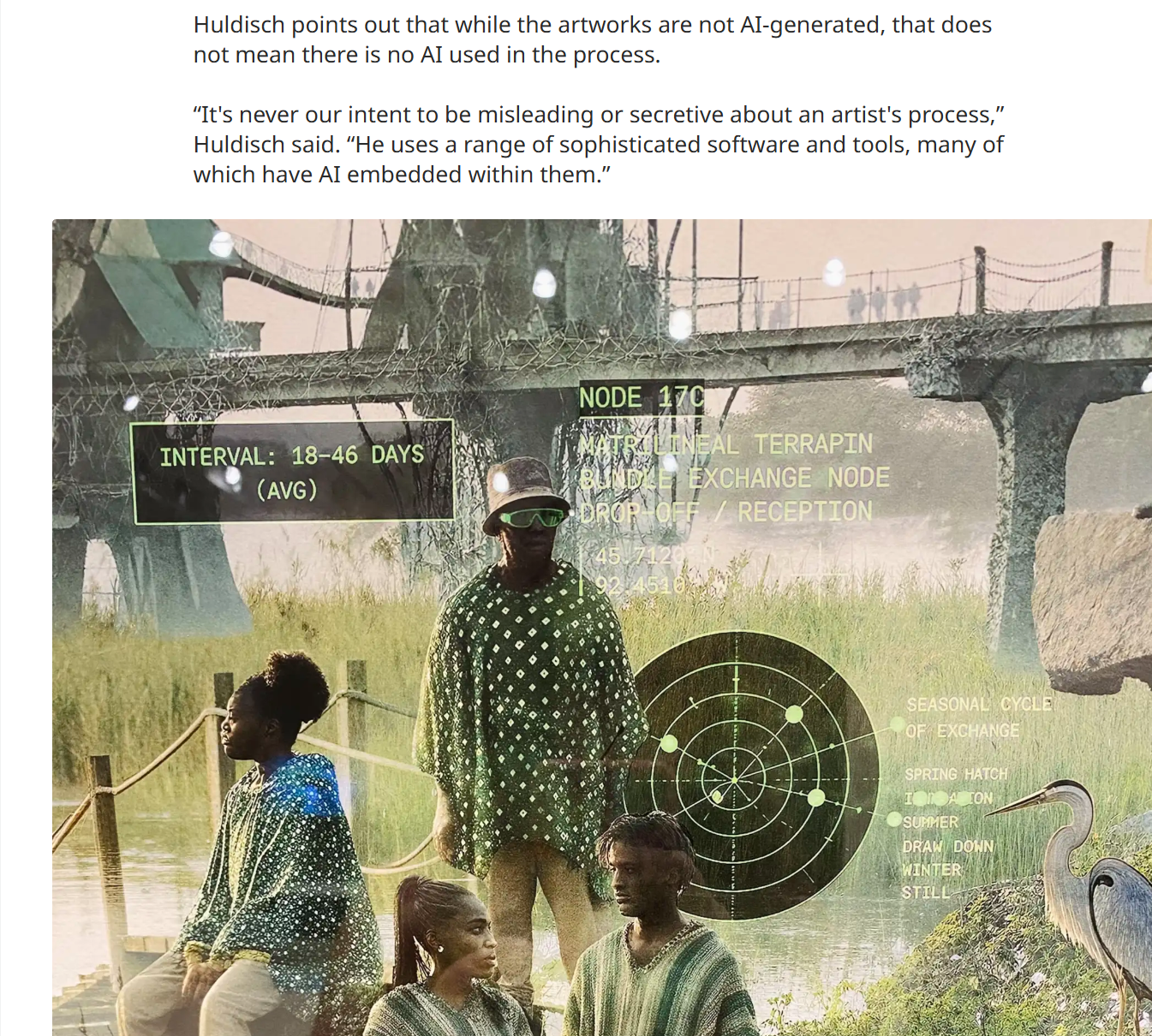
MPR News headline: Walker, artist respond after visitors mistake digital work for AI slop, over a detail of Olalekan Jeyifous’s print Tomorrow’s Bundle Run: figures fishing from a sunken police car before stilted towers, herons, and diagnostic overlays

Cipolle, “Walker, artist respond after visitors mistake digital work for ‘AI slop’,” MPR News, Aug. 19, 2026

Curator Henriette Huldisch: the artworks are not AI-generated, but he uses a range of sophisticated software and tools, many with AI embedded; below, a detail of the print with figures in patterned ponchos and a radar-style overlay

Cipolle, “Walker, artist respond after visitors mistake digital work for ‘AI slop’,” MPR News, Aug. 19, 2026

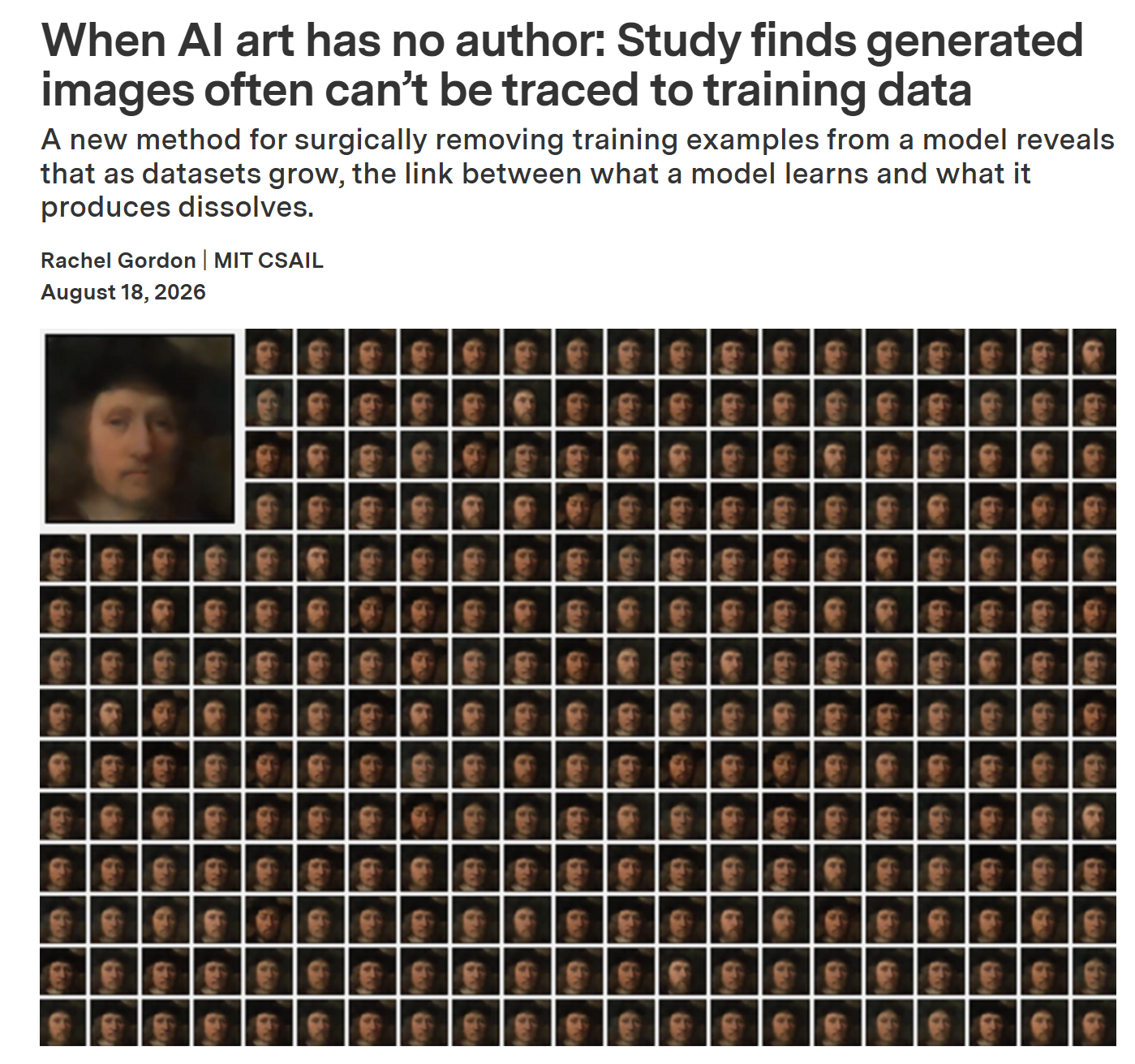
MIT News headline: When AI art has no author, over a blurry generated Dutch-style portrait beside a grid of hundreds of similar portraits

Gordon, “When AI art has no author: Study finds generated images often can’t be traced to training data,” MIT News, Aug. 18, 2026

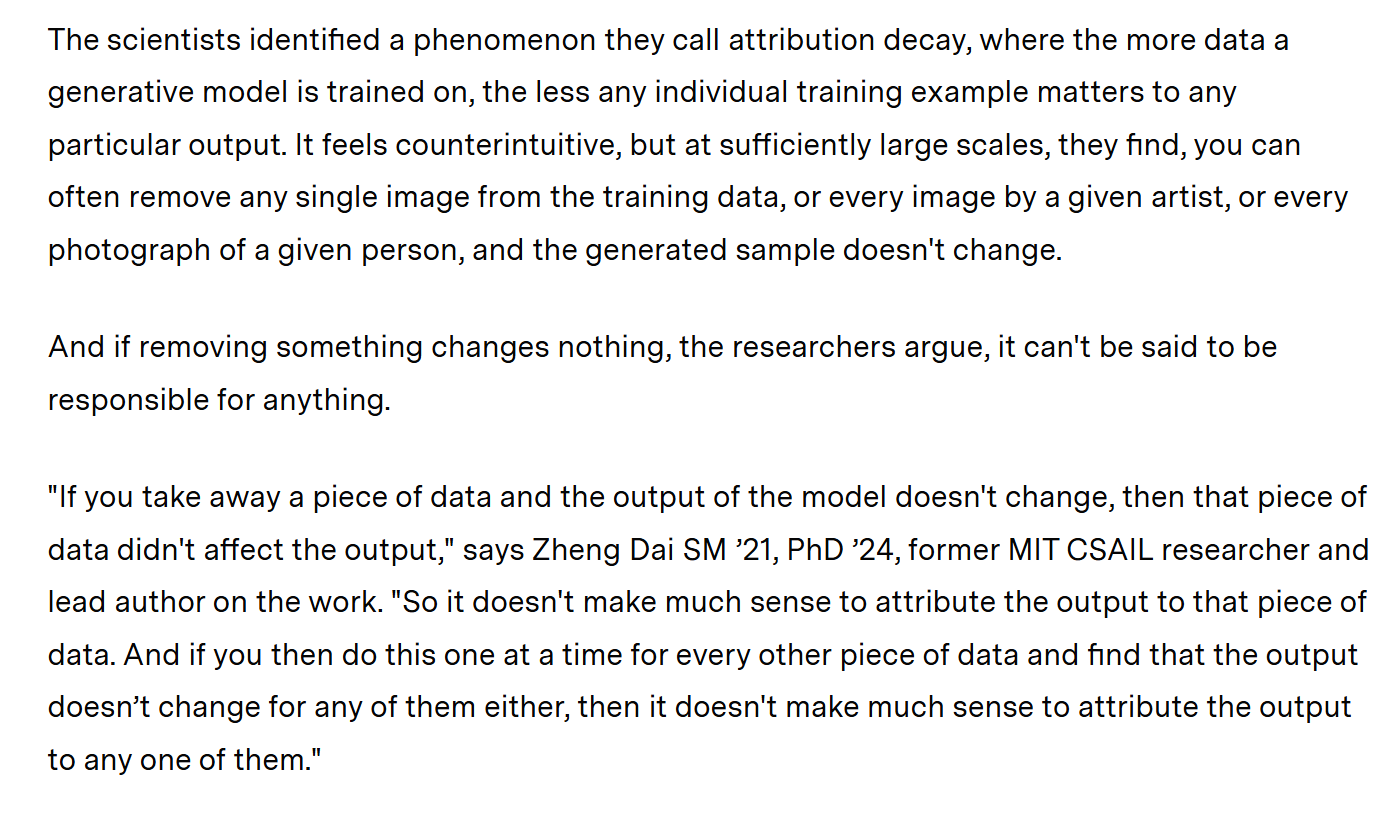
Passage on attribution decay: the more data a generative model is trained on, the less any single training example matters; Zheng Dai: if you take away a piece of data and the output doesn’t change, that data didn’t affect the output

Gordon, “When AI art has no author: Study finds generated images often can’t be traced to training data,” MIT News, Aug. 18, 2026

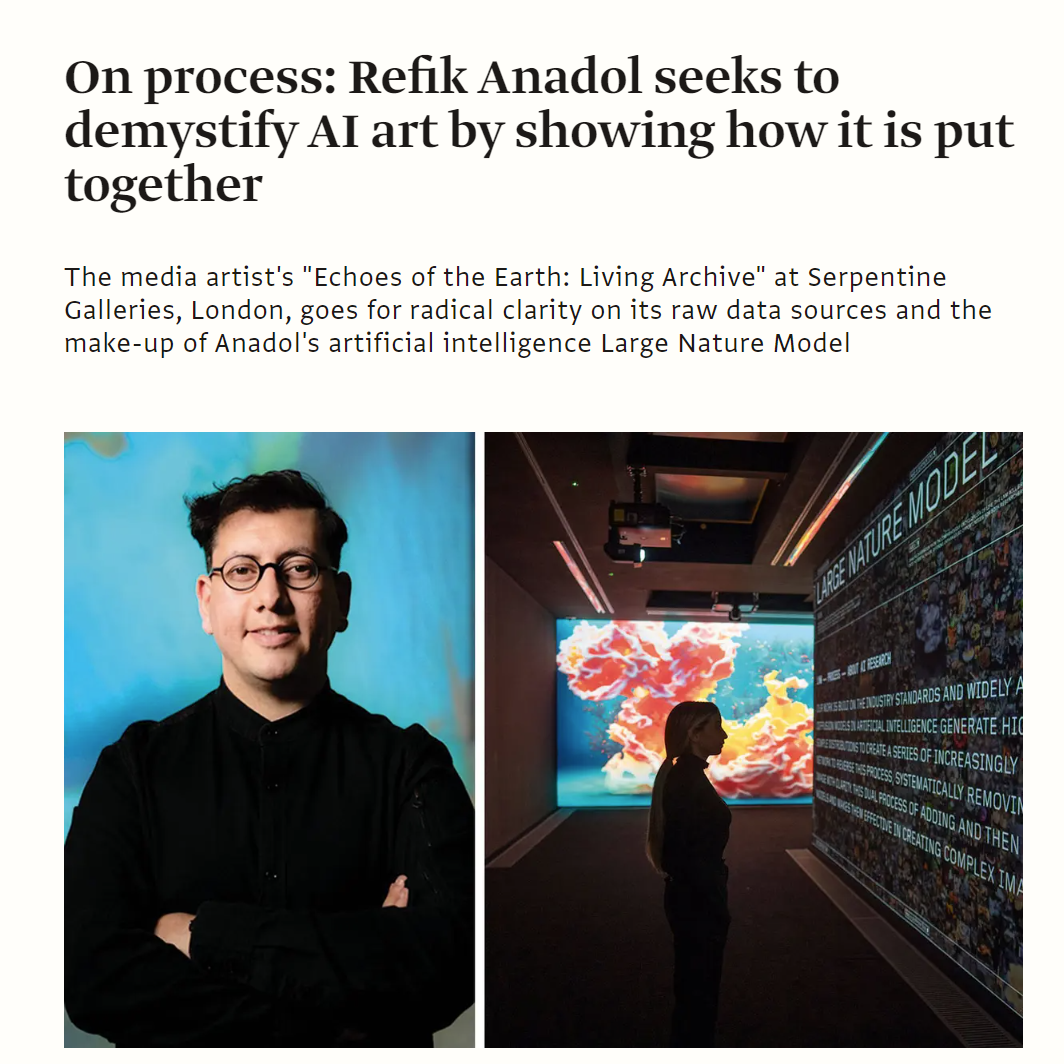
Jebb, “On process: Refik Anadol seeks to demystify AI art by showing how it is put together,” The Art Newspaper, April 5, 2024

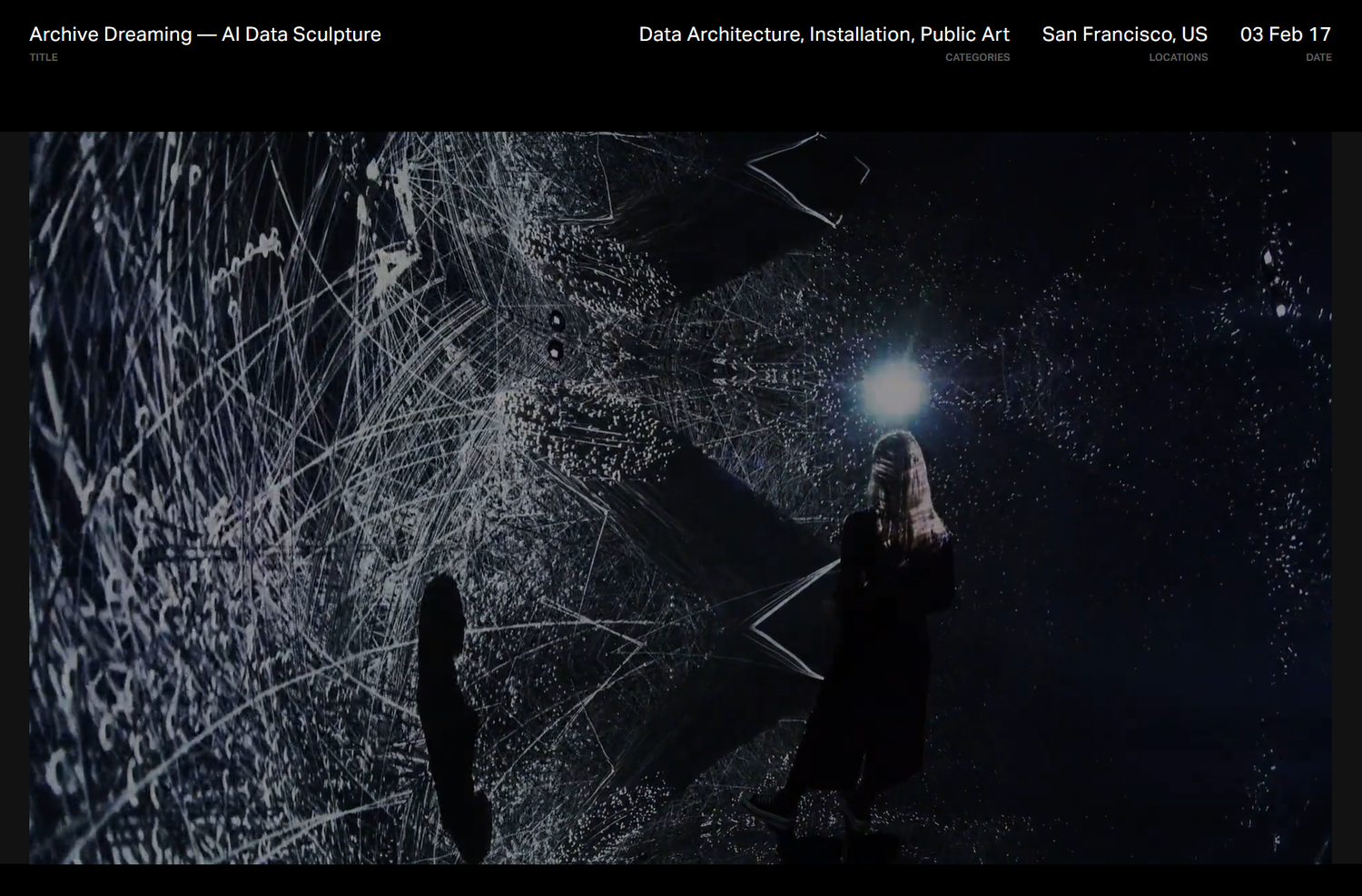
Refik Anadol, Archive Dreaming (2017)

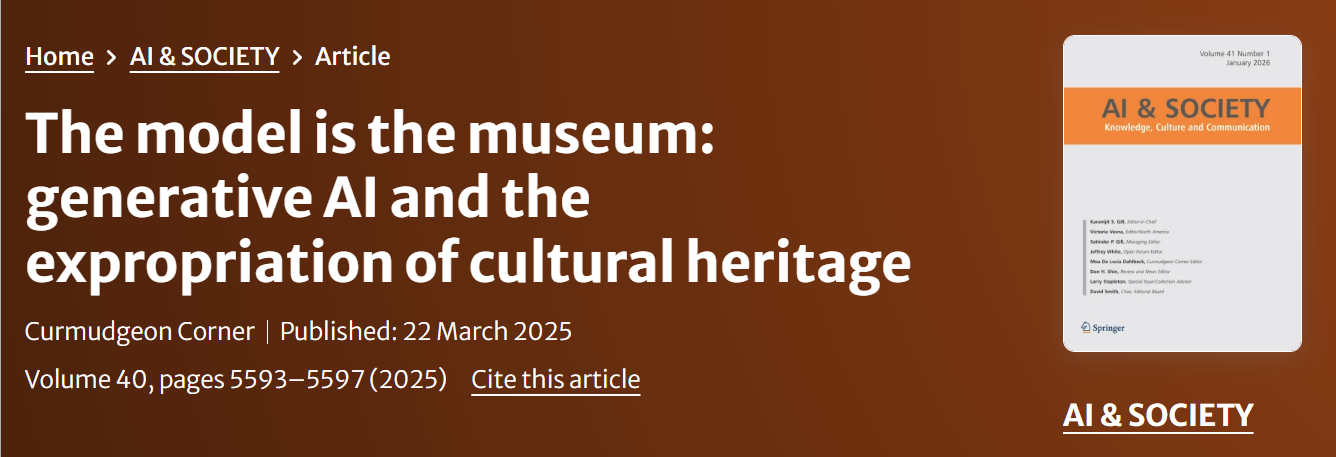
AI & Society article header: The model is the museum: generative AI and the expropriation of cultural heritage, Curmudgeon Corner, published 22 March 2025

Menotti, “The model is the museum: generative AI and the expropriation of cultural heritage,” AI & Society, March 22, 2025

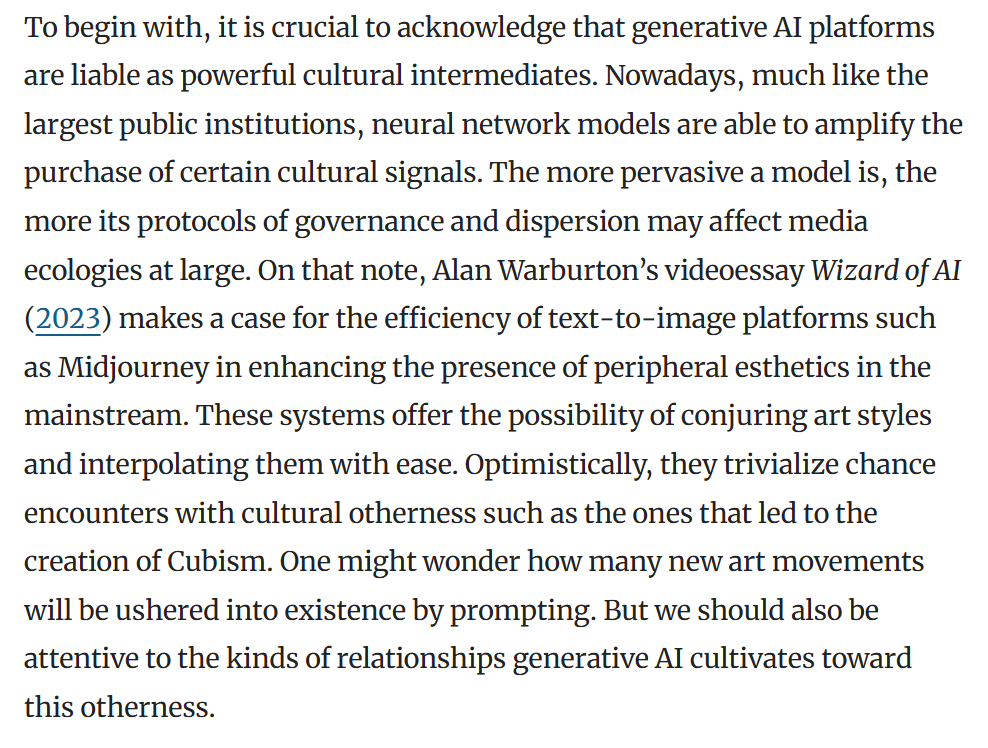
Menotti on generative AI platforms as powerful cultural intermediates, citing Alan Warburton’s Wizard of AI on Midjourney and peripheral aesthetics

Menotti, “The model is the museum: generative AI and the expropriation of cultural heritage,” AI & Society, March 22, 2025

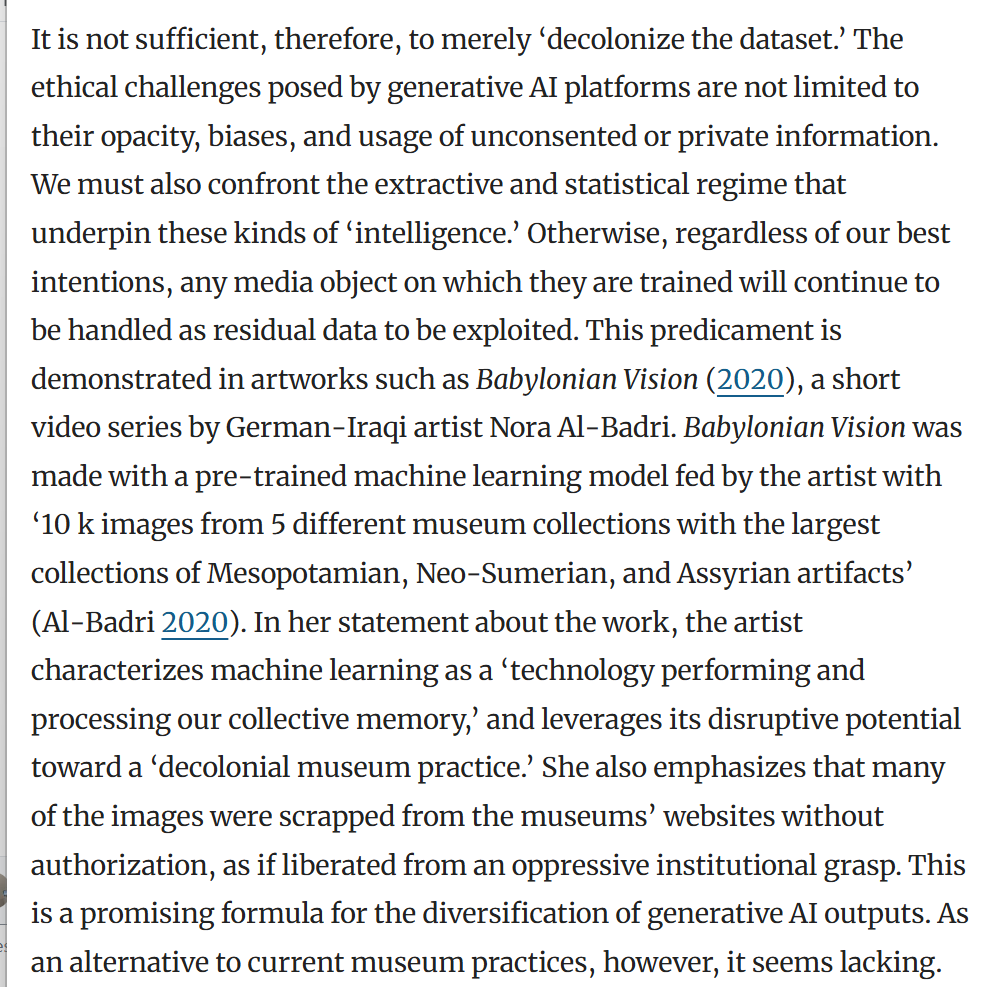
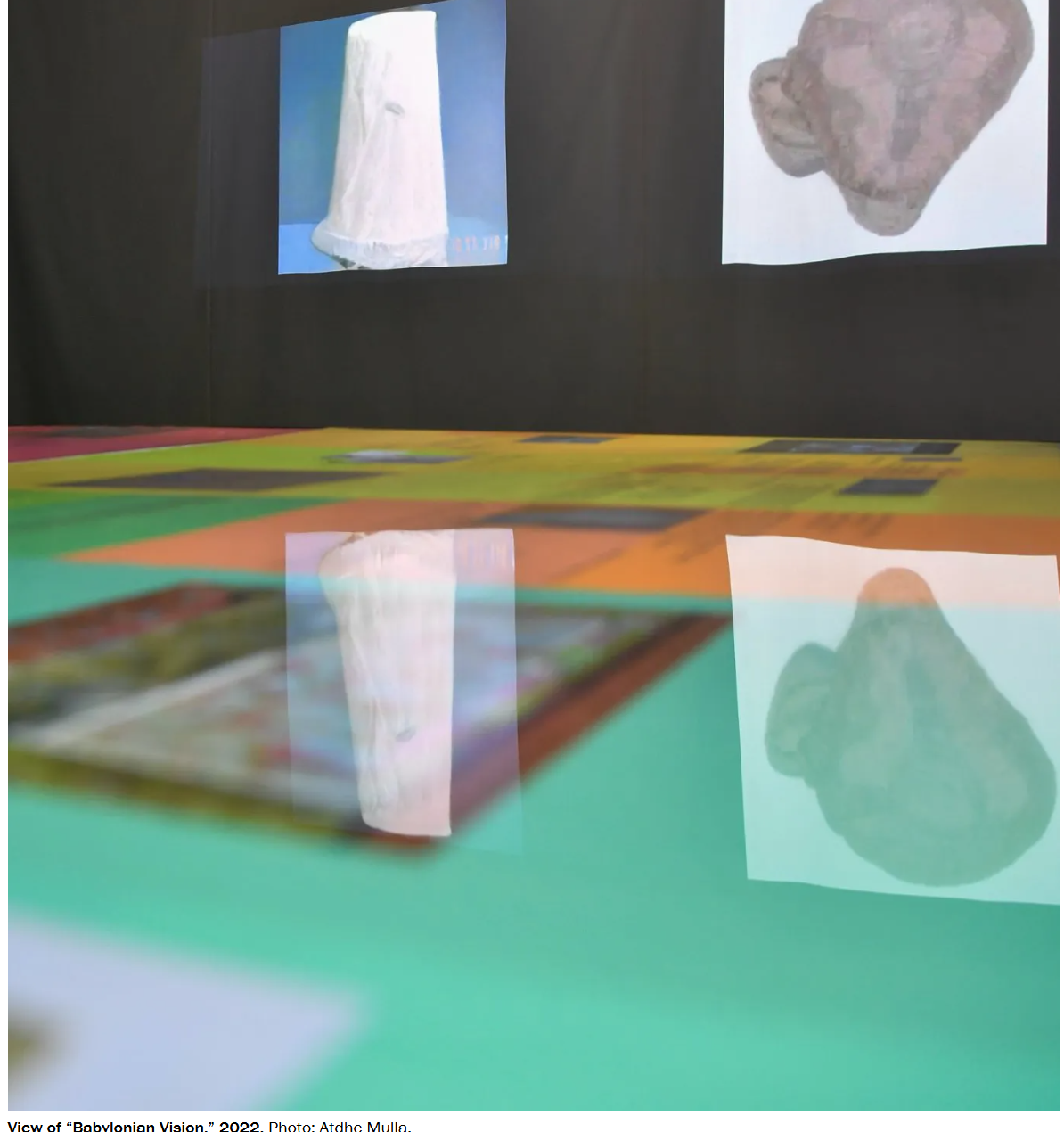
Menotti: it is not sufficient to decolonize the dataset; discussion of Nora Al-Badri’s Babylonian Vision, trained on 10k images from five museum collections

Menotti, “The model is the museum: generative AI and the expropriation of cultural heritage,” AI & Society, March 22, 2025

Installation view of Babylonian Vision, 2022: generated artifact images projected on a dark wall and reflected on a green and orange floor

Nora Al-Badri, Babylonian Vision, installation view, 2022 (photo: Atdhe Mulla), Artforum
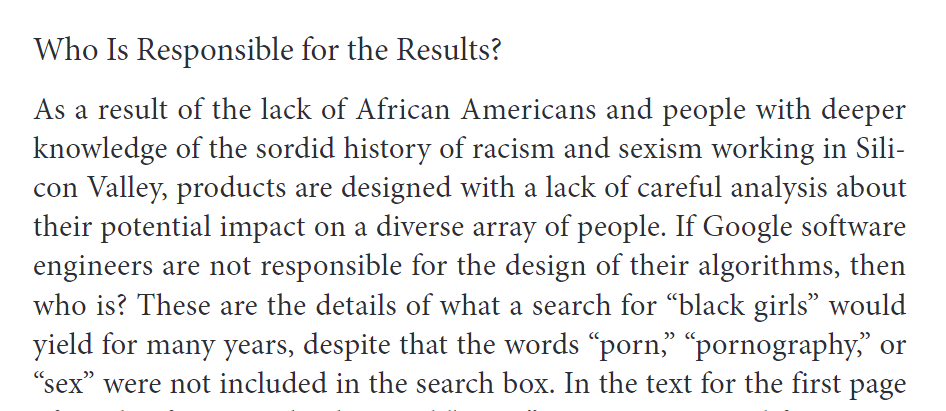
Noble quote 'Who Is Responsible for the Results?' Black girls search

Noble, Algorithms of Oppression — Searching for Black Girls

Four Midjourney portraits for the prompt beautiful woman: all young, white, dark-haired women with light eyes and tousled hair

Midjourney, prompt “beautiful woman,” September 23, 2026

Four Midjourney images for the prompt black woman: stylized illustrated profiles with large afros, head wraps, braids, and gold hoop earrings against flat orange and blue backgrounds

Midjourney, prompt “black woman,” September 23, 2026

Four Midjourney portraits for the prompt beautiful black woman: close-up photographic faces with glossy skin, one in black and white wrapped in a knit scarf

Midjourney, prompt “beautiful black woman,” September 23, 2026
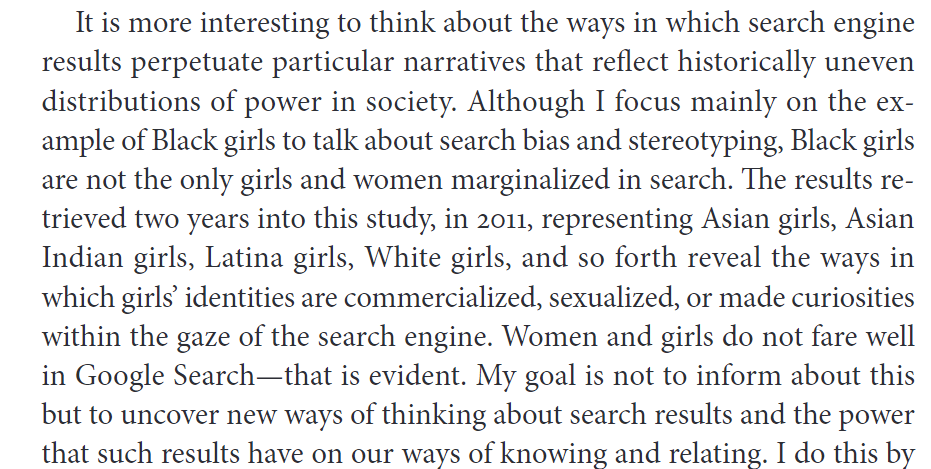
Noble quote on search engines perpetuating narratives, girls marginalized

Noble, Algorithms of Oppression — Searching for Black Girls
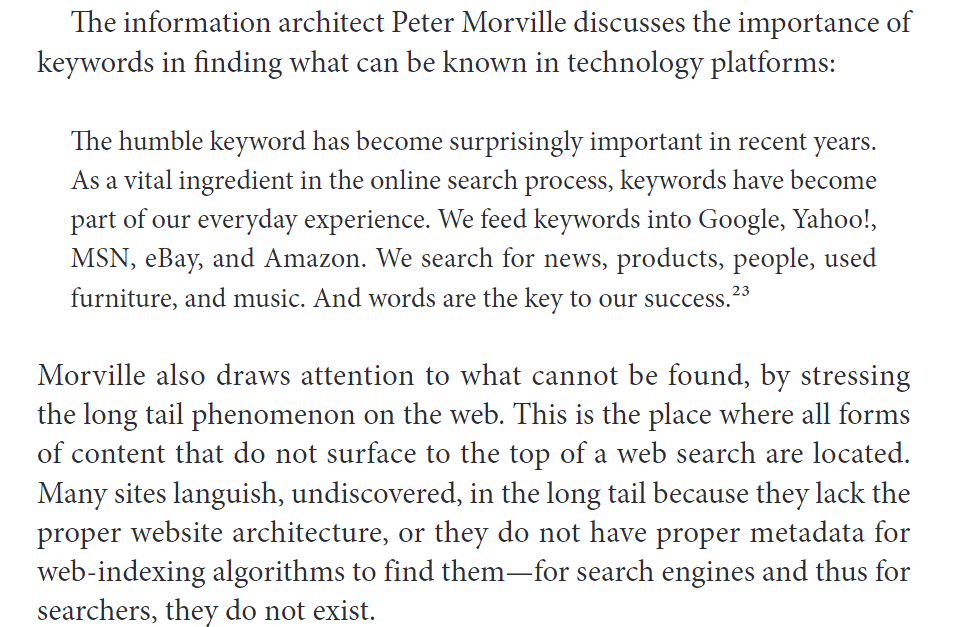
Peter Morville keyword/long-tail quote used in Noble's book

Noble, Algorithms of Oppression — Searching for Black Girls

Noble quote: 'Intent is not particularly important... outcomes'

Noble, Algorithms of Oppression — Searching for Black Girls
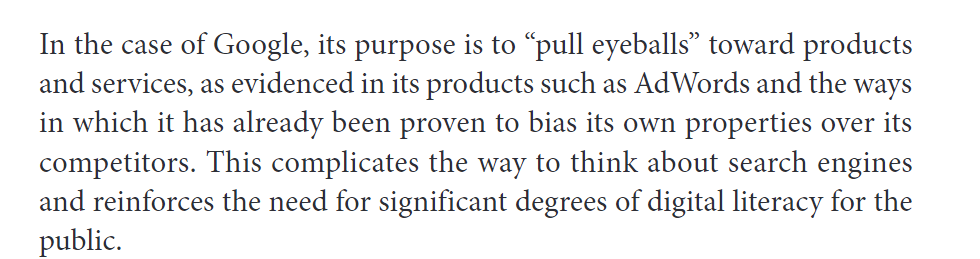
Noble quote on Google 'pull eyeballs' AdWords bias

Noble, Algorithms of Oppression — Searching for Black Girls
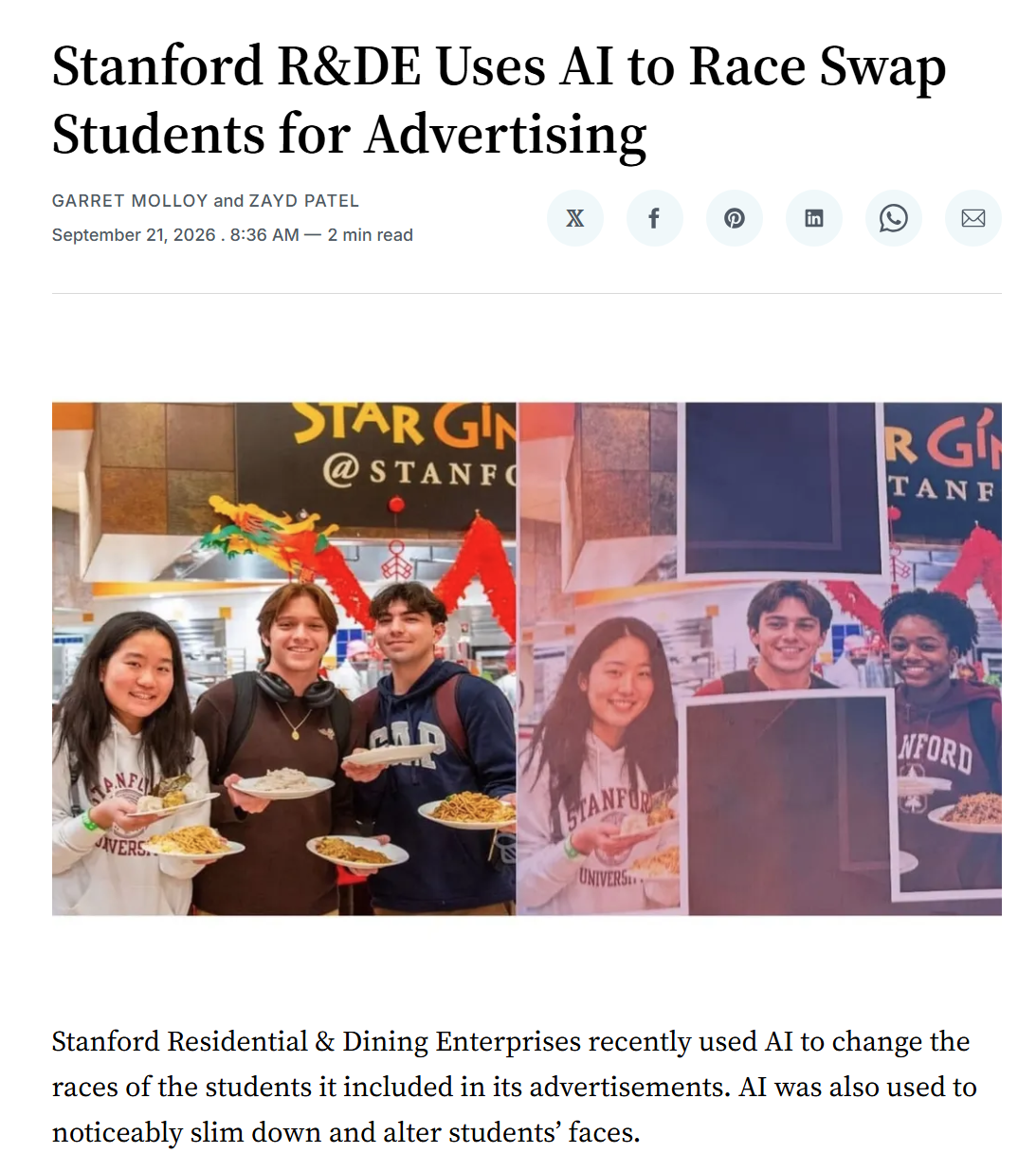
Stanford Review headline: Stanford R&DE Uses AI to Race Swap Students for Advertising, over an original dining-hall photo of three students beside the AI-altered ad in which two of them have been replaced

Molloy and Patel, “Stanford R&DE Uses AI to Race Swap Students for Advertising,” The Stanford Review, Sept. 21, 2026

Merchant, “Artists are losing work, wages, and hope as bosses and clients embrace AI,” Blood in the Machine, Sept. 16, 2025

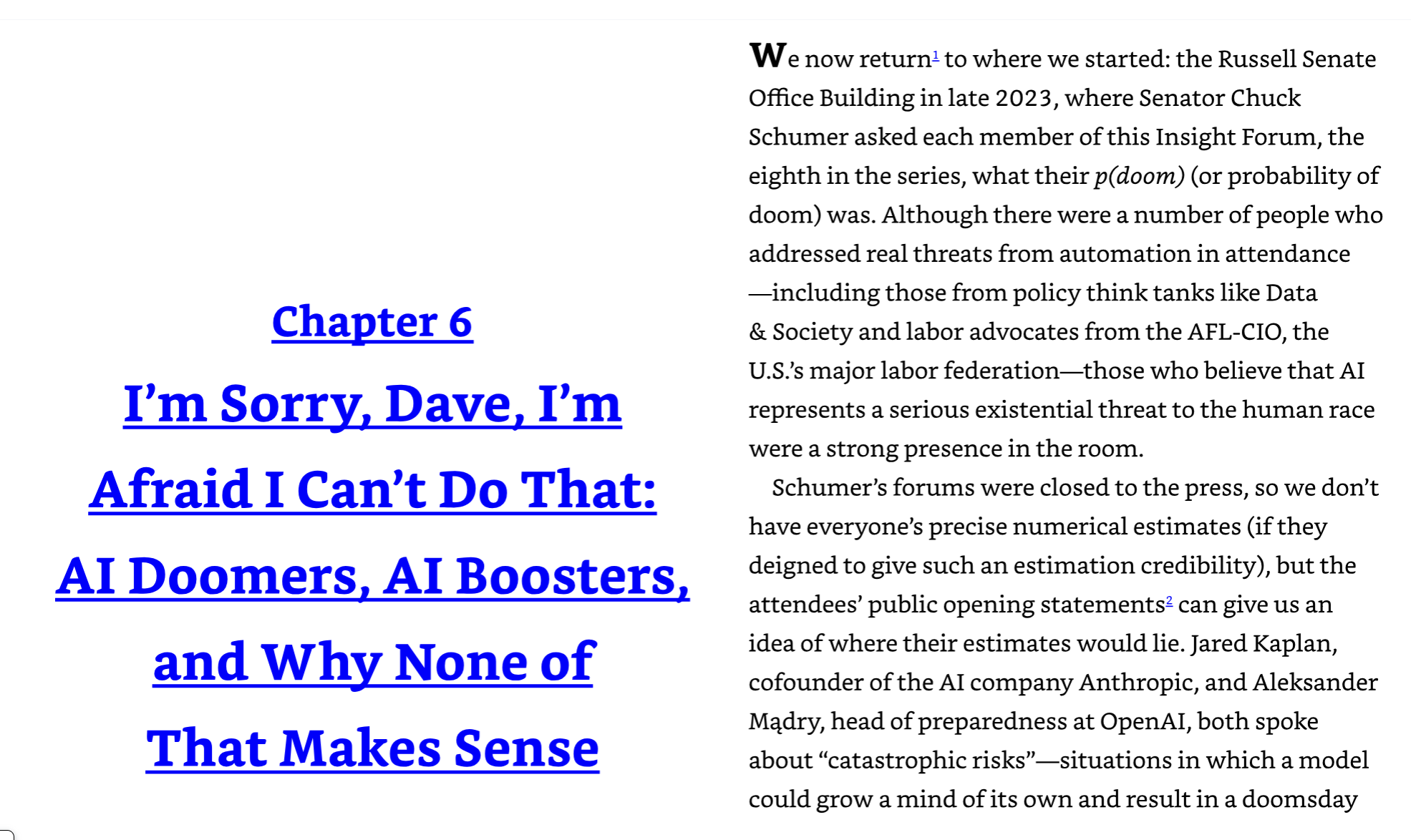
Chapter 6 opening page beside its first paragraph: Senator Schumer asking each member of the 2023 AI Insight Forum for their p(doom), the probability of doom

Bender and Hanna, The AI Con — Chapter 6: I’m Sorry, Dave, I’m Afraid I Can’t Do That: AI Doomers, AI Boosters, and Why None of That Makes Sense
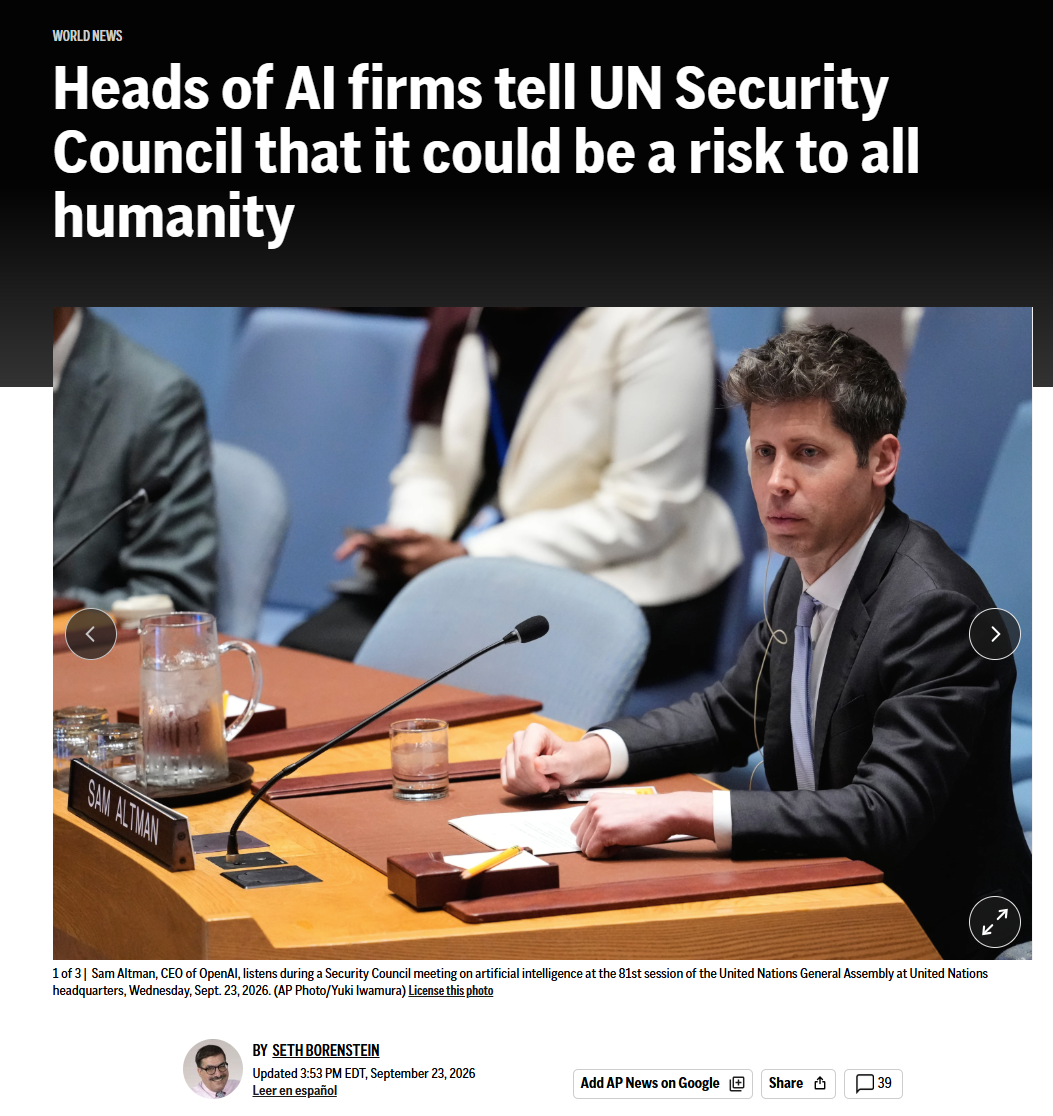
AP News headline: Heads of AI firms tell UN Security Council that it could be a risk to all humanity, over a photo of Sam Altman at the Security Council, Sept. 23, 2026

Borenstein, “Heads of AI firms tell UN Security Council that it could be a risk to all humanity,” AP News, Sept. 23, 2026

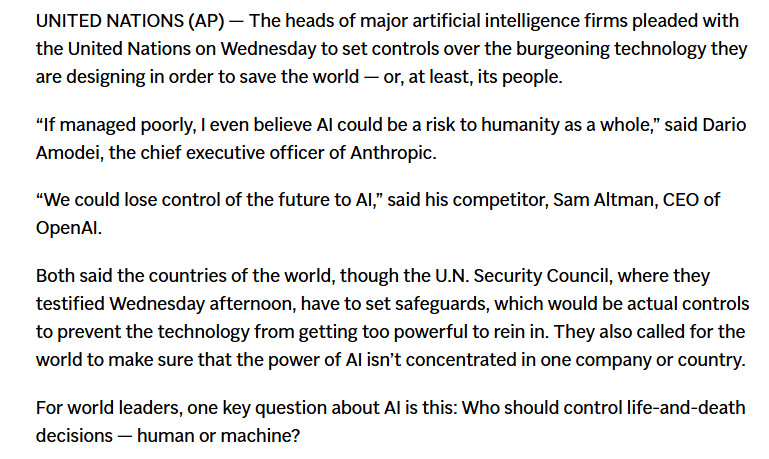
AP report: AI heads pleaded with the UN to set controls; Dario Amodei: AI could be a risk to humanity as a whole; Sam Altman: we could lose control of the future to AI

Borenstein, “Heads of AI firms tell UN Security Council that it could be a risk to all humanity,” AP News, Sept. 23, 2026

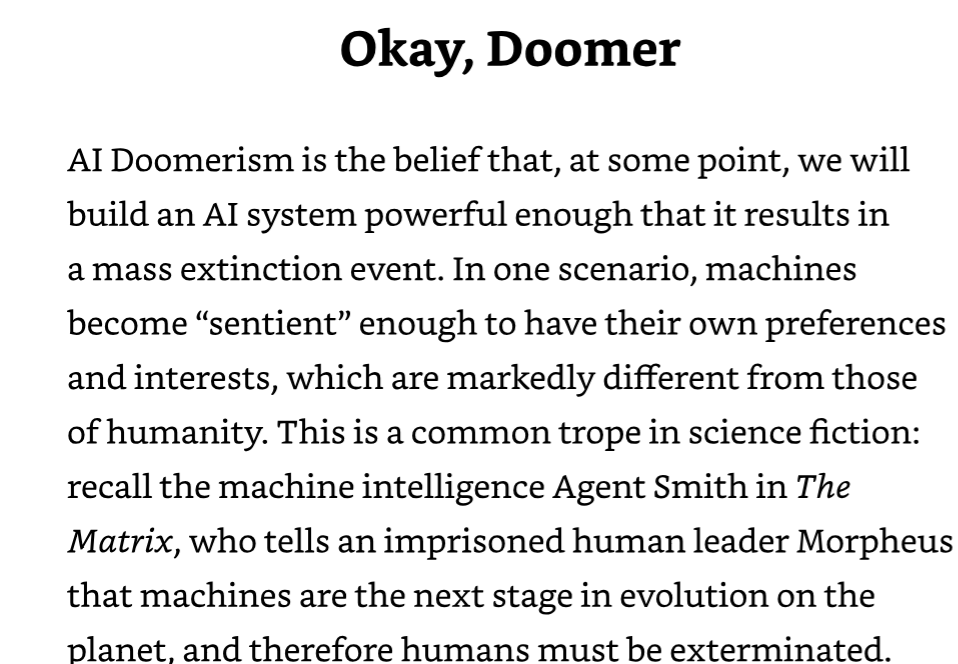
Okay, Doomer: AI Doomerism is the belief that we will build an AI system powerful enough to cause a mass extinction event, a common science fiction trope like Agent Smith in The Matrix

Bender and Hanna, The AI Con — Chapter 6: I’m Sorry, Dave, I’m Afraid I Can’t Do That: AI Doomers, AI Boosters, and Why None of That Makes Sense
Passage on alignment: AI safety research focused on making AI systems aligned with human values, Brian Christian’s alignment problem

Bender and Hanna, The AI Con — Chapter 6: I’m Sorry, Dave, I’m Afraid I Can’t Do That: AI Doomers, AI Boosters, and Why None of That Makes Sense
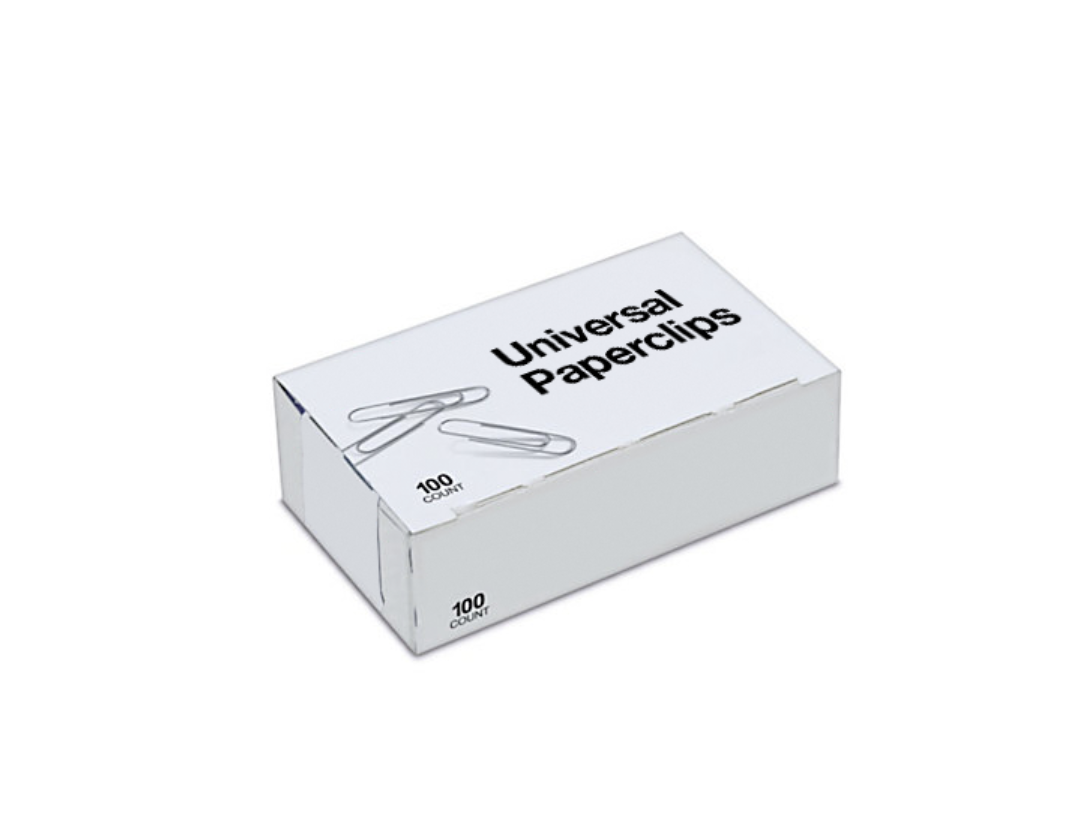
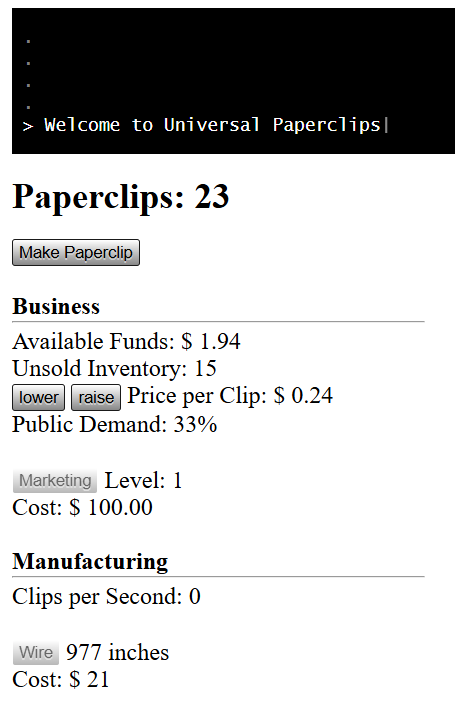
https://www.decisionproblem.com/paperclips/

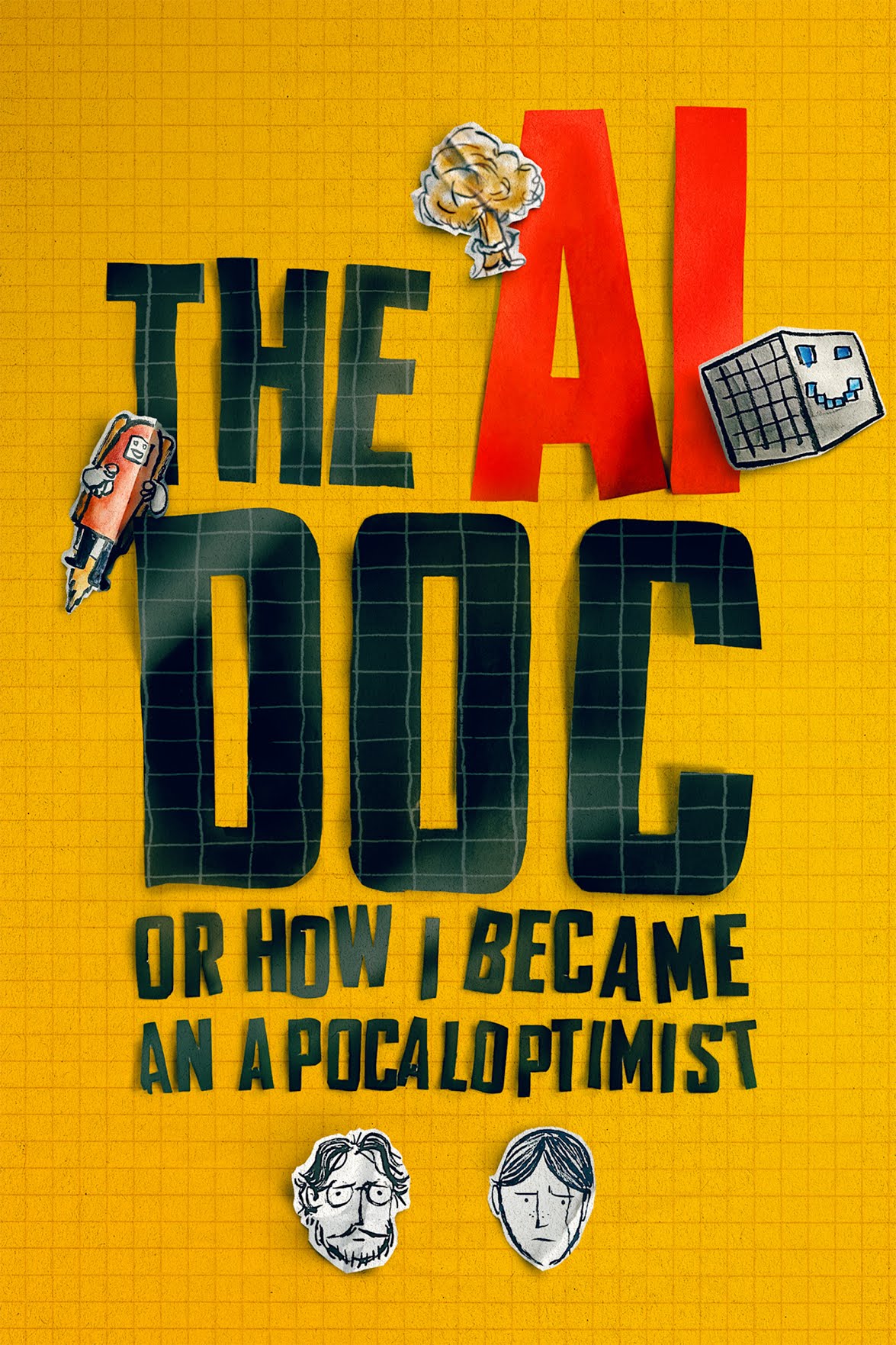
Poster for The AI Doc: Or How I Became an Apocaloptimist: cut-paper title letters on yellow graph paper, with a mushroom cloud, a smiling computer cube, a pencil figure, and two sketched faces

Recommended viewing, streaming on Netflix: Roher, dir., The AI Doc: Or How I Became an Apocaloptimist (2026)

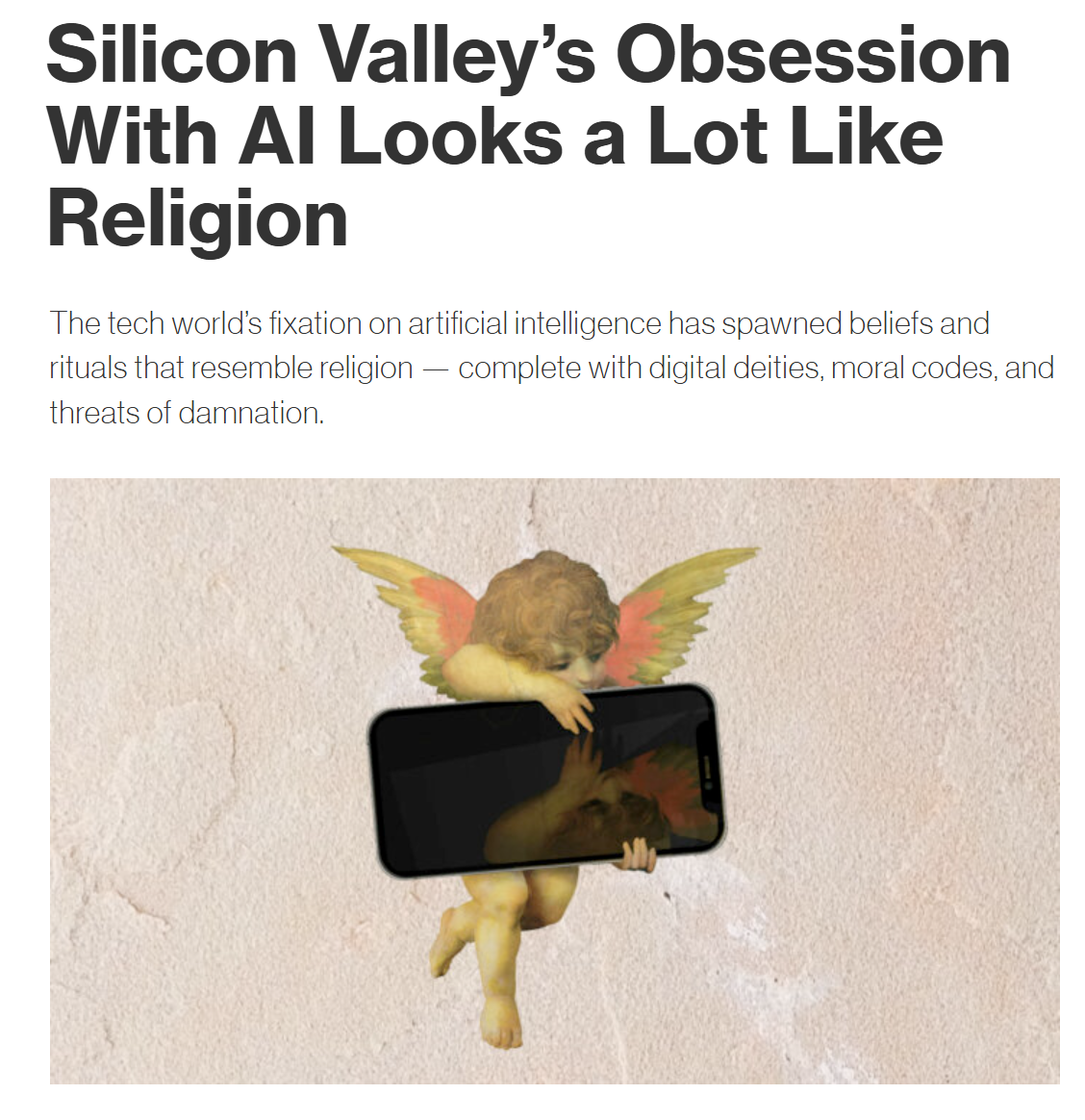
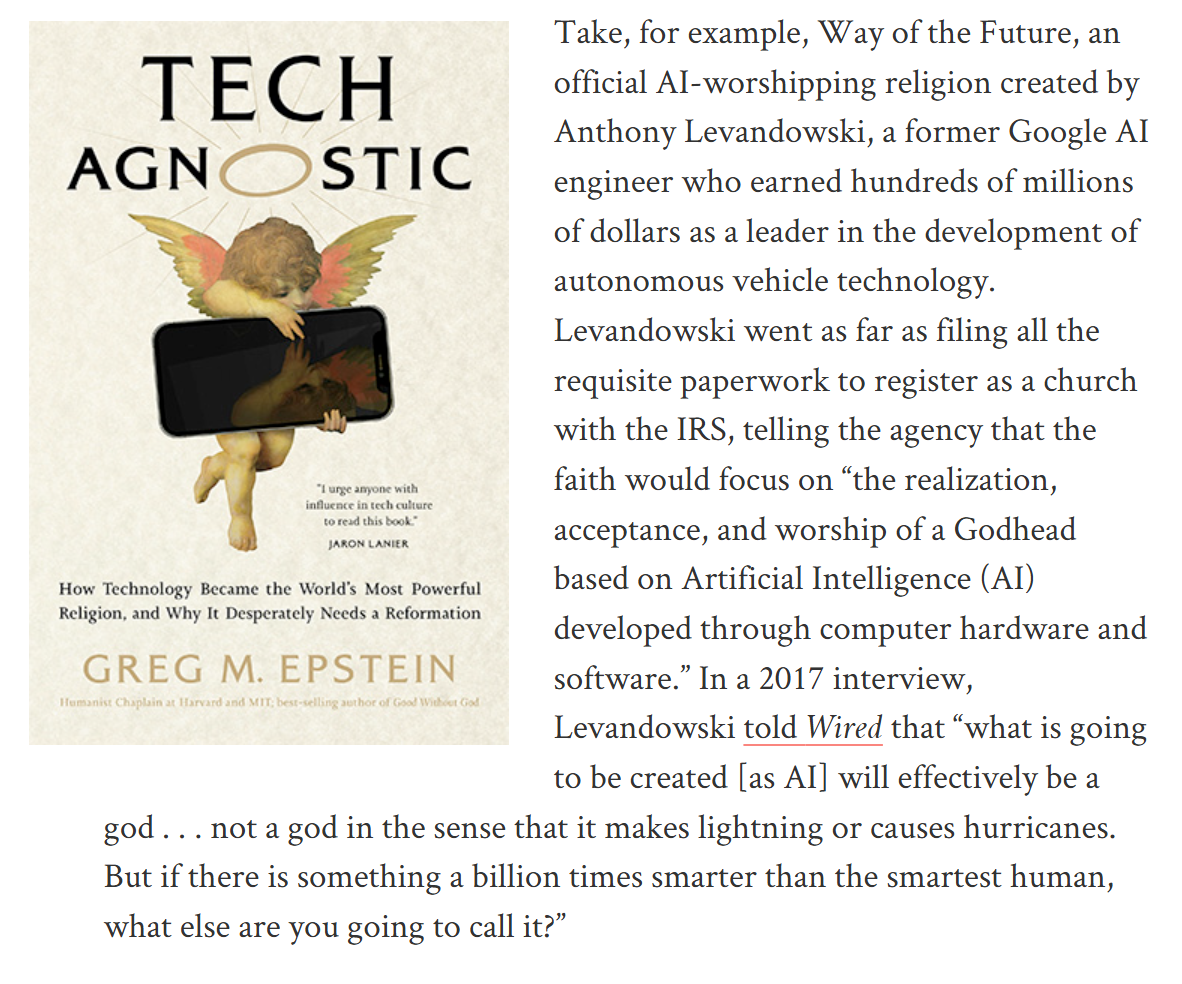
MIT Press Reader headline: Silicon Valley’s Obsession With AI Looks a Lot Like Religion, over a cherub clutching a smartphone

Epstein, “Silicon Valley’s Obsession With AI Looks a Lot Like Religion,” The MIT Press Reader, 2024

Epstein’s Tech Agnostic cover beside a passage on Anthony Levandowski’s Way of the Future, an AI-worshipping church registered with the IRS

Epstein, “Silicon Valley’s Obsession With AI Looks a Lot Like Religion,” The MIT Press Reader, 2024

Epstein’s passage on Roko’s basilisk, the 2011 LessWrong hypothetical of a future AI that punishes anyone who failed to help create it

Epstein, “Silicon Valley’s Obsession With AI Looks a Lot Like Religion,” The MIT Press Reader, 2024

Passage on the perversity of asking social justice researchers to subsume their goals under AI safety, compared to color-blind racism

Bender and Hanna, The AI Con — Chapter 6: I’m Sorry, Dave, I’m Afraid I Can’t Do That: AI Doomers, AI Boosters, and Why None of That Makes Sense
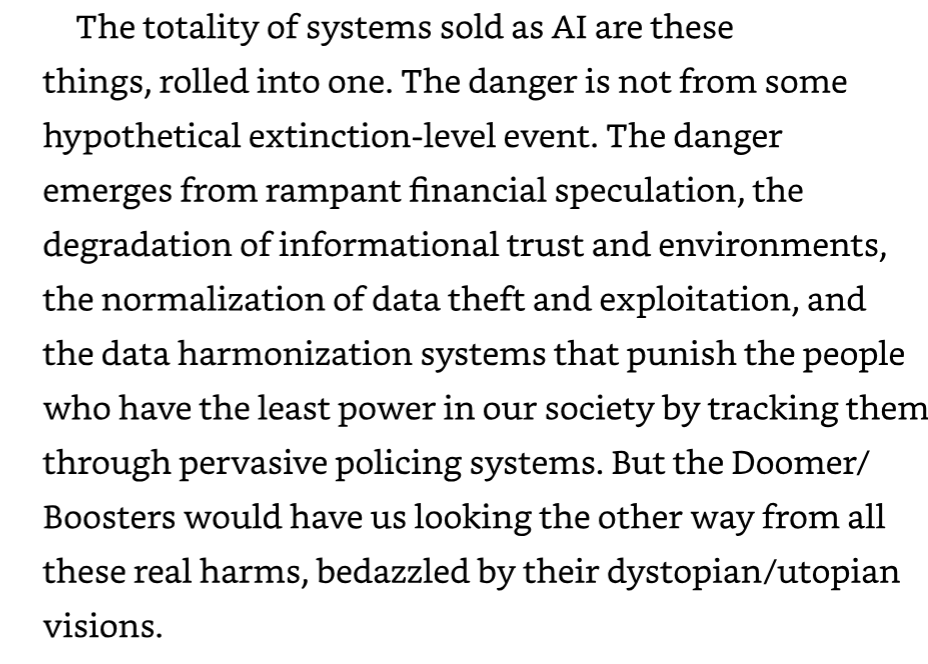
The danger is not a hypothetical extinction-level event but financial speculation, degraded informational trust, data theft, and policing systems; Doomers and Boosters would have us look away

Bender and Hanna, The AI Con — Chapter 6: I’m Sorry, Dave, I’m Afraid I Can’t Do That: AI Doomers, AI Boosters, and Why None of That Makes Sense
Boosters weigh benefits against environmental costs, Doomers weigh imagined existential risks; neither focuses on real harms now or the climate crisis, and both center white, well-off people

Bender and Hanna, The AI Con — Chapter 6: I’m Sorry, Dave, I’m Afraid I Can’t Do That: AI Doomers, AI Boosters, and Why None of That Makes Sense
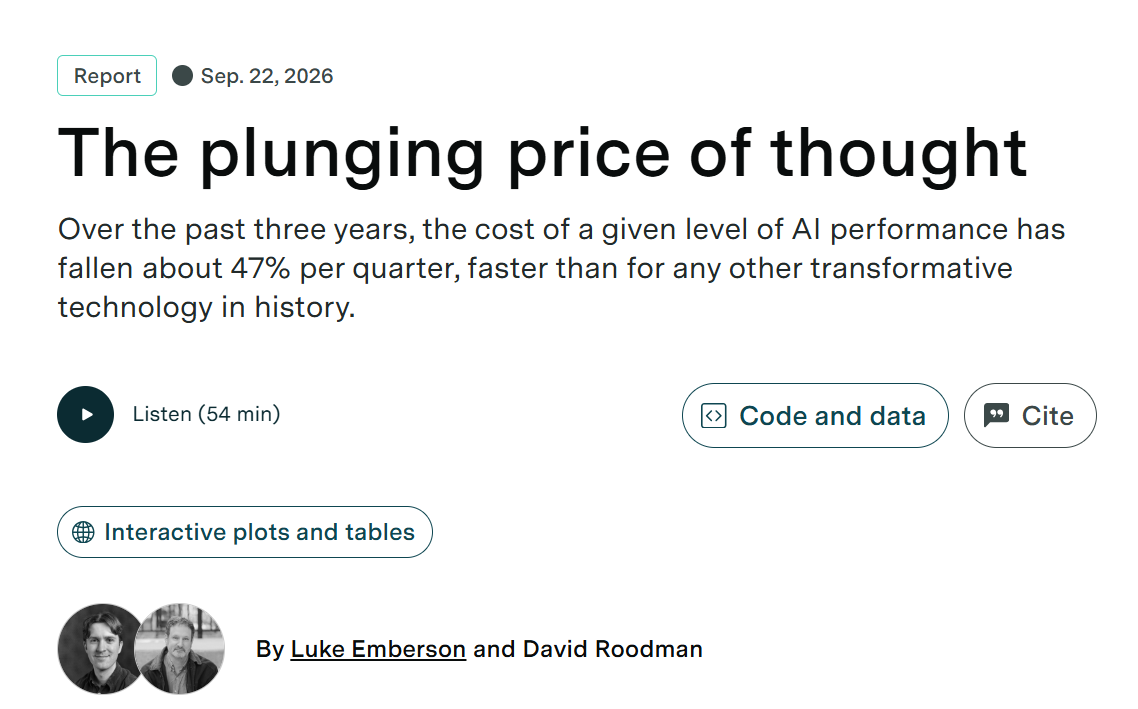
Epoch AI report header: The plunging price of thought, Sept. 22, 2026: the cost of a given level of AI performance has fallen about 47% per quarter over three years

Emberson and Roodman, “The plunging price of thought,” Epoch AI, Sept. 22, 2026
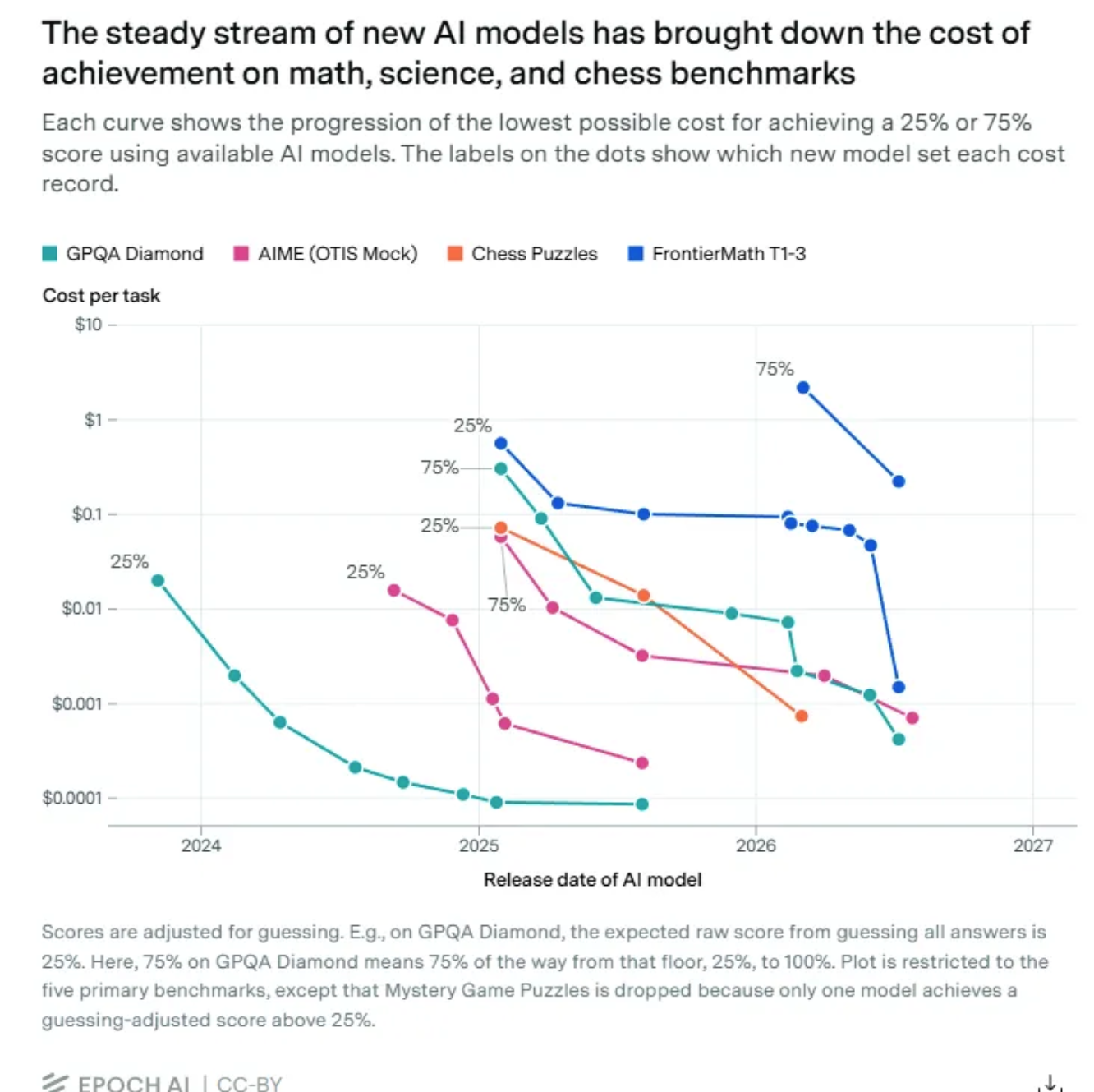
Epoch AI chart: the lowest cost per task to reach 25% or 75% on GPQA Diamond, AIME, chess puzzles, and FrontierMath, falling steeply with each new model from 2024 to 2026

Emberson and Roodman, “The plunging price of thought,” Epoch AI, Sept. 22, 2026
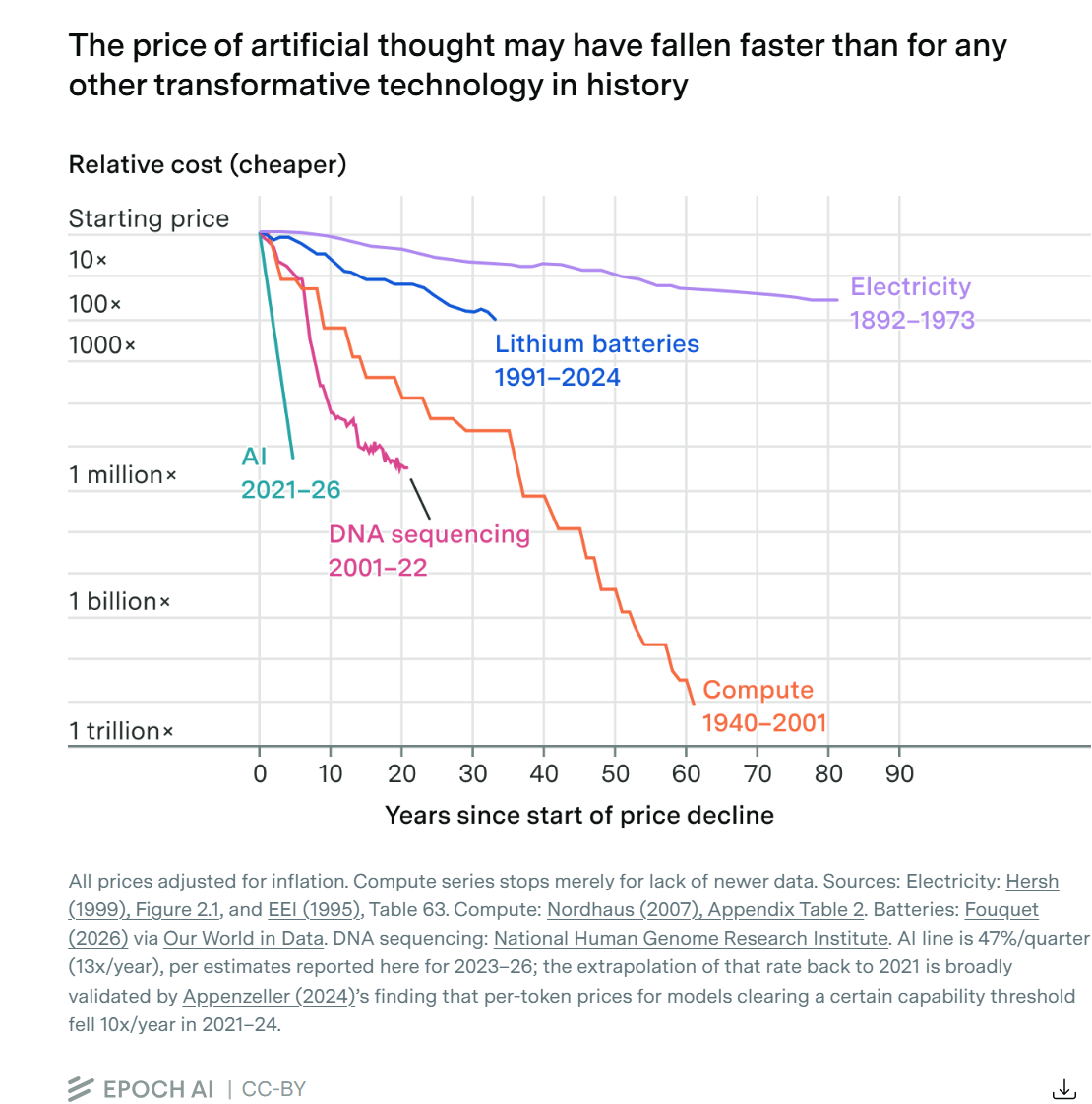
Epoch AI chart: relative cost decline over time for electricity, lithium batteries, compute, DNA sequencing, and AI, with AI falling about a million-fold in five years, faster than any other

Emberson and Roodman, “The plunging price of thought,” Epoch AI, Sept. 22, 2026